Bridging the Gap: How Voice Harmonization and Accent Translation Improve Communication
13 Aug, 2026
666 Views 0 Like(s)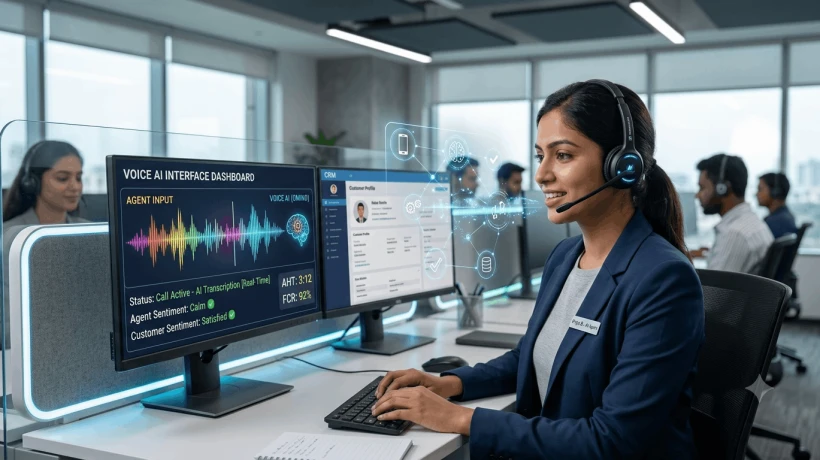
Discover how voice harmonization, accent translation, and accent modification software break communication barriers, improve clarity, and connect global teams.
Imagine speaking to a global client, a customer service agent on the other side of the world, or an international colleague. Now, imagine that regardless of your native tongue, the regional slang you use, or the pitch and timbre of your vocal cords, the person on the other end hears you with absolute clarity, in a natural accent, and with a comfortable vocal tone.
This is no longer the stuff of science fiction. Thanks to rapid advancements in artificial intelligence and audio engineering, technologies like voice harmonization and accent translation are redefining how the world communicates.
Whether you are looking to scale your business globally, improve remote work collaboration, or simply make cross-cultural conversations smoother, understanding these tools is essential. Let’s dive into how voice harmonization and accent translation are breaking down language and audio barriers.
What is Accent Translation and Voice Harmonization?
Before exploring their impact, it helps to define what these technologies actually do.
-
Accent Translation: This goes beyond traditional speech-to-text translation. While translation software changes the words you are saying into another language, accent translation modifies the sound of your speech. It retains your unique voice identity while shifting your accent—for example, converting a heavy regional accent into a neutral American, British, or Australian accent, or even translating speech while keeping the speaker's voice in a completely different target language.
-
Voice Harmonization: This technology focuses on the auditory quality of speech. It smooths out harsh frequencies, balances volume levels, eliminates background noise, and even aligns multiple speakers’ audio profiles so they sound cohesive. It ensures that the human voice sounds natural, warm, and professional, regardless of the recording equipment being used.
When combined—often powered by sophisticated accent modification software—these tools create an unprecedented level of clarity and inclusivity in verbal communication.
4 Ways These Technologies Improve Communication
1. Reducing Cognitive Load in Global Business
Cross-border communication often fails not because people don't know the language, but because of the cognitive fatigue caused by heavy accents, poor audio quality, or fast pacing. Listeners expend so much energy trying to decode the words that they miss the actual meaning.
By using voice harmonization and accent translation, companies can eliminate this friction. When a listener hears speech in an accent they are intimately familiar with, combined with crystal-clear audio harmonization, comprehension skyrockets. Misunderstandings drop, meetings become more efficient, and global teams can focus on strategy rather than struggling to understand one another.
2. Revolutionizing Customer Support and Call Centers
Customer satisfaction often hinges on the quality of communication. In global call centers, mismatched accents can sometimes create frustration for both the customer and the agent.
Advanced accent modification software allows call center agents to speak naturally while subtly modifying their accent in real time to match the caller's regional preferences. At the same time, voice harmonization ensures that the agent's voice sounds calm, clear, and professional, free from static or audio distortion. The result? Empathy is conveyed more effectively, and customer satisfaction scores rise.
3. Enhancing Remote Work and Virtual Collaboration
As remote work continues to dominate, we rely heavily on digital audio channels like Zoom, Microsoft Teams, and Google Meet. However, poor microphones, varying room acoustics, and different speaking styles can make virtual meetings exhausting.
Voice harmonization acts as an equalizer in these settings. It balances the audio output of everyone in the meeting—making the soft-spoken participant audible and softening the harsh volume of someone sitting too close to their microphone. Paired with real-time translation and accent adjustment, remote teams from Tokyo to Toronto feel like they are sitting in the same room.
4. Fostering Inclusion and Combatting Bias
Communication is deeply tied to identity. Unfortunately, linguistic and accent biases are still prevalent in professional environments. People are sometimes unfairly judged based on how they sound rather than the quality of their ideas.
Voice harmonization and accent translation can act as great equalizers. By offering tools that bridge the gap between different speech patterns, organizations can create a more level playing field. It shifts the focus from how something is said to what is actually being said, fostering a more inclusive and merit-based global culture.
The Future of the Human Voice
As artificial intelligence continues to evolve, the tools we use to communicate will only become more seamless. We are moving toward a world where language and accent barriers no longer dictate who we can collaborate with, buy from, or befriend.
By investing in voice harmonization and accent modification software, businesses and individuals are not just upgrading their tech stack—they are investing in better human connection. After all, the ultimate goal of any communication tool is to bring people closer together, and these technologies are doing just that, one clear, harmonious sentence at a time.

Comments
Login to Comment