AC Fire & Suffocation: This Is How Death Occurs, Do These Things to Protect Yourself
07 May, 2026
1841 Views 0 Like(s)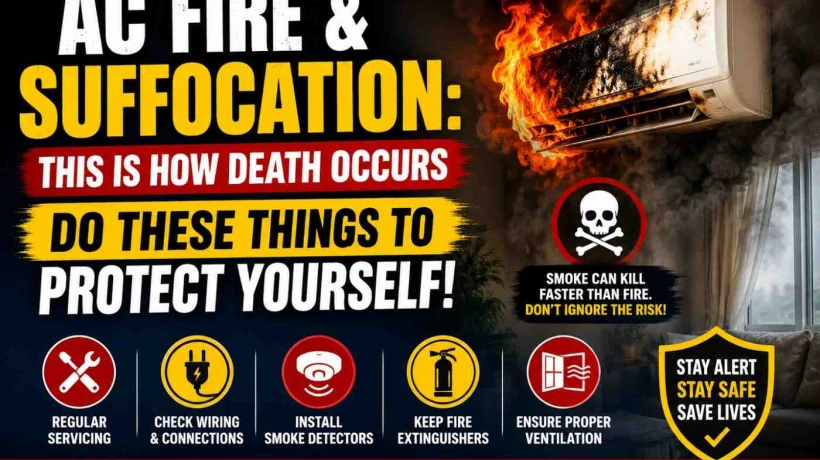
AC Fire & Suffocation: This Is How Death Occurs, Do These Things to Protect Yourself
As summer temperatures rise, air conditioners become a necessity in almost every home and office. However, a small mistake in AC maintenance or electrical safety can turn this comfort appliance into a deadly hazard. Every year, several incidents of AC fires and suffocation-related deaths are reported, especially during extreme heatwaves when ACs run continuously for long hours.
Many people believe that an AC blast or fire happens suddenly without warning, but in reality, there are several signs and preventive measures that can save lives. Understanding how AC-related fires and suffocation occur can help protect your family and property from serious danger.
How Does an AC Fire Start?
An air conditioner works using electricity, gas refrigerants, compressors, and cooling coils. If any part becomes faulty, overheating can occur. In many cases, electrical short circuits are the main reason behind AC fires.
Old wiring, overloaded power sockets, damaged circuits, or continuous usage without servicing can generate excessive heat inside the AC unit. Once sparks occur, nearby plastic parts, curtains, furniture, or wooden materials can catch fire quickly.
Split AC outdoor units are especially vulnerable because they are exposed to dust, heat, and weather conditions. If the compressor overheats, it may lead to smoke and eventually fire.
How Suffocation Happens During an AC Fire
Most people think burns are the primary cause of death during fires, but suffocation is often more dangerous. When an AC catches fire, thick smoke spreads rapidly inside closed rooms. The smoke contains toxic gases such as carbon monoxide, which reduce oxygen levels in the room.
Since people usually keep doors and windows closed while using ACs, smoke gets trapped indoors. Breathing toxic smoke for even a few minutes can lead to unconsciousness, breathing failure, and death.
Many victims die while sleeping because they do not realize the room is filling with smoke. Inhaling poisonous gases can damage the lungs and brain within minutes.
Warning Signs You Should Never Ignore
There are several warning signs that indicate your AC may be unsafe:
- Burning smell coming from the AC
- Frequent tripping of the circuit breaker
- Sparks near the switchboard
- Unusual noise from the compressor
- Smoke or overheating around wires
- Water leakage near electrical connections
- AC becoming excessively hot during operation
Ignoring these signs can increase the risk of fire significantly.
Common Reasons Behind AC Accidents
Poor Maintenance
Dust accumulation inside the filters and outdoor unit blocks airflow, forcing the AC to work harder. This overheating can damage internal components.
Faulty Wiring
Low-quality wires or loose electrical connections are among the biggest causes of AC fires. Many homes use old wiring systems that cannot handle modern AC power loads.
Continuous Usage
Running the AC for 15–20 hours continuously without breaks increases pressure on the compressor and electrical system.
Overloaded Power Boards
Connecting an AC to extension cords or overloaded sockets is extremely dangerous. High-voltage appliances should always have dedicated power connections.
Gas Leakage
Refrigerant gas leaks can become hazardous when combined with electrical sparks, potentially triggering explosions or fires.
Important Safety Tips to Protect Yourself
Get Regular Servicing Done
Experts recommend servicing your AC at least twice a year. Professional cleaning and inspection help detect damaged parts early.
Use Quality Wiring
Always install branded wires, stabilizers, and circuit breakers. Never compromise on electrical safety to save money.
Avoid Overuse
Turn off the AC periodically to prevent overheating. Giving the compressor short breaks improves both safety and performance.
Install Smoke Detectors
Smoke alarms can alert you immediately during a fire emergency, especially at night when people are asleep.
Keep Ventilation Available
Do not completely seal the room. Proper ventilation can help reduce smoke buildup during emergencies.
Switch Off Power Immediately
If you notice smoke, sparks, or burning smells, immediately switch off the main power supply. Do not touch the AC directly with wet hands.
Keep Fire Extinguishers at Home
A small fire extinguisher designed for electrical fires can help control minor incidents before they become dangerous.
What To Do During an AC Fire
If your AC catches fire:
- Turn off the main electricity supply immediately.
- Do not throw water on electrical fires.
- Evacuate the room quickly.
- Open doors and windows to release smoke.
- Call emergency services immediately.
- Use a fire extinguisher only if the fire is small and manageable.
The most important thing is to avoid inhaling smoke. Cover your nose with a cloth and stay low to the ground while escaping, as smoke rises upward.
Final Thoughts
Air conditioners provide comfort during extreme heat, but negligence in maintenance and electrical safety can turn them into life-threatening machines. AC fires and suffocation deaths often happen silently and quickly, especially during nighttime.
Simple precautions such as regular servicing, proper wiring, smoke alarms, and responsible usage can greatly reduce the risk. Staying alert to warning signs and acting quickly during emergencies can save lives.
Your safety is more important than convenience. A few preventive steps today can protect your family from a devastating accident tomorrow.



Comments
Login to Comment