A2 Desi Ghee Is a Great Choice for Traditional Food Lovers
03 Nov, 2026
14 Views 0 Like(s)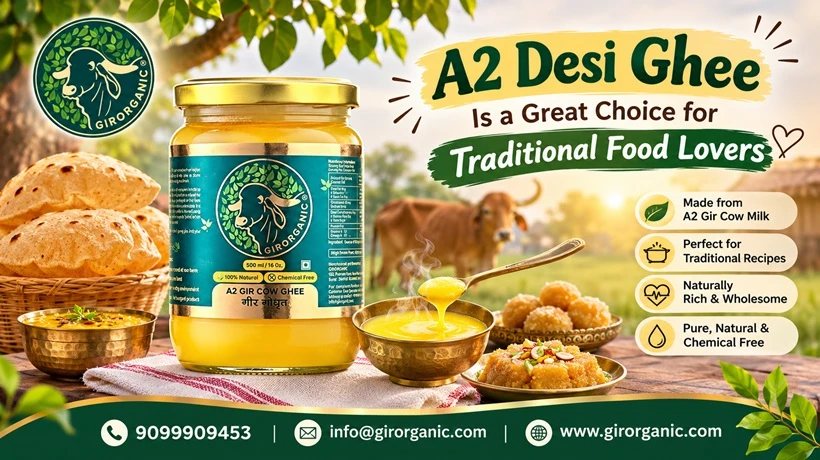
Why GirOrganic A2 Desi Ghee Is a Great Choice for Traditional Food Lovers
Indian food is deeply connected to tradition, culture and family values. From homemade rotis and dal to festive sweets and traditional dishes, certain ingredients have always held a special place in Indian kitchens. One such ingredient is desi ghee. Known for its rich aroma, delicious taste and versatility, ghee has been an essential part of Indian cooking for generations.
Among the different varieties available today, A2 Desi Ghee has gained attention among people who appreciate traditional food choices and authentic dairy products. Many households are exploring traditionally prepared ghee to bring familiar flavours back into their everyday meals.
GirOrganic brings this traditional ingredient closer to modern Indian households with its A2 Desi Ghee. For people who value authentic taste, traditional cooking and quality food ingredients, choosing the right ghee can make a noticeable difference in their culinary experience.
What Makes A2 Desi Ghee Different?
A2 Desi Ghee is traditionally made from milk containing A2 beta-casein protein. This type of protein is naturally found in the milk of certain indigenous cattle breeds, including Gir cows.
Unlike conventional dairy products that may contain a mixture of A1 and A2 beta-casein proteins, A2 milk is specifically associated with the A2 beta-casein variant.
However, it is important to understand that ghee is primarily composed of milk fat. Most milk proteins are removed during the clarification process. Therefore, A2 Desi Ghee is mainly identified by the milk source and production process used to prepare it.
For traditional food lovers, the appeal goes beyond its nutritional profile. Its rich flavour, pleasant aroma and connection with traditional Indian food preparation make it an interesting choice for everyday cooking.
Why Traditional Food Lovers Prefer A2 Desi Ghee
Traditional Indian cooking involves more than simply combining ingredients. The aroma, texture and quality of each ingredient contribute to the overall experience.
Here are some reasons why A2 Desi Ghee is becoming a preferred option among people who appreciate traditional food.
1. Rich Aroma and Authentic Taste
One of the most noticeable qualities of traditionally prepared ghee is its characteristic aroma. A spoonful of ghee over freshly cooked dal, khichdi or hot roti can enhance the overall flavour of a meal.
Its rich, buttery taste also complements Indian dishes without requiring complicated ingredients.
2. Connection with Traditional Indian Food Culture
Ghee has been used in Indian households for centuries. It is an important ingredient in traditional recipes, festive preparations and regional cuisines.
From making homemade laddoos to preparing halwa and parathas, ghee continues to represent the traditional flavours many families enjoy.
Choosing traditionally prepared A2 Desi Ghee allows food lovers to maintain this connection with familiar cooking practices.
3. Versatile Ingredient for Everyday Cooking
A2 Desi Ghee can be used in several ways in the kitchen. Its versatility makes it suitable for both everyday meals and special occasions.
Some popular applications include:
-
Add a spoonful to hot rice, dal and khichdi.
-
Preparing crispy parathas and traditional rotis.
-
Making halwa, laddoos and other Indian sweets.
-
Enhancing the flavour of pulao and selected rice dishes.
-
Using it in traditional tadka preparations.
-
Greasing cooking utensils and preparing festive recipes.
Its rich flavour makes even simple homemade meals feel more satisfying.
Traditional Preparation: Understanding the Bilona Method
The Bilona method is a traditional technique associated with making desi ghee from curd. It involves several stages that require attention and careful preparation.
Understanding this method helps consumers appreciate how traditional ghee is produced.
Step 1: Preparing Curd from Milk
The process begins with milk, which is heated and allowed to cool to a suitable temperature. A traditional starter culture is then added to convert the milk into curd.
Step 2: Churning the Curd
Once the curd is ready, it is churned to separate butter from the liquid portion. Traditional churning techniques are used to obtain the butter.
Step 3: Collecting the Butter
The separated butter is collected and prepared for the next stage of production.
Step 4: Heating the Butter
The butter is gently heated until moisture evaporates and the milk solids separate. This process produces clarified butter with its characteristic aroma and golden appearance.
Step 5: Filtering and Packaging
The prepared ghee is filtered to remove the remaining milk solids. It is then cooled and packed appropriately to maintain its quality.
Not every A2 ghee product is necessarily made using the Bilona method. Consumers should check the manufacturer's actual preparation process and product information before purchasing.
Important Things to Consider When Buying A2 Desi Ghee
With several ghee varieties available in the Indian market, selecting a suitable product requires attention to more than packaging and price.
Here are some practical factors to consider:
1. Check the Milk Source
Look for clear information about the cattle breed and milk sourcing. If a product is marketed as Gir cow A2 ghee, the manufacturer should be able to provide appropriate sourcing information.
2. Understand the Manufacturing Process
Check whether the ghee is prepared using the traditional Bilona method or another clarification process. A transparent manufacturer should explain its production method.
3. Look for Quality and Purity Information
Check the ingredient list, manufacturing details, batch information and applicable food safety and licensing details.
In India, consumers can also look for relevant FSSAI licensing information on packaged food products.
4. Check Packaging and Storage Instructions
Good packaging helps protect ghee from moisture, contamination and unnecessary exposure to air. Always follow the manufacturer's storage recommendations and use a clean, dry spoon.
5. Choose a Reliable Brand
A trustworthy brand should provide clear product information and avoid exaggerated nutritional or health claims.
How to Use A2 Desi Ghee in Traditional Indian Recipes
One of the biggest advantages of ghee is how easily it fits into different Indian food traditions.
Here are a few simple ways to enjoy it:
With Dal and Rice: Add a small spoonful of ghee to freshly cooked dal and rice for a rich, familiar flavour.
With Roti and Paratha: Spread ghee over hot rotis or use it while preparing parathas to improve their taste and texture.
In Homemade Sweets: Ghee is an important ingredient in traditional sweets such as besan laddoo, sooji halwa and moong dal halwa.
For Khichdi: A little ghee over hot khichdi adds richness and complements its simple ingredients.
For Festive Cooking: Many Indian festive recipes use ghee as a key ingredient because of its distinctive aroma and flavour.
These simple applications make ghee a valuable addition to households that enjoy traditional Indian cuisine.
Why Choose GirOrganic A2 Desi Ghee?
Choosing a food product is not just about its name. Consumers increasingly want to understand where their food comes from, how it is prepared and what makes it suitable for their kitchen.
GirOrganic offers A2 Desi Ghee for consumers who appreciate traditional dairy products and authentic Indian food flavours.
When considering GirOrganic A2 Desi Ghee, customers can explore its product details, milk sourcing information, preparation method and packaging information to make an informed purchasing decision.
For families who enjoy traditional recipes, homemade meals and the familiar taste of desi ghee, it can be a suitable option to consider.
GirOrganic aims to bring the appreciation of traditional food ingredients into modern kitchens while keeping the importance of informed food choices in mind.
Frequently Asked Questions (FAQs)
1. What is A2 Desi Ghee?
A2 Desi Ghee is clarified butter prepared from milk sourced from cattle producing A2 beta-casein milk. It is valued for its traditional dairy origin, rich flavour and versatility in Indian cooking.
2. Is A2 Desi Ghee suitable for everyday cooking?
Yes, A2 Desi Ghee can be used in everyday cooking, including dal, rice, rotis, parathas and traditional recipes. However, like other fats, it should be consumed in moderation as part of a balanced diet.
3. What is the Bilona method of making ghee?
The Bilona method is a traditional process in which curd is churned to separate butter. The collected butter is then heated to remove moisture and separate milk solids, producing clarified butter.
4. Can A2 Desi Ghee be used for making Indian sweets?
Yes. A2 Desi Ghee can be used to prepare several traditional Indian sweets, including laddoos, halwa, barfi and other homemade desserts. Its rich aroma and flavour complement these recipes.
5. How should GirOrganic A2 Desi Ghee be stored?
Store ghee in a clean, dry and airtight container according to the manufacturer's instructions. Keep it away from moisture, direct sunlight and contamination. Always use a dry spoon when serving.
Conclusion
Desi ghee continues to hold an important place in Indian food culture because of its distinctive flavour, versatility and traditional culinary value. From simple everyday meals to festive sweets, it helps bring familiar aromas and richness to a wide variety of recipes.
For traditional food lovers looking for a dairy product connected with indigenous cattle milk and traditional food practices, A2 Desi Ghee is an option worth exploring.
With GirOrganic A2 Desi Ghee, consumers can discover an ingredient that complements traditional Indian cooking and everyday meals. By understanding its milk source, preparation method and product quality, buyers can make a more informed choice for their kitchen.
Bring the familiar taste of traditional ghee into your cooking and continue enjoying the flavours that make Indian food special.



Comments
Login to Comment