A Practical Guide to Reducing Supplier Risks Through Quality Audits and Manufacturing Inspections
22 Jun, 2026
1295 Views 0 Like(s)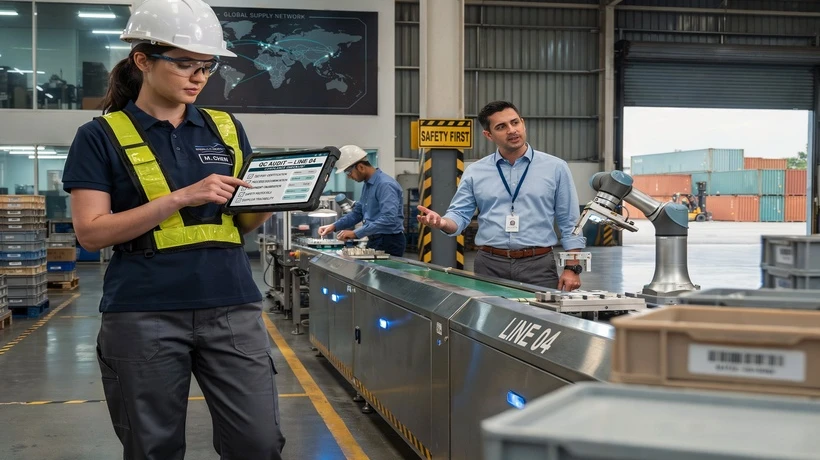
Learn how quality audits and manufacturing inspections help businesses reduce supplier risks, improve production reliability, and prevent costly failures in global supply chains.
A Practical Guide to Reducing Supplier Risks Through Quality Audits and Manufacturing Inspections
Introduction
Global sourcing has made manufacturing more efficient, but it has also increased exposure to supplier-related risks. Delays, inconsistent quality, non-compliance issues, and production failures can all arise when companies lack visibility into how their products are being made. Managing these risks requires a structured approach that goes beyond contracts and pricing agreements.
This is where Quality Audits and Manufacturing Inspections become essential. By evaluating supplier systems, production processes, and product output at different stages, businesses can identify risks early and prevent costly disruptions. Instead of reacting to failures after they occur, companies gain the ability to control quality proactively across their supply chain.
In today’s competitive environment, organizations that prioritize supplier risk management are better positioned to maintain consistency, reduce losses, and build long-term manufacturing stability. A well-designed inspection strategy creates transparency and strengthens trust between buyers and suppliers.
Understanding Supplier Risk in Global Manufacturing
Supplier risk is one of the most overlooked challenges in international manufacturing. Even when suppliers appear reliable, hidden issues can exist within their production systems, workforce capabilities, or quality control processes.
One major risk is inconsistent production standards across different batches. A supplier may deliver high-quality samples initially, but fail to maintain the same standard during mass production. Another risk involves material substitution, where lower-quality materials are used without proper approval.
Other common risks include:
-
Lack of process documentation, making it difficult to trace defects
-
Over-reliance on manual inspections, increasing human error
-
Production delays caused by poor planning or capacity issues
-
Compliance gaps in safety or regulatory requirements
These risks often go unnoticed until products reach customers, resulting in returns, complaints, and financial losses. Understanding supplier risk is the first step toward building a more controlled and predictable supply chain.
The Role of Quality Audits and Manufacturing Inspections in Risk Reduction
Quality Audits and Manufacturing Inspections help companies gain visibility into supplier operations and identify risks before they escalate. Audits evaluate the supplier’s overall system, while inspections focus on product-level quality during or after production.
A structured approach ensures that both system-level and product-level risks are addressed. Audits review documentation, production processes, employee training, and quality systems. Inspections verify whether finished goods meet required specifications.
Key benefits include:
-
Early detection of process weaknesses before production failures occur
-
Improved supplier accountability through structured evaluations
-
Better consistency across production cycles
-
Reduced cost of rework and defect correction
For example, an audit might reveal that a supplier lacks proper calibration procedures for machinery. An inspection would then confirm whether this issue is affecting product dimensions. Together, these tools provide a complete picture of supplier performance and risk exposure.
By combining both approaches, companies move from reactive problem-solving to proactive risk prevention.
Building a Strong Supplier Evaluation System
A strong supplier evaluation system ensures that risks are identified and managed consistently across all suppliers. Without a structured system, companies often rely on assumptions rather than verified data, which increases vulnerability to supply chain disruptions.
An effective evaluation framework should include clear criteria for assessing supplier performance. These criteria should cover production capability, quality consistency, compliance adherence, and delivery reliability.
Important evaluation practices include:
-
Pre-qualification assessments before onboarding new suppliers
-
Regular performance reviews based on measurable KPIs
-
On-site inspections to verify real production conditions
-
Corrective action tracking to monitor improvements over time
Supplier performance scoring systems can also help companies compare suppliers objectively. This allows businesses to identify high-performing partners and address underperforming ones before issues escalate.
A well-designed evaluation system reduces uncertainty and ensures that all suppliers are held to the same standard. It also encourages continuous improvement by making expectations clear and measurable.
How Manufacturing Inspections Prevent Costly Production Failures
Manufacturing inspections play a critical role in preventing defects from reaching customers. Instead of waiting until production is complete, inspections are conducted at multiple stages to catch issues early.
Pre-production inspections verify raw materials and initial samples. During-production inspections monitor ongoing manufacturing processes. Final inspections ensure finished products meet specifications before shipment.
Manufacturing Inspections improve control by:
-
Detecting defects early in the production cycle
-
Reducing waste from defective batches
-
Ensuring product consistency across large volumes
-
Preventing shipment of non-compliant goods
For instance, if a defect is detected during mid-production, corrective action can be taken immediately, preventing thousands of faulty units from being completed. This not only reduces financial loss but also protects brand reputation.
Inspections also help suppliers improve their internal processes by highlighting recurring issues. Over time, this leads to higher production efficiency and fewer quality deviations.
Strengthening Supplier Accountability Through Structured Oversight
Supplier accountability is essential for maintaining long-term quality standards. Without oversight, suppliers may gradually deviate from agreed processes, leading to inconsistent results.
Structured oversight ensures that suppliers remain aligned with buyer expectations. This is achieved through regular audits, inspections, and performance tracking systems that measure compliance and quality outcomes.
Effective accountability strategies include:
-
Clear quality agreements defined before production begins
-
Routine monitoring of production performance
-
Documented corrective action plans for identified issues
-
Transparent communication between buyers and suppliers
When suppliers know their processes are being evaluated, they are more likely to maintain discipline in production practices. This creates a culture of responsibility where quality becomes a shared objective.
Accountability also improves trust. Instead of relying on assumptions, companies use data-driven evaluations to make informed sourcing decisions. This leads to stronger and more reliable supplier relationships over time.
Reducing Financial and Operational Risks in Supply Chains
Supplier-related failures can create significant financial and operational challenges. These include product recalls, shipment delays, lost sales, and damage to brand reputation. Managing these risks requires proactive quality control measures.
A structured risk reduction approach helps companies avoid unnecessary costs. Early detection of issues through audits and inspections is significantly more cost-effective than correcting problems after shipment.
Key financial benefits include:
-
Lower defect-related rework costs
-
Reduced return and replacement expenses
-
Minimized logistics disruptions
-
Improved production efficiency
Operationally, risk reduction ensures smoother production cycles and better planning accuracy. Companies can forecast inventory needs more effectively when supplier performance is stable and predictable.
By integrating risk management into supplier oversight, businesses create a more resilient supply chain that can withstand fluctuations and unexpected challenges.
Creating a Resilient Global Supply Network
A resilient supply chain is one that can maintain performance even during disruptions. This requires strong supplier relationships, consistent monitoring, and continuous improvement practices.
Long-term resilience depends on visibility and control. Companies must understand how suppliers operate, where risks exist, and how performance changes over time. Regular evaluations provide the data needed to make informed decisions.
Key elements of supply chain resilience include:
-
Diversified supplier base to reduce dependency risks
-
Continuous monitoring of supplier performance
-
Standardized quality expectations across all suppliers
-
Strong communication and feedback systems
When companies invest in structured oversight systems, they build supply networks that are more stable and adaptable. This allows them to respond quickly to market changes without compromising quality or delivery performance.
Resilience is not achieved through one-time actions but through consistent and ongoing supplier management practices.
Conclusion
Managing supplier risk is one of the most important challenges in global manufacturing. Without proper oversight, companies face quality failures, delays, and financial losses that can significantly impact business performance.
Quality Audits and Manufacturing Inspections provide a structured and proactive approach to identifying risks, improving supplier accountability, and ensuring consistent production standards. By combining evaluation, monitoring, and continuous improvement, companies can build stronger and more reliable supply chains.
The key takeaway is clear: reducing supplier risk is not about reacting to problems but preventing them before they occur. Organizations that adopt structured inspection systems are better equipped to maintain quality, reduce costs, and achieve long-term manufacturing stability.



Comments
Login to Comment