3D Printed Surgical Guides: Transforming Precision In Modern Surgery
06 Apr, 2026
2943 Views 0 Like(s)
Discover how 3D printed surgical guides improve precision, reduce surgery time, and transform modern healthcare. Learn their benefits, applications, and future potential.
Modern healthcare is rapidly evolving, and one of the most impactful innovations is the use of 3D printing in surgery. From dental implants to complex orthopedic procedures, 3D printed solutions are helping surgeons achieve higher accuracy and better patient outcomes. Among these advancements, 3D printed surgical guides are becoming an essential tool in precision-based treatments.
What Are 3D Printed Surgical Guides?
3D printed surgical guides are custom-made tools designed to assist surgeons during medical procedures. These guides are created using advanced imaging technologies like CT scans or MRI data, which are converted into digital 3D models. Based on the patient’s unique anatomy, a guide is then printed using biocompatible materials to ensure safety and accuracy.
These guides act as a roadmap during surgery, helping surgeons place implants, make incisions, or drill at exact angles and depths. This eliminates guesswork and significantly reduces the margin for error. They are widely used in dental implantology, orthopedic surgery, neurosurgery, and maxillofacial procedures. Because each guide is tailored to the patient, it ensures a personalized approach that improves both efficiency and results.
Benefits Of 3D Printed Surgical Guides In Modern Healthcare
The use of 3D printed surgical guides offers numerous benefits that make them a preferred choice for both surgeons and patients. One of the most significant advantages is enhanced precision. Since the guides are designed based on exact patient data, they allow for highly accurate surgical execution.
Another major benefit is reduced surgery time. With a clear plan and a physical guide, surgeons can perform procedures more quickly and efficiently. This also leads to shorter anesthesia time and faster recovery for patients. Additionally, these guides help minimize complications, as they reduce the chances of human error.3d printed implant surgical guide.
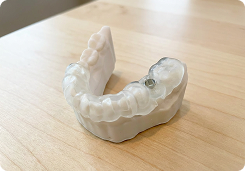
How 3D Printed Surgical Guides Improve Surgical Accuracy?
Accuracy is one of the most critical aspects of any surgical procedure, and 3D printed surgical guides excel in this area. By using detailed imaging data, these guides ensure that every step of the procedure is pre-planned and executed precisely as intended.
For example, in dental implant procedures, the guide helps position the implant at the correct angle and depth, avoiding damage to surrounding nerves and tissues. In orthopedic surgeries, they assist in aligning bones and placing screws or plates accurately. This level of precision is difficult to achieve with traditional methods.
Why Are 3D Printed Surgical Guides Becoming So Popular?
The growing popularity of 3D printed surgical guides can be attributed to advancements in technology and increasing demand for personalized healthcare. Patients today expect treatments tailored to their specific needs, and these guides make that possible.
Another reason is the ease of integration into existing workflows. Many hospitals and clinics now have access to 3D printing technology or partner with specialized providers to create these guides. The process—from imaging to printing—has become faster and more streamlined over time.
Additionally, surgeons are recognizing the long-term benefits of using these guides. Improved outcomes, reduced complications, and higher patient satisfaction make them a valuable investment. As awareness grows, more medical professionals are adopting this technology, further driving its popularity across various fields.
Applications Of 3D Printed Surgical Guides Across Medical Fields
3D printed surgical guides are not limited to a single type of procedure; their applications span across multiple medical disciplines. In dentistry, they are widely used for implant placement, ensuring optimal positioning and stability. In orthopedics, they assist in joint replacement surgeries and fracture repairs.
In neurosurgery, these guides help navigate complex brain structures with extreme precision. Similarly, in maxillofacial surgery, they are used for reconstructive procedures, improving both functional and aesthetic outcomes. Even in cardiovascular surgeries, customized guides are being explored for better intervention planning.
The versatility of these guides makes them a valuable tool in modern medicine. As technology continues to evolve, their applications are expected to expand even further, opening new possibilities for improved patient care.
Challenges And Future Of 3D Printed Surgical Guides
While 3D printed surgical guides offer numerous advantages, they are not without challenges. One of the main concerns is the need for specialized equipment and expertise. Not all healthcare facilities have access to advanced 3D printing technology, which can limit widespread adoption.
Regulatory considerations also play a role. Since these guides are used in medical procedures, they must meet strict safety and quality standards. This can sometimes slow down the development and implementation process.
Despite these challenges, the future of 3D printed surgical guides looks promising. Continuous advancements in materials, printing techniques, and software are making the process more accessible and cost-effective. As technology becomes more widely available, it is expected that these guides will become a standard part of surgical practice worldwide.
Conclusion
3D printed surgical guides are revolutionizing the way surgeries are planned and performed. By combining advanced imaging with cutting-edge printing technology, they offer unmatched precision, efficiency, and personalization. From reducing surgical time to improving patient outcomes, their benefits are undeniable.



Comments
Login to Comment