2026 Volkswagen Taigun Facelift Vs Maruti Suzuki Victoris: Same Segment, But Worlds Apart
17 Apr, 2026
2059 Views 0 Like(s)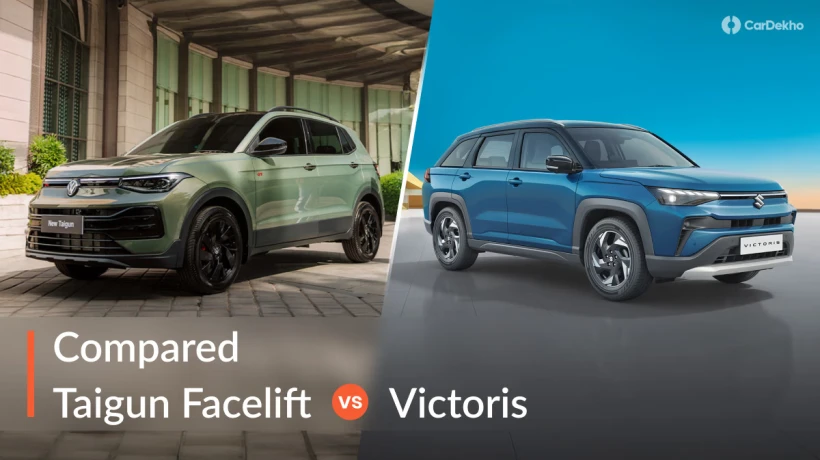
2026 Volkswagen Taigun Facelift Vs Maruti Suzuki Victoris: Same Segment, But Worlds Apart
The compact SUV segment in India is one of the most competitive spaces in the automotive market, and the arrival of the 2026 Volkswagen Taigun Facelift alongside the much-talked-about Maruti Suzuki Victoris has only intensified the battle. While both SUVs target similar buyers, they differ significantly in design philosophy, performance, features, and overall driving experience. Let’s explore how these two contenders compare and why they feel like worlds apart despite sharing the same segment.
Bold Design vs Practical Appeal
The Volkswagen Taigun Facelift 2026 brings a refreshed European design language. It features sharper LED headlamps, a redesigned grille, and sportier alloy wheels that give it a premium and aggressive stance. Volkswagen has focused on making the Taigun look modern yet sophisticated, appealing to urban buyers who value aesthetics.
On the other hand, the Maruti Suzuki Victoris follows a more practical and family-friendly design approach. While it may not be as sporty as the Taigun, it offers a clean, functional look with a focus on spaciousness and everyday usability. Maruti Suzuki’s design philosophy prioritizes mass appeal, and the Victoris reflects that clearly.
Performance and Driving Experience
When it comes to performance, the Taigun stands out with its turbocharged petrol engine options. Known for its punchy acceleration and refined handling, the Taigun delivers a fun-to-drive experience. Volkswagen’s engineering ensures solid build quality and excellent stability at high speeds, making it a great choice for enthusiasts.
In contrast, the Victoris is expected to focus on fuel efficiency and smooth city driving. Maruti Suzuki typically prioritizes mileage and low maintenance, and the Victoris is likely to continue that legacy. While it may not match the Taigun in raw performance, it caters well to daily commuters looking for reliability and cost-effectiveness.
Interior and Comfort
Step inside the Taigun, and you’re greeted with a premium cabin. The facelift is expected to include a larger touchscreen infotainment system, wireless connectivity, ventilated seats, and improved material quality. The cabin feels solid and well-built, aligning with Volkswagen’s premium positioning.
The Victoris, meanwhile, is expected to offer a more practical and spacious interior. Maruti Suzuki focuses on comfort for families, so expect ample legroom, user-friendly controls, and decent infotainment features. While it may not feel as premium as the Taigun, it will likely excel in convenience and ease of use.
Technology and Features
The Taigun facelift is expected to come loaded with advanced features such as a digital instrument cluster, connected car technology, and enhanced safety features including multiple airbags and electronic stability control. Volkswagen is likely to push the boundaries in terms of tech upgrades.
Maruti Suzuki, with the Victoris, will focus on essential features that provide value for money. It may include a touchscreen infotainment system, smartphone connectivity, and basic safety features. While it might lack some high-end tech, it ensures affordability and practicality for the average Indian buyer.
Safety and Build Quality
One of the biggest differences between the two lies in safety and build quality. Volkswagen vehicles are known for their robust construction, and the Taigun is no exception. It has already gained recognition for its strong safety ratings, making it a reliable choice for safety-conscious buyers.
Maruti Suzuki has been improving its safety standards, but it still focuses on keeping costs low. The Victoris is expected to offer standard safety features, but it may not match the Taigun’s solid build and advanced safety engineering.
Pricing and Value Proposition
Pricing plays a crucial role in this segment. The Taigun facelift will likely be positioned as a premium compact SUV, with a slightly higher price tag justified by its performance, build quality, and features.
The Victoris, on the other hand, will target budget-conscious buyers. Maruti Suzuki’s strength lies in offering affordable cars with low maintenance costs and excellent resale value, making the Victoris an attractive option for cost-sensitive customers.
Final Verdict
The 2026 Volkswagen Taigun Facelift and the Maruti Suzuki Victoris may belong to the same segment, but they cater to entirely different audiences. The Taigun is for those who seek performance, premium feel, and superior build quality, while the Victoris is aimed at buyers who prioritize affordability, mileage, and practicality.
In the end, the choice depends on what you value more—driving excitement and premium features, or everyday convenience and budget-friendly ownership. Either way, both SUVs bring something unique to the table, proving that even within the same segment, the differences can truly feel like worlds apart.



Comments
Login to Comment