When Is Hard Drive Recycling the Safest Disposal Option?
10 Jul, 2026
1210 Views 0 Like(s)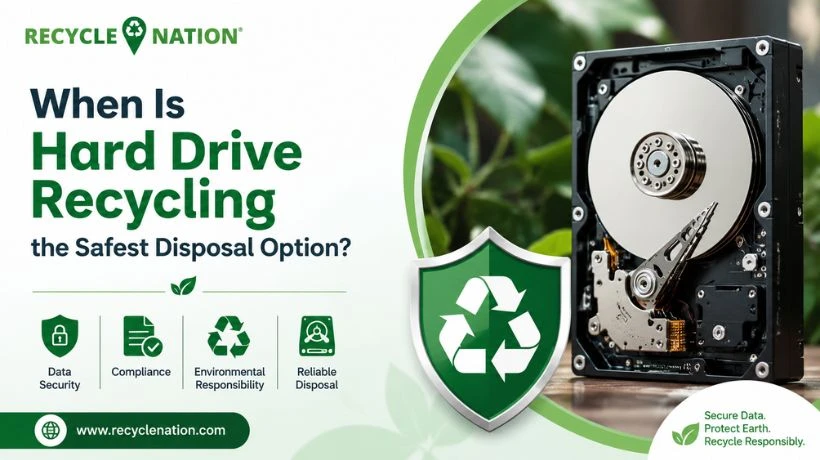
Choose hard drive recycling when securely disposing of old storage devices to protect sensitive data, reduce e-waste, and support environmental sustainability.
Eventually, computers, servers and external storage devices will reach the end of their useful life, but the data they hold can live on long after the hardware is gone. An old hard drive that could contain confidential personal or business data can be a liability that is not worth having if it's simply dumped into the trash or just kept in a box. Therefore, it has become crucial to adopt reliable hard drive recycling solutions for the responsible handling of e-waste.
Recycling hard drives is a solution that can be used to replace a personal computer or upgrade an organization's IT infrastructure, and it can help ensure the security and protection of confidential information while promoting environmentally responsible disposal.
Why Hard Drives Require Special Disposal
Hard drives have a capacity for storing large amounts of digital information; unlike many household goods, they can hold a great deal.
Without proper disposal, data can be recovered for file deletion or failure of a device.
There are three things that can be stored on a hard drive:
-
Financial records
-
Customer information
-
Employee files
-
Medical records
-
Login credentials
-
Personal documents
This is also very sensitive information and hard drives should never be thrown away in the household trash.
By selecting hard drive recycling services, there is less of a risk of unauthorized access to data, and electronic components will also be managed in a responsible manner.
When Replacing Computers or Servers
Some of the most frequent times people recycle hard drives is when their technology needs an upgrade.
Frequently, businesses and individuals replace:
-
Desktop computers
-
Laptops
-
Servers
-
Network storage devices
-
External hard drives
Recycling used drives after proper data destruction can help save time and reduce storage space usage, as well as eliminate unnecessary security risks by not storing the outdated equipment indefinitely.
Hard drive recycling may be a component of a larger project to replace equipment, particularly in organizations that have several systems to replace.
Before Donating Electronic Devices
Most people donate working computers to schools, community projects or nonprofit organizations.
Prior to donating any electronic device, it is crucial that all personal and confidential information is thoroughly removed from the device.
Recycling might be a safer choice if a device can't be sanitized or the hard drive has been removed.
Responsible electronics recycling saves the previous owner, and recovered materials are reused appropriately.
During Business Equipment Refresh Cycles
Computers and storage devices are regularly being replaced as part of the technology modernization process within businesses.
Large numbers of hard drives with business information typically are involved in these projects.
Examples include:
-
Employee records
-
Financial data
-
Customer databases
-
Business contracts
-
Internal communications
In these cases, business electronics recycling programs assist in the safe disposal of retired devices and make sure that data is protected and environmental laws are adhered to.
When equipment is being refreshed, it is important to plan properly to minimise the risk of security breaches and minimise electronic waste.
When a Hard Drive Stops Working
Even if a computer hard drive cannot be accessed via normal computer operation, the information may still be present in the drive.
If sensitive information can be accessed from the storage media, erasing a drive improperly could endanger it.
Rather, damaged drives should be handled with professional hard drive recycling services that feature safe and secure management and the proper destruction of data.
Failing to operate a device doesn't mean that stored information is gone.
Supporting Environmental Responsibility
Recycling can often lead to the recovery and reuse of materials from hard drives.
They can contain:
-
Aluminum
-
Steel
-
Copper
-
Magnets
-
Electronic components
Recycling saves the need to use mineral resources that are mined for the first time and aids in the prevention of e-waste being sent to landfills.
Electronics recycling is also helping to fulfill the larger agenda of responsible electronics by recycling reusable resources whenever possible.
Don't Forget About Batteries
A number of electronic devices that are being retired along with hard drives also have rechargeable batteries.
Handle batteries safely: In particular, batteries should be recycled separately from other electronic products (where possible) using appropriate battery recycling programs.
Good battery disposal reduces the potential for harmful waste in the environment, in addition to promoting good waste management procedures.
Why Businesses Benefit From Planned Recycling Programs
Developing a structured business electronics recycling program allows companies to manage retired equipment more consistently.
Businesses can benefit from regular recycling programs by:
-
Protect confidential information
-
Reduce electronic waste
-
Improve asset management
-
Support sustainability initiatives
-
Simplify equipment replacement projects
Planning ahead often creates a more efficient and secure approach to electronic equipment disposal.
FAQs
Why is hard drive recycling important?
Hard drive recycling safeguards sensitive information and responsibly processes electronic components, while recovering valuable materials.
Can deleted files still be recovered from an old hard drive?
In some cases, yes. If a hard drive hasn't been properly destroyed or erased, deleted files can be recovered.
Should batteries be recycled with electronic devices?
Most batteries should be sent to a suitable battery recycling facility as they need to be treated differently from other electronic components.
Conclusion
Retiring electronic equipment is a process that goes beyond just replacing old equipment. Hard drive recycling offers a secure approach to safeguard delicate information and promote accountable e-waste administration. Whether it's replacing individual computers or conducting larger technology refreshes, it makes good business sense to reduce security and environmental concerns with proper disposal.
By combining electronics recycling, business electronics recycling, and appropriate battery recycling practices, a more comprehensive solution to responsible technology disposal is realized. The reuse of electronic equipment through the implementation of secure and environmentally responsible programs enables individuals and organizations to help protect their data and play a role in more sustainable resource management.


Comments
Login to Comment