What Type of Ink Should You Use for Different Rubber Stamps?
29 Sep, 2026
116 Views 0 Like(s)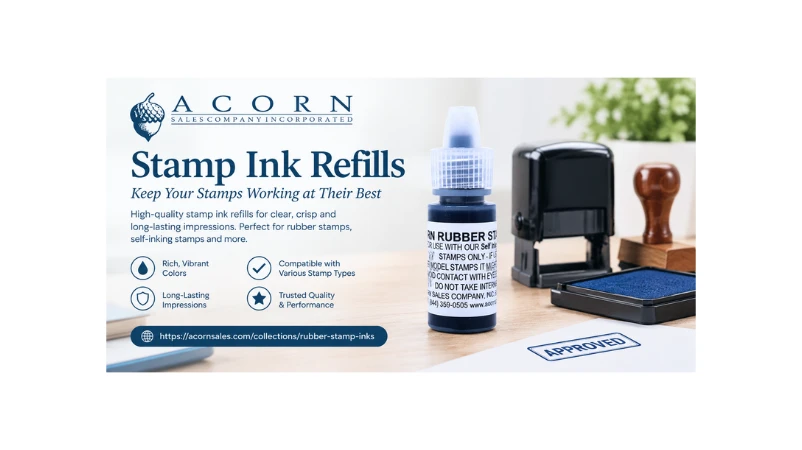
Keep your rubber stamps performing at their best with reliable stamp ink refills from Acorn Sales. Choose compatible ink for self-inking and rubber stamps to maintain crisp, vibrant, and long-lasting impressions for office, business, and crafting needs.
Choosing the right ink can make a noticeable difference in the quality, clarity, and durability of every stamped impression. Whether you use a traditional rubber stamp, self-inking stamp, or a specialty stamp, the right stamp ink helps produce cleaner and more consistent results.
Many people assume that any ink can be used with any stamp. That is not always the case. Different stamp designs, ink pads, and stamping surfaces can require different ink formulations. Using the wrong product can result in faint impressions, excessive ink, smudging, or damage to the stamp mechanism.
This guide explains the main types of rubber stamp ink, how they work with different stamps, and what to consider before choosing stamp ink refills for your office, business, classroom, craft room, or home.
Why Does the Right Stamp Ink Matter?
The purpose of stamping is usually to create a clear and repeatable impression. The ink needs to transfer evenly from the stamp surface to the material without becoming too wet or too dry.
The right ink for rubber stamps depends on several factors, including the type of stamp, the material being stamped, and how permanent you need the impression to be.
For everyday paper documents, a standard water-based ink may be suitable. For non-porous materials or applications where greater durability is required, a specialty or permanent stamp ink may be more appropriate.
Before buying an ink refill, check the manufacturer's recommendations for your specific stamp.
What Are the Main Types of Rubber Stamp Ink?
There are several types of ink commonly used with rubber stamps. Understanding their differences can help you select the appropriate option.
Water-Based Stamp Ink
Water-based stamp ink is commonly used for traditional rubber stamps and porous paper surfaces. It generally produces sharp impressions and is available in a wide variety of colors.
This type of ink is popular for office paperwork, invitations, scrapbooking, classroom activities, and general crafting. It is particularly useful when you want a straightforward stamping solution for paper.
Self-Inking Stamp Ink
Self-inking stamp ink is formulated for stamps that contain an internal ink pad. Instead of using a separate external pad every time, the stamp automatically re-inks itself between impressions.
When the internal pad begins producing lighter impressions, you may need compatible stamp ink refills. Always use an ink designed for your particular self-inking stamp, because incompatible ink can affect the pad and stamping mechanism.
Permanent Stamp Ink
Permanent stamp ink is designed for applications where the impression needs to resist fading, moisture, or handling more effectively than standard paper inks.
Depending on the formulation, permanent inks can be suitable for certain non-porous or specialty surfaces. However, compatibility is important. A permanent ink should not automatically be assumed to be suitable for every rubber stamp.
How Do You Choose the Right Stamp Ink Refill?
When purchasing stamp ink refills, start by identifying the type and brand of your stamp. A refill designed for one stamping system may not be appropriate for another.
Next, consider the surface you will stamp. Paper and cardboard generally work well with standard stamping inks, while glossy, coated, plastic, metal, or other non-porous surfaces may require a specialty formulation.
Color is another consideration. For business documents, black and blue are common choices, while creative projects may call for a wider range of colors.
It is also important to avoid over-inking. Adding too much ink can cause impressions to appear blurry or cause excess ink to transfer around the edges of the design.
What Happens If You Use the Wrong Ink?
Using unsuitable rubber stamp ink can create several problems.
The impression may look too light, too dark, uneven, or blurry. In some cases, the ink may take longer to dry and become easier to smudge.
For self-inking stamps, incompatible ink may affect the internal pad and the way the stamp transfers ink. Specialty stamps may also require particular ink formulations to maintain their intended performance.
If a stamp suddenly starts producing poor impressions, check the ink level, pad condition, stamp cleanliness, and ink compatibility before assuming the stamp itself needs replacement.
How Often Should You Refill a Rubber Stamp?
There is no single refill schedule because usage varies significantly. An office stamp used hundreds of times each week will need attention much sooner than a craft stamp used occasionally.
Watch the impression rather than relying only on a calendar. When impressions become noticeably lighter or uneven, it may be time to inspect the pad or add compatible ink.
With stamp ink refills, use the amount recommended for your specific stamp. A small amount at a time is generally preferable to adding excessive ink.
How Can You Get Cleaner Stamp Impressions?
Start with a clean, suitable stamping surface. Place the stamp straight down and apply consistent pressure. Avoid rocking the stamp from side to side, as this can create blurred edges.
For traditional stamps, make sure the rubber stamp ink pads are evenly inked. For self-inking models, confirm that the internal pad has sufficient compatible ink.
If the impression remains unclear, inspect the rubber surface for dust, dried ink, or debris. Cleaning the stamp according to the manufacturer's instructions can help restore detail.
For businesses and home users looking for dependable stamping supplies, Acorn Sales offers a range of rubber stamp inks and related supplies designed for different stamping applications. Choosing an ink that matches your stamp and intended surface can help maintain consistent impressions.
Conclusion
Choosing the right ink is an important part of getting clear, consistent rubber stamp impressions. Traditional rubber stamps, self-inking stamps, pre-inked stamps, and specialty stamps may require different ink solutions.
Before purchasing stamp ink refills, consider your stamp type, stamping surface, desired durability, and the manufacturer's recommendations. Using the correct stamp ink can help reduce smudging, improve impression quality, and extend the useful life of your stamping supplies.
Frequently Asked Questions (FAQ)
What type of ink is best for rubber stamps?
For general paper stamping, a compatible water-based rubber stamp ink is commonly used. The best choice depends on the stamp type and the surface being stamped.
Can you use any ink in a self-inking stamp?
No. Use ink specifically recommended for the self-inking stamp or its replacement pad. The wrong formulation may affect the pad and impression quality.
What is self-inking stamp ink?
Self-inking stamp ink is formulated for stamps with an internal ink pad. The stamp automatically transfers ink to its stamping surface between impressions.
Are water-based inks good for rubber stamps?
Yes. Water-based stamp ink is commonly used for traditional rubber stamps on porous surfaces such as paper and cardboard.
When should you replace an ink pad instead of refilling it?
If the pad is worn, damaged, contaminated, or no longer distributes ink evenly after proper refilling, replacement may be more appropriate than adding additional ink.
How do I know which stamp ink refill to buy?
Identify your stamp type, brand, and compatible pad or ink specification first. Then choose a refill designed for that particular system and intended stamping surface.


Comments
Login to Comment