What Makes a Good Wood and Metal Paint? Key Quality Factors to Check
02 Jul, 2026
1159 Views 0 Like(s)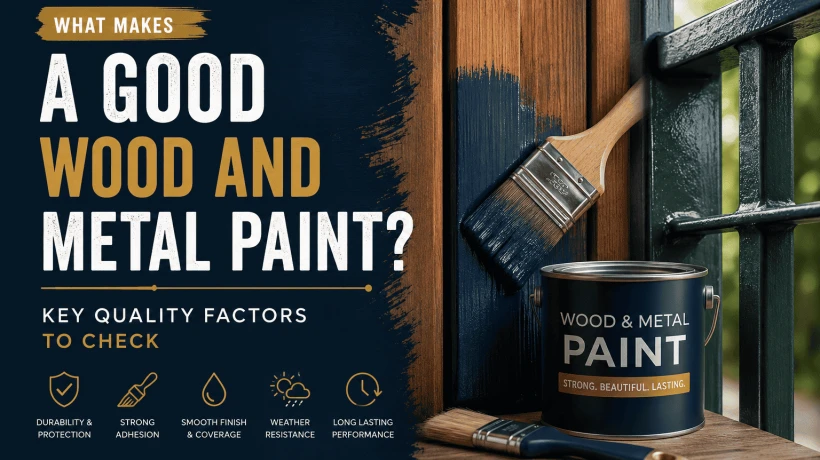
Learn what makes a good wood and metal paint. Check key quality factors like adhesion, finish, durability, moisture resistance, rust protection, coverage, and value before buying.
Choosing the right paint for wood and metal surfaces is important if you want long-lasting beauty, protection, and performance. Wood and metal are two very different materials. Wood can absorb moisture, expand, shrink, and develop cracks, while metal can rust, corrode, and lose its finish when exposed to weather or humidity.
This is why normal wall paint is not suitable for wooden doors, furniture, metal gates, railings, grills, or machinery surfaces. You need a paint that is specially made to bond properly, protect the surface, and maintain its finish over time.
So, what makes a good wood and metal paint? The best paint should offer strong adhesion, smooth finish, durability, weather resistance, moisture protection, colour retention, and protection against rust or surface damage.
Quick Answer: What Makes a Good Wood and Metal Paint?
A good wood and metal paint is one that provides strong surface adhesion, smooth coverage, long-lasting finish, moisture resistance, and protection against daily wear. For metal, anti-rust protection is important. For wood, the paint should help protect against moisture, stains, scratches, and surface damage. The right primer, surface preparation, and paint type also play a major role in final results.
Why Wood and Metal Need Special Paint
Wood and metal surfaces face different challenges compared to walls. They are often touched, exposed to dust, cleaned frequently, and sometimes placed outdoors. If the paint quality is poor, the surface may start peeling, fading, cracking, or rusting much earlier.
Wooden surfaces such as doors, cabinets, furniture, frames, and decorative panels need paint that can handle movement and moisture. Metal surfaces such as gates, grills, railings, shutters, pipes, and frames need paint that protects against rust and corrosion.
Using the right paint helps improve:
- Surface protection
- Finish quality
- Colour life
- Resistance to stains and scratches
- Weather durability
- Overall appearance
- Long-term value
1. Strong Adhesion
Adhesion means how well the paint sticks to the surface. This is one of the most important quality factors for both wood and metal paint.
If paint does not bond properly, it may peel, flake, or chip after a short time. Good paint should hold firmly to the surface after proper cleaning, sanding, and priming.
For wood, adhesion helps the paint settle evenly on the surface. For metal, adhesion helps prevent peeling and supports better rust protection.
2. Proper Surface Coverage
A good wood and metal paint should provide smooth and even coverage. Quality paint usually covers the surface well with fewer coats, while low-quality paint may require multiple coats and still look patchy.
Good coverage means:
- Better colour depth
- Smooth appearance
- Less patchiness
- Reduced material waste
- Better finishing result
Before buying paint, check whether it is designed for high coverage and whether it is suitable for the surface you want to paint.
3. Smooth Finish
Finish is one of the first things people notice. A good paint should give the surface a clean, smooth, and premium look.
Wood and metal paints are available in different finishes, such as:
- Gloss
- Semi-gloss
- Satin
- Matte
- Enamel finish
Gloss and semi-gloss finishes are commonly used on doors, gates, grills, railings, furniture, and metal frames because they are easier to clean and give a polished look. Satin finishes can give a softer and more elegant appearance.
The best finish depends on where the surface is located and how much use it gets.
4. Durability Against Daily Wear
Wood and metal surfaces often face more contact than walls. Doors are opened and closed daily. Furniture is touched and moved. Gates and railings face dust, sunlight, and rain. This is why durability matters.
A good paint should resist:
- Scratches
- Stains
- Chipping
- Peeling
- Fading
- Surface marks
- Cleaning damage
Durability is especially important for high-use areas such as main doors, kitchen cabinets, wardrobes, stair railings, balcony grills, and outdoor gates.
5. Moisture Resistance
Moisture is one of the biggest enemies of both wood and metal. Wood can swell, warp, or develop stains when exposed to moisture. Metal can rust and corrode if not properly protected.
A good wood and metal paint should create a protective layer that helps reduce moisture damage. This is especially important for:
- Bathroom doors
- Kitchen cabinets
- Outdoor wooden furniture
- Metal gates
- Balcony railings
- Window grills
- Outdoor frames
However, paint alone cannot fix serious dampness or leakage. The surface must be dry and properly prepared before painting.
6. Rust Protection for Metal
For metal surfaces, rust protection is a key quality factor. Metal paint should help protect the surface from oxidation, moisture, and corrosion.
Before painting metal, rust should be removed properly. The surface should be cleaned, sanded, and primed with a suitable metal primer. If rust is painted over without treatment, it can come back and damage the finish.
Good metal paint should be suitable for:
- Iron gates
- Steel railings
- Metal grills
- Pipes
- Shutters
- Frames
- Outdoor metal structures
7. Protection for Wood Grain and Surface
Wood is a natural material, so it needs paint or coating that protects its surface while improving its appearance. Some wood paints hide the grain completely, while varnishes and stains enhance the natural wood look.
A good wood coating should help protect against:
- Moisture
- Dust
- Stains
- Scratches
- Fading
- Surface dullness
For furniture and doors, the finish should also be easy to clean and maintain.
8. Weather Resistance
If you are painting outdoor wood or metal, weather resistance becomes very important. Exterior surfaces face sunlight, rain, humidity, dust, and temperature changes.
A good exterior wood or metal paint should resist:
- UV damage
- Rain exposure
- Heat
- Moisture
- Colour fading
- Cracking
- Peeling
For outdoor gates, grills, railings, and wooden doors, always choose paint that is suitable for exterior use.
9. Colour Retention
Good paint should maintain its colour for a long time. Poor-quality paint may start looking dull, faded, or uneven after exposure to sunlight, cleaning, or daily use.
Colour retention is especially important for:
- Main gates
- Front doors
- Decorative furniture
- Exterior railings
- Window grills
- Wooden cabinets
- Commercial spaces
Before buying paint, check whether the product is made for long-lasting colour and whether it is suitable for indoor or outdoor use.
10. Easy Application
A good paint should be easy to apply with a brush, roller, or spray method, depending on the project. It should spread evenly and dry properly without leaving heavy brush marks, bubbles, or uneven patches.
Easy application helps achieve:
- Better finish
- Faster work
- Less wastage
- Cleaner appearance
- More professional results
Still, application quality also depends on the painter’s skill, surface preparation, tools, and drying time between coats.
11. Quick Drying Time
Drying time is another factor to check before buying wood or metal paint. Quick-drying paint can be useful when you want to finish a project faster. However, fast drying should not compromise strength or finish quality.
Always follow the recommended drying time mentioned by the manufacturer. Applying the second coat too early can affect the final look and durability.
12. Washability and Cleanability
Wood and metal surfaces often need cleaning. Doors, cabinets, furniture, grills, and railings can collect dust, fingerprints, stains, and marks.
A good paint should allow gentle cleaning without losing shine, colour, or finish. Gloss and semi-gloss finishes are usually easier to clean compared to very flat finishes.
This is especially useful for homes with children, pets, busy kitchens, offices, shops, and commercial spaces.
13. Primer Compatibility
Primer is very important for both wood and metal painting. It helps the paint bond better and improves the final result.
For wood, primer helps seal the surface and create an even base. For metal, primer helps improve adhesion and adds protection against rust.
A good paint system should include the right combination of:
- Surface cleaning
- Sanding
- Primer
- Paint coat
- Final finish
Skipping primer may reduce paint life, especially on raw wood, new metal, rusty metal, or previously damaged surfaces.
14. Interior vs Exterior Use
Before buying paint, always check whether it is made for interior or exterior use.
Interior wood and metal paint is suitable for furniture, doors, cabinets, wardrobes, frames, and indoor decorative surfaces. Exterior paint is better for gates, grills, outdoor railings, exterior wooden doors, and surfaces exposed to weather.
Using interior paint outdoors can lead to early fading, peeling, or cracking.
15. Value for Money
The cheapest paint is not always the best choice. A low-cost paint may require extra coats, frequent repainting, and more maintenance. A better-quality paint may cost more at first but can save money in the long run.
When comparing value, check:
- Coverage
- Durability
- Finish quality
- Surface protection
- Required number of coats
- Maintenance needs
- Indoor or outdoor suitability
Good paint gives better results over time, not just a lower price at purchase.
Wood Paint vs Metal Paint: What Is the Difference?
Wood paint is designed to work with a porous and natural surface. It should protect against moisture, stains, and surface damage while giving a smooth finish.
Metal paint is designed to protect non-porous surfaces that can rust or corrode. It needs stronger adhesion and anti-rust protection.
The main difference is that wood needs protection from absorption and movement, while metal needs protection from rust and corrosion.
Best Uses for Wood Paint
Wood paint is commonly used for:
- Wooden doors
- Furniture
- Cabinets
- Wardrobes
- Wooden frames
- Decorative panels
- Wooden partitions
- Wooden shelves
For premium results, the surface should be sanded, cleaned, primed, and painted with the right finish.
Best Uses for Metal Paint
Metal paint is commonly used for:
- Metal gates
- Window grills
- Railings
- Iron doors
- Steel frames
- Shutters
- Pipes
- Outdoor metal structures
For long-lasting results, remove rust, clean the surface, use a metal primer, and apply paint evenly.
Common Mistakes to Avoid When Buying Wood and Metal Paint
Many people choose paint only by colour or price. This can lead to poor results. Avoid these common mistakes:
- Buying wall paint for wood or metal surfaces
- Skipping primer
- Painting over rust
- Painting on dusty or oily surfaces
- Choosing interior paint for outdoor surfaces
- Ignoring finish type
- Not checking drying time
- Applying too many thick coats
- Not allowing proper drying between coats
- Choosing cheap paint without checking quality
How to Check Paint Quality Before Buying
Before buying wood or metal paint, ask these questions:
- Is this paint suitable for wood, metal, or both?
- Is it for interior or exterior use?
- Does it need primer?
- What finish does it provide?
- Is it resistant to moisture?
- Does it protect metal from rust?
- Is it easy to clean?
- How many coats are required?
- What is the drying time?
- Does it offer good coverage?
- Will it maintain colour over time?
These questions can help you choose a better product and avoid costly repainting later.
Final Thoughts
A good wood and metal paint should do more than add colour. It should protect the surface, improve appearance, resist damage, and deliver long-lasting results. The right paint depends on the surface type, location, usage, finish preference, and exposure to moisture or weather.
For wood, look for smooth finish, moisture protection, colour retention, and surface durability. For metal, focus on rust protection, strong adhesion, weather resistance, and long-term performance.
Before buying, always check the paint type, primer requirement, finish, coverage, durability, and whether it is suitable for interior or exterior use. With the right product and proper application, your wooden and metal surfaces can stay beautiful, protected, and durable for years.
FAQs
What makes a good wood paint?
A good wood paint should offer strong adhesion, smooth finish, moisture resistance, colour retention, and protection against stains, scratches, and daily wear.
What makes a good metal paint?
A good metal paint should provide strong adhesion, rust protection, weather resistance, durability, and a smooth finish that can handle outdoor or high-use conditions.
Can I use wall paint on wood or metal?
No, wall paint is not recommended for wood or metal surfaces. Wood and metal require special paints or coatings that bond properly and protect the surface.
Do I need primer before painting wood and metal?
Yes, primer is usually recommended. It helps improve adhesion, coverage, finish, and durability. Metal surfaces especially need primer for better rust protection.
Which finish is best for wood and metal paint?
Gloss and semi-gloss finishes are commonly used for wood and metal because they are smooth, durable, and easier to clean. Satin finish is also a good option for a softer look.
Why does metal paint peel off?
Metal paint can peel because of poor surface preparation, rust, oil, dust, moisture, wrong primer, or using the wrong paint type.
How can I make wood and metal paint last longer?
Clean and sand the surface, remove rust, use the correct primer, choose the right paint, apply thin even coats, allow proper drying time, and avoid painting on damp or dirty surfaces.

Comments
Login to Comment