What Is the Difference Between Reflective & Traditional Ins
05 Nov, 2026
9 Views 0 Like(s)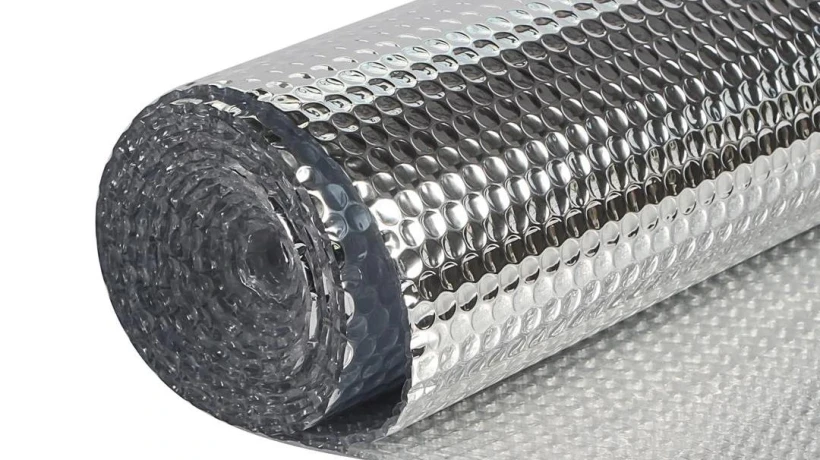
KANPACK Insulation provides reflective and thermal insulation solutions for roofing, commercial and industrial applications.
Choosing the right insulation material is important for maintaining comfortable indoor temperatures in homes, factories, warehouses and commercial buildings. With different insulation options available, reflective insulation and traditional insulation are two commonly discussed solutions.
Both materials help manage heat transfer, but they work in different ways. Reflective insulation uses reflective surfaces to reduce radiant heat transfer, while traditional insulation generally slows heat flow through materials with low thermal conductivity.
Aluminium Foil Insulation is a popular reflective insulation option used in roofing and building applications. KANPACK Insulation provides reflective insulation solutions designed for different industrial, commercial and construction requirements.
Understanding the difference between these insulation types can help property owners, builders and industrial users choose a suitable solution for their projects.
1. What Is Reflective Insulation?
Reflective insulation is designed to reduce radiant heat transfer using reflective surfaces, commonly made with aluminium foil. These surfaces reflect a large proportion of incoming radiant energy when installed correctly.
Aluminium Foil Insulation is commonly used beneath metal roofs, in industrial sheds, warehouses, commercial buildings and other structures exposed to strong sunlight.
Many reflective insulation products combine aluminium foil with air bubble layers, foam or other supporting materials. These layers can provide additional resistance to heat transfer depending on the product's construction and installation.
Key benefits of reflective insulation:
- Helps reduce radiant heat entering through roofs.
- Suitable for metal roofing and industrial sheds.
- Lightweight and easy to handle.
- Flexible for different building applications.
- Can help improve indoor thermal comfort.
- Available in different product constructions and thicknesses.
2. What Is Traditional Insulation?
Traditional insulation generally includes materials such as fibreglass, mineral wool, cellulose and expanded or extruded polystyrene.
These materials primarily work by slowing heat transfer through conduction and, depending on their structure and installation, convection. They trap air within their structure or enclosed spaces, reducing the movement of heat between indoor and outdoor environments.
Traditional insulation is widely used in residential buildings, commercial properties, industrial facilities, walls, ceilings and roofs.
Key benefits of traditional insulation:
- Helps reduce conductive heat transfer.
- Available in different thermal resistance ratings.
- Suitable for walls, ceilings and roof cavities.
- Can contribute to year-round temperature management.
- Some products also provide sound absorption.
- Performance can be measured using R-value.
3. Difference Between Reflective Insulation and Traditional Insulation
Although both insulation types help manage heat transfer, their working principles and applications are different.
|
Comparison |
Reflective Insulation |
Traditional Insulation |
|
Working principle |
Reflects radiant heat |
Slows heat transfer |
|
Common materials |
Aluminium foil and reflective layers |
Fibreglass, mineral wool, cellulose and foam |
|
Main heat transfer focus |
Radiation |
Mainly conduction and convection |
|
Weight |
Often lightweight |
Varies by material |
|
Installation |
Often installed beneath roofs or with suitable air spaces |
Installed in walls, ceilings and roof cavities |
|
Common applications |
Metal roofs, warehouses and industrial sheds |
Homes, offices, walls and roofs |
|
Performance factors |
Reflectivity, emissivity, air space and installation |
Thermal conductivity, thickness and R-value |
The right choice depends on the building design, climate, insulation requirements and installation conditions.
3. How Does Aluminium Foil Insulation Work?
Aluminium Foil Insulation works by using a reflective metallic surface to reduce radiant heat transfer. When sunlight heats a roof, the roof surface can radiate heat towards the building's interior.
A reflective foil surface facing a suitable air space helps reduce this radiant heat transfer. Some products also contain polyethylene air bubbles or foam layers that provide additional thermal resistance.
For effective performance, proper installation is essential. The reflective surface should face an appropriate air space, and the insulation system should be installed according to the manufacturer's recommendations.
ASHRAE Handbook+1
5. Applications of Reflective Insulation in Buildings
Reflective insulation is useful in different types of buildings where radiant heat from roofs is a concern.
1. Metal Roof Buildings
Metal roofs can become hot under direct sunlight. Reflective insulation beneath suitable metal roofing assemblies can help reduce radiant heat transfer into the building.
2. Industrial Factories
Factories often have large roof areas exposed to sunlight. Aluminium foil insulation can be considered as part of a suitable thermal management system.
3. Warehouses and Storage Facilities
Reflective insulation can help manage roof-related heat gain in warehouses and storage buildings.
4. Commercial Buildings
Offices, workshops and commercial spaces can use reflective insulation systems as part of their overall building thermal design.
5. Agricultural Buildings
Poultry farms and other agricultural structures may benefit from suitable roof insulation solutions to help manage indoor temperature conditions.
6. Can Reflective and Traditional Insulation Be Used Together?
Yes. In many building designs, combining reflective insulation with traditional insulation can provide a more comprehensive approach to managing heat transfer.
For example, traditional insulation can be installed within a roof or wall cavity to slow conductive heat flow, while an appropriately positioned reflective surface can help reduce radiant heat transfer.
This combination can be useful for buildings that experience high outdoor temperatures, especially industrial facilities and warehouses with metal roofing.
However, the complete insulation assembly should be designed with attention to air gaps, ventilation, moisture control and local building requirements.
ASHRAE Handbook+1
7. How to Choose the Right Insulation for Your Building
Before selecting an insulation material, consider the following factors:
- Building type: Identify whether the application is residential, commercial, industrial or agricultural.
- Roof material: Metal roofs, concrete roofs and other roofing systems may require different insulation approaches.
- Climate conditions: Consider local temperatures, humidity and seasonal heat transfer.
- Thermal performance: Compare tested thermal resistance values and system performance.
- Installation requirements: Check whether an air space is required and how the material should be installed.
- Budget and maintenance: Consider initial cost, expected service life and maintenance requirements.
Selecting the right insulation material depends on the complete building structure rather than just the material itself.
8. Why Consider KANPACK Insulation?
KANPACK Insulation offers insulation solutions for different roofing, building and industrial applications. Its product range includes aluminium foil insulation sheets, reflective insulation sheets and air bubble thermal insulation materials.
These solutions are designed for applications such as:
- Metal roofs and industrial sheds.
- Factories and warehouses.
- Commercial buildings.
- Roofing and building thermal insulation.
- Other industrial insulation requirements.
When selecting an insulation product, customers should consider the required thickness, construction, installation method and tested thermal performance for their specific application.
9. Frequently Asked Questions
Q1. What is the main difference between reflective insulation and traditional insulation?
Reflective insulation primarily reduces radiant heat transfer using reflective surfaces, while traditional insulation generally slows heat transfer through conduction and convection.
Q2. Is Aluminium Foil Insulation suitable for metal roofs?
Yes. Aluminium foil insulation can be used in suitable metal roof assemblies to help reduce radiant heat transfer, provided it is installed correctly.
Q3. Does reflective insulation require an air gap?
Yes. A reflective surface needs to face an appropriate air space to reduce radiant heat transfer effectively.
Q4. Can aluminium foil insulation replace traditional insulation?
Not in every application. Reflective and traditional insulation work differently, and the best choice depends on the building's thermal requirements. They can also be combined.
Q5. Where is aluminium foil insulation commonly used?
It is commonly considered for metal roofs, factories, warehouses, industrial sheds, commercial buildings and other structures requiring radiant heat management.
Conclusion
Reflective insulation and traditional insulation both play important roles in building thermal management. However, they work through different heat-transfer mechanisms. Traditional insulation helps slow conductive and convective heat flow, while reflective insulation helps reduce radiant heat transfer.
Aluminium Foil Insulation is a practical option for suitable roofing and industrial applications, particularly where radiant heat from metal roofs is a concern. Depending on the building design, reflective insulation can also be combined with traditional insulation for improved overall thermal performance.
KANPACK Insulation provides reflective and thermal insulation solutions for roofing, commercial and industrial applications.
Explore more: Aluminium Foil Insulation Sheet for Roof and Building – KANPACK Insulation


Comments
Login to Comment