What Is FUT Hair Transplant in Dubai and How Does It Work?
28 Sep, 2026
131 Views 0 Like(s)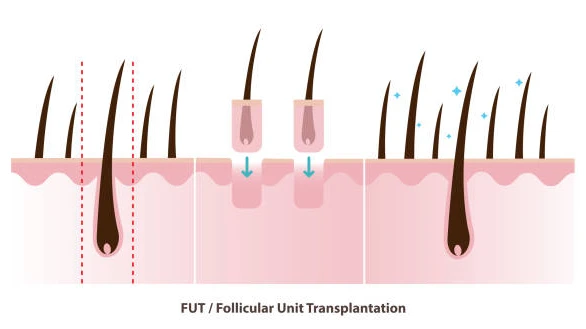
Learn how FUT Hair Transplant in Dubai works, from strip harvesting to graft placement, with expert insights from Tajmeels Clinic on suitability and recovery.
Hair loss can gradually affect hairline definition, scalp coverage, and confidence. FUT Hair Transplant in Dubai is a surgical hair restoration procedure that involves removing a thin strip of scalp from the donor area and separating it into individual follicular units for transplantation. It can restore hair in thinning or bald areas by relocating healthy follicles that continue to grow in their new position.
Follicular unit transplantation has been used for decades to address different patterns of hair loss. Its suitability depends on donor hair quality, scalp flexibility, the extent of thinning, and the patient's long-term restoration goals.
How FUT Hair Transplant in Dubai Works
FUT stands for follicular unit transplantation. The procedure uses naturally occurring groups of hair follicles, known as follicular units, which typically contain one to four hairs.
These units are harvested from a donor area, usually at the back of the scalp, where hair is often more resistant to androgen-related hair loss. The surgeon then prepares the grafts and places them into carefully planned recipient sites.
Understanding the Strip Harvesting Technique
The procedure begins with local anesthesia to numb the donor area. The surgeon removes a narrow strip of scalp tissue and closes the resulting incision with sutures or another appropriate closure technique.
The tissue is then dissected under magnification to separate individual follicular units. Careful handling helps protect the follicles and preserve graft quality.
How Hair Grafts Are Implanted
Once the grafts are prepared, the surgeon creates small recipient sites in the areas affected by hair loss. Their angle, direction, and spacing are planned to complement the patient's existing hair growth.
Single-hair grafts are often used along the front hairline to create a softer transition. Larger follicular units may be placed behind the hairline to support coverage and visual density.
Who Is a Suitable Candidate for FUT Hair Transplant in Dubai?
Not everyone experiencing hair loss is an appropriate candidate for FUT. A detailed assessment helps determine whether the donor area can provide enough healthy follicles without creating excessive tension during wound closure.
Patients who may benefit include:
-
Adults with stable, pattern-related hair loss and sufficient donor hair.
-
Individuals with extensive thinning who need a substantial number of grafts.
-
Patients with good scalp flexibility and adequate donor density.
-
People who prefer to keep their hair long enough to conceal a linear donor scar.
-
Individuals seeking a surgical approach to restore hairline or mid-scalp coverage.
Patients with active scalp inflammation, certain medical conditions, limited donor supply, or poor scalp elasticity may require additional evaluation before surgery.
How Dubai's Climate Can Affect FUT Recovery
Dubai's climate creates practical considerations for patients recovering from hair restoration surgery. Intense sunlight, summer humidity, and frequent transitions between outdoor heat and air-conditioned spaces can affect scalp comfort during healing.
Protecting the Healing Scalp From Sun Exposure
The donor incision and recipient sites need time to heal. Direct sunlight may irritate healing skin, so patients should follow their surgeon's instructions regarding sun exposure and protective headwear.
Outdoor activities may need to be limited during the early recovery period. The timing of a return to swimming, beach visits, and strenuous outdoor exercise should be guided by the treating surgeon.
Managing Sweat and Scalp Irritation
High humidity and exercise can increase sweating around the scalp. Excessive sweating, friction, or unapproved hair products may irritate healing areas.
Patients should follow a gentle washing routine and avoid scratching or rubbing the donor incision. Air conditioning can make the scalp feel dry, but moisturizers and topical products should only be used when approved by the medical team.
FUT Compared With Other Hair Restoration Techniques
FUT is one of several methods used to transplant hair follicles. The main difference lies in how the donor follicles are collected and how the donor area heals.
|
Feature |
FUT |
FUE |
|---|---|---|
|
Harvesting method |
A strip of scalp tissue is removed |
Individual follicular units are extracted |
|
Donor scarring |
Usually a linear scar |
Multiple small scars |
|
Donor area closure |
Requires surgical closure |
Usually heals without a linear incision |
|
Hair length considerations |
Longer hair can help conceal the scar |
May offer more flexibility for shorter hairstyles |
|
Donor area management |
Strip-based harvesting |
Distributed follicle extraction |
|
Recovery considerations |
Includes healing of the donor incision |
Includes healing of multiple extraction sites |
Neither method is suitable for every patient. The choice depends on donor characteristics, desired coverage, hairstyle preferences, scarring considerations, and the surgeon's assessment.
What Determines Natural-Looking FUT Results?
A natural-looking result depends on more than the number of transplanted grafts. Hairline design, follicle direction, graft placement, and the patient's existing hair characteristics all contribute to the final appearance.
Hairline Design and Facial Proportions
The surgeon considers forehead height, facial proportions, existing hairline shape, and the patient's likely future hair loss. A hairline that is too low or too dense may use donor follicles that could be needed later.
A carefully planned design balances current cosmetic goals with long-term donor hair preservation.
Graft Distribution and Coverage
The number of grafts required depends on the size of the recipient area, existing hair density, hair thickness, and the desired degree of coverage. Strategic placement can improve the appearance of density without requiring uniform graft distribution across the scalp.
For a closer look at the procedure, candidacy, and treatment planning, explore FUT hair transplant in Dubai at Tajmeels Clinic .
Common Patient Questions About FUT Hair Transplant
Does FUT Create a Permanent Scar?
FUT generally leaves a linear scar at the donor site. Its width and visibility depend on healing, scalp tension, surgical technique, and individual scar formation.
Longer hair may conceal the scar, but patients who prefer very short hairstyles should discuss this consideration before surgery.
Will Transplanted Hair Fall Out After Surgery?
Some transplanted hair shafts typically shed during the first few weeks after surgery. This is a common part of the hair growth cycle and does not necessarily mean the follicles have been lost.
New growth often becomes noticeable over the following months, with further improvement developing gradually.
Can FUT Restore Hair Permanently?
Transplanted follicles can produce hair for many years when they survive and establish themselves successfully. However, FUT does not stop untreated native hair from thinning, so long-term planning remains important.
FUT Hair Transplant Recovery and Timeline
Recovery varies from person to person, but the following stages provide a general overview.
1. Consultation and planning: The surgeon evaluates hair loss, donor density, scalp flexibility, medical history, and restoration goals.
2. Procedure day: The donor strip is removed, follicular units are prepared, and grafts are implanted into the recipient area.
3. First 7–14 days: The donor incision and recipient sites begin healing. Patients follow wound-care instructions and attend scheduled follow-up appointments.
4. Weeks 2–8: Some transplanted hair shafts may shed as the follicles enter a resting phase.
5. Months 3–6: Early new growth may appear, although hair can initially look fine or uneven.
6. Months 6–12: Hair coverage and thickness generally become more noticeable as growth progresses.
7. Months 12–18: Further maturation may occur, depending on individual growth patterns and the areas treated.
Patients traveling to Dubai for surgery should plan around postoperative reviews and recovery instructions before arranging international travel.
Long-Term Hair Restoration With Tajmeels Clinic
FUT can offer a lasting approach to hair restoration for carefully selected patients, particularly when donor hair is sufficient and the surgical plan accounts for future hair loss. A realistic treatment plan considers graft availability, scar management, hairline design, and the patient's preferred hairstyle.
A professional consultation can help determine whether FUT is appropriate or whether another approach may better suit the patient's needs.
To learn more about hair restoration options and personalized treatment planning, visit Tajmeels Clinic.
Disclaimer: ThynkTales is a public blogging platform where content is contributed by individual users. While we encourage thoughtful and accurate sharing, we do not independently verify the information provided. Readers are advised to use their discretion and verify any information before relying on it.
Comments
Login to Comment