What Are GDPR Regulations? A Practical Guide to GDPR Compliance Automation for Modern Businesses
31 Jul, 2026
790 Views 0 Like(s)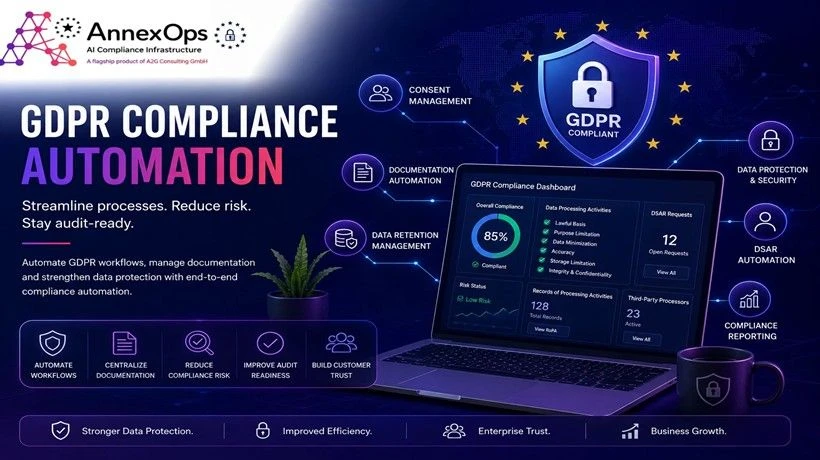
Learn what are GDPR regulations, why they matter for modern businesses, and how GDPR compliance automation helps simplify compliance, reduce risk, and improve audit readiness.
In today’s digital economy, data powers almost every business decision. Companies collect customer information, employee records, website analytics, and data from AI-driven applications to improve services and drive growth. However, handling personal data also comes with significant responsibilities.
This is where many organizations ask an important question: what are GDPR regulations, and how can they maintain compliance without slowing down business operations?
The General Data Protection Regulation (GDPR) has transformed how organizations collect, process, store, and protect personal information. Instead of treating privacy as a one-time legal requirement, businesses now need ongoing governance, documentation, and monitoring.
Fortunately, GDPR compliance automation is helping organizations simplify these responsibilities while improving operational efficiency.
This guide explains GDPR regulations, why they matter, and how automation makes compliance more manageable.
What Are GDPR Regulations?
The General Data Protection Regulation (GDPR) is a European Union privacy law designed to protect the personal data of individuals and give them greater control over how their information is used.
Although GDPR is an EU regulation, it also applies to organizations outside Europe if they offer products or services to EU residents or monitor their behavior online.
The regulation establishes clear rules for how businesses should:
-
Collect personal information
-
Process data lawfully
-
Store information securely
-
Share data responsibly
-
Respect individual privacy rights
-
Demonstrate accountability through documentation
Rather than focusing only on penalties, GDPR encourages organizations to build trust through responsible data governance.
Why GDPR Matters for Every Business
Many companies assume GDPR only affects large multinational corporations.
In reality, organizations of all sizes may have compliance responsibilities if they process the personal data of European residents.
Strong GDPR practices can help businesses:
-
Build customer confidence
-
Reduce operational risks
-
Improve internal governance
-
Strengthen enterprise relationships
-
Prepare for audits and customer due diligence
-
Support long-term regulatory readiness
Privacy has become an important business differentiator, especially as customers increasingly expect transparency in how their data is handled.
Core Principles Behind GDPR
Understanding the principles of GDPR makes compliance much easier.
Some of the key principles include:
Lawfulness, Fairness, and Transparency
Organizations must explain clearly why personal data is collected and how it will be used.
Purpose Limitation
Personal information should only be collected for legitimate and clearly defined purposes.
Data Minimization
Businesses should collect only the information necessary for their intended purpose.
Accuracy
Personal information should remain accurate and be updated whenever necessary.
Storage Limitation
Data should not be retained longer than required.
Integrity and Confidentiality
Organizations must protect information using appropriate technical and organizational safeguards.
Accountability
Perhaps the most important principle is accountability. Businesses should be able to demonstrate compliance through documented policies, processes, and evidence.
Common GDPR Challenges
While GDPR principles appear straightforward, implementing them across an organization is often more difficult.
Businesses commonly struggle with:
-
Managing data inventories
-
Maintaining processing records
-
Tracking consent
-
Coordinating multiple departments
-
Managing third-party vendors
-
Preparing audit documentation
-
Monitoring ongoing compliance
As organizations grow, manual compliance processes quickly become difficult to manage.
The Growing Need for GDPR Compliance Automation
This is why many organizations are adopting GDPR compliance automation.
Automation does not replace compliance teams. Instead, it helps reduce repetitive administrative work while improving consistency.
Rather than maintaining scattered spreadsheets and disconnected documents, automated compliance workflows help organizations centralize their governance activities.
Automation can support areas such as:
-
Documentation management
-
Compliance workflows
-
Governance tracking
-
Evidence collection
-
Audit preparation
-
Continuous monitoring
This allows compliance professionals to focus more on risk management and strategic decision-making instead of manual paperwork.
Building a Practical GDPR Compliance Process
A successful compliance program should become part of daily business operations rather than an annual project.
Organizations typically begin by:
-
Identifying personal data across systems
-
Mapping data processing activities
-
Creating privacy documentation
-
Reviewing security controls
-
Managing third-party relationships
-
Maintaining evidence of compliance
-
Regularly reviewing governance processes
Instead of reacting to regulatory requests, businesses can remain prepared through continuous oversight.
Why Continuous Monitoring Matters
Business environments change constantly.
New software platforms, cloud services, AI applications, vendors, and marketing campaigns all introduce new privacy considerations.
Without regular monitoring, organizations may unknowingly create compliance gaps.
Continuous reviews help businesses:
-
Detect governance issues early
-
Update documentation efficiently
-
Improve operational transparency
-
Maintain audit readiness
-
Reduce compliance risks over time
A proactive approach is significantly more effective than addressing issues only during regulatory reviews.
How AnnexOps Supports GDPR Compliance Automation
Managing GDPR manually becomes increasingly difficult as organizations scale.
AnnexOps helps organizations operationalize compliance by providing infrastructure that supports governance rather than isolated documentation. The platform enables businesses to automate compliance workflows, organize documentation, maintain evidence, and improve audit readiness within a centralized environment. It is designed to help teams build compliance into everyday operations instead of treating it as a last-minute activity.
By integrating compliance processes into operational workflows, organizations can spend less time managing paperwork and more time strengthening privacy and governance.
GDPR and the Future of AI Governance
As businesses adopt artificial intelligence, privacy compliance becomes even more important.
Organizations increasingly need governance systems that address both GDPR requirements and emerging AI regulations.
Modern compliance platforms help businesses manage these overlapping responsibilities through centralized documentation, governance tracking, evidence management, and continuous monitoring. AnnexOps is designed to support organizations with GDPR and EU AI Act compliance through developer-first compliance infrastructure, automated documentation, evidence management, risk classification, and continuous compliance workflows.
Final Thoughts
Understanding what are GDPR regulations is only the first step. Long-term success comes from embedding privacy into everyday business operations.
As regulations continue to evolve, organizations that invest in structured governance and GDPR compliance automation will be better positioned to reduce risk, improve efficiency, and build customer trust.
Rather than treating compliance as a one-time project, businesses should focus on creating repeatable, scalable processes that support continuous improvement. With the right governance strategy and modern compliance infrastructure, GDPR can become more than a legal obligation, it can become a competitive advantage.
Contact Now:
Call us: +49 1522 2383606
Email at: marketing@annexops.com


Comments
Login to Comment