The Rise of IoT Connected Fuel Ecosystems for Intelligent Fleet Operations
20 Jul, 2026
940 Views 0 Like(s)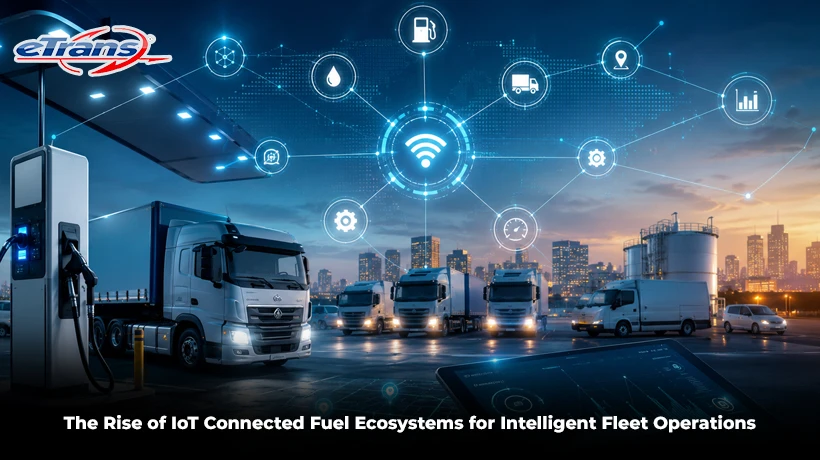
Discover how IoT-connected fuel level sensor tech powers real-time tracking, theft prevention, and smarter fleet operations across India.
India runs on diesel, and diesel runs on trust. Every fleet owner has felt that gut punch of checking a tank and realizing the numbers just don't add up. Fuel makes up a massive chunk of trucking costs, and a large share of fleet fuel gets lost to theft, hitting profits directly. That's not a rounding error. That's rent, salaries, and expansion plans disappearing through a siphon hose in the dead of night.
However, something genuinely interesting is happening in India's fuel management space. Sensors, cloud platforms, and telematics networks are merging into a single nervous system for fleet operations. This is an example of a connected fleet ecosystem in action, where a dashboard hundreds of kilometres away is continuously communicating with a smart fuel level sensor.
Fuel monitoring is no longer about one device measuring one tank. It's about IoT fuel monitoring architecture where every drop of diesel gets tracked, timestamped, and turned into a decision. That shift changes everything about how fleets operate, budget, and grow.
As such, the good news is that the technology to stop this bleeding already into existence, and it's getting smarter every quarter. A fuel level sensor today isn't a dumb float bobbing in a tank. It's a connected node in a living, breathing digital ecosystem. Keep reading, because by the end of this article, you'll understand exactly how IoT is turning fuel monitoring into a strategic weapon for fleet operators, not just a compliance checkbox.
The Evolution from Conventional Fuel Monitoring to Connected IoT Ecosystems
Old-school fuel tracking meant a supervisor with a dipstick and a notebook. Drivers self-reported mileage. Managers trusted paper logs that arrived days late, if they arrived at all. That system worked fine when fleets had five trucks. It falls apart completely at scale.
Wireless fuel monitoring replaced the dipstick with continuous digital visibility. A sensor now reports fuel level every few seconds, not once a week. Managers see live data on a phone screen instead of waiting for a driver to return to base. This single change transformed fuel accountability across India's logistics, mining, and construction sectors.
Why Conventional Fuel Monitoring Can No Longer Meet Modern Fleet Requirements?
Manual fuel recording invites two problems: human error and human dishonesty. Neither is meant as an insult to drivers, most of whom are honest and overworked. But delayed inspections mean theft goes unnoticed for days. Isolated devices with no connectivity can't alert anyone to a problem in real time.
Fleet owners running dozens or hundreds of vehicles simply cannot rely on spreadsheets anymore. Real-time fuel tracking through connected sensors closes this gap immediately. An alert fires the second fuel drops abnormally, whether that vehicle sits in a depot or crosses a state highway at midnight.
Why is India rapidly adopting smart IoT integrated fuel level sensor technologies? Because the math is brutal without them. Driver behaviour alone can add ten to fifteen percent extra to fuel costs through avoidable waste, and that's before theft even enters the picture.
Understanding the Core Technologies Behind IoT Connected Fuel Ecosystems
Building a genuine enterprise fuel intelligence platform takes more than a single gadget. It requires several technologies working in sync. High-precision sensors capture the raw data. GSM and cellular modules transmit that data over long distances. GPS pins the exact location of every reading. Cloud servers store and process the incoming stream.
Dashboards translate all of it into something a fleet manager can actually read on a coffee break. This layered structure is what makes a true industrial IoT sensor deployment different from a standalone gadget. Each component depends on the others, and the whole system only works when every layer stays connected around the clock.
The Growing Importance of High-Precision Non-Contact Fuel Level Sensors
Non-contact fuel sensing has become the gold standard for a simple reason. Over time, the moving components of traditional float sensors deteriorate, corrode, or become stuck in sediment. Capacitive and ultrasonic sensors avoid this entirely by measuring fuel levels without touching the liquid or relying on mechanical arms. Accuracy matters enormously here.
Modern capacitive fuel level sensors now achieve accuracy above 99 percent, which is a dramatic leap from the guesswork of older float-based systems. That precision holds up even in rough conditions, on unpaved mining roads, in high-vibration construction equipment, or under scorching summer heat across Indian highways. Durability paired with accuracy is exactly what keeps a GPS-integrated fuel sensor reliable for years without constant recalibration.
How IoT-Connected Fuel Ecosystems Improve Fleet Intelligence and Operational Efficiency
A connected sensor network doesn't just watch fuel. It reshapes how an entire fleet runs. Fleet fuel optimization becomes possible when managers can compare consumption across hundreds of vehicles side by side, spotting which routes, drivers, or vehicle models burn more diesel than they should.
Telematics fuel management platforms combine this fuel data with GPS trails, idling time, and engine diagnostics. A truck that idles for three extra hours a day gets flagged automatically. A route that consistently costs more fuel than a shorter alternative gets redesigned. None of this requires manual auditing anymore. The system surfaces the problem before a manager even has to ask.
Commercial vehicle volumes back up why this matters at scale. India's logistics sector contributes roughly 14 percent of GDP, and commercial vehicle sales crossed 10.3 lakh units in 2025. That's a lot of tanks to watch, and manual methods simply cannot keep pace with fleets this large.
Using AI and Predictive Analytics to Transform Fuel Management
Predictive fuel analytics is where things get genuinely exciting. Artificial intelligence studies historical consumption patterns, driver habits, weather conditions, and vehicle health to forecast fuel needs before a shortage even happens. Instead of reacting to an empty tank on a highway, a fleet manager gets a notification a day in advance.
AI also catches anomalies that a human eye might miss buried in spreadsheets. A sudden dip that doesn't match any refuel event or trip log gets escalated instantly. This kind of intelligent fuel management turns raw sensor data into genuine foresight, not just a historical record.
How Do IoT-Connected Fuel Level Sensors Improve Fuel Efficiency and Prevent Fuel Theft?
This question sits at the heart of why fleet owners invest in this technology at all. Connected sensors monitor every refuel and every drainage event continuously, and they compare each reading against expected consumption for that vehicle and route.
Fuel theft detection works through instant alerts tied to GPS location. If fuel drops sharply while a vehicle sits parked overnight, the system flags it immediately with a timestamp and exact coordinates. Fleet managers no longer investigate theft after the fact. They get the chance to respond while it's still happening. Roughly 40 percent of fleet fuel can be lost to theft without this kind of monitoring in place, which shows just how much is riding on catching these events early.
Cloud-based fuel monitoring also generates automated reports that remove the need for manual reconciliation. Finance teams get clean, verifiable numbers instead of driver-submitted receipts that are difficult to audit.
Why Is India Rapidly Adopting Smart IoT Integrated Fuel Level Sensor Technologies?
India's commercial transportation, mining, and construction sectors are digitizing at a rapid clip, and the numbers reflect that shift clearly. India's telematics and fleet safety systems market was valued at roughly 1.40 billion dollars in 2025 and is projected to reach 4.35 billion dollars by 2030, growing at a striking pace year over year. The broader India automotive sensors market is expected to reach 4.8 billion dollars by 2034, with fuel and telematics sensors forming a core part of that growth.
Regulatory pressure plays a role too. Government mandates around vehicle tracking and safety compliance have pushed fleet operators toward connected hardware they might not have adopted voluntarily. Once that hardware sits on the vehicle, adding fuel intelligence on top becomes a natural next step rather than a separate investment.
Sustainability goals matter as well. Reducing unnecessary idling and optimizing routes doesn't just save money. It cuts emissions, and Indian corporates increasingly report these metrics to stakeholders and regulators alike.
How eTrans Solutions Is Advancing Intelligent IoT Fuel Monitoring Ecosystems?
eTrans Solutions has built its reputation around solving exactly this problem for Indian fleets. Its fuel level sensor devices come in both wired and wireless configurations, giving operators flexibility depending on vehicle type and installation constraints.
The platform centers around remote fuel tank monitoring through a unified dashboard that displays every vehicle's fuel status at a glance. Real-time alerts fire the moment something looks abnormal, whether that's a sudden drop, an unscheduled refuel, or inconsistent readings that warrant a maintenance check. Theft and pilferage detection sits at the core of the system, built specifically around the patterns Indian fleet operators actually encounter on the road.
GPS integration ties every fuel event to a specific location, and the platform supports both moving vehicles and stationary assets like generators or storage tanks. This flexibility means organizations can build one connected fleet ecosystem that covers their entire operation rather than juggling separate tools for different asset types.
The Future of IoT Connected Fuel Ecosystems for Intelligent Fleet Operations
Where does this all head next? Edge AI will push more processing directly onto the sensor itself, cutting latency and reducing dependency on constant cloud connectivity in remote areas with patchy network coverage. Digital twins of entire fleets will let managers simulate fuel scenarios before committing real budget to a route change or vehicle purchase.
Autonomous fuel monitoring will likely reduce human intervention even further, with systems that self-diagnose calibration drift and schedule their own maintenance. Cloud-native fleet platforms will continue absorbing more data streams, blending fuel intelligence with driver safety scores, maintenance schedules, and route planning into one unified enterprise view.
Investing in connected fuel technology today isn't just about stopping theft. It's about building the operational backbone that future fleet growth will depend on. eTrans Solutions continues to position itself at the center of that shift, delivering fuel level sensor devices and integrated telematics built specifically for the realities of Indian fleet operations.
Conclusion
Fuel management has quietly transformed from a manual chore into a strategic advantage. Fleets that adopt smart fuel level sensor technology today aren't just plugging a leak. They're building visibility, accountability, and predictive power into every vehicle they own.
In an industry where margins are thin and fuel costs keep climbing, that kind of intelligence isn't optional anymore. It's the difference between a fleet that reacts to problems and one that sees them coming.
Frequently Asked Questions
1. What is a fuel-level sensor and how does it work?
A fuel level sensor measures diesel or petrol levels inside a tank continuously, using capacitive or ultrasonic technology, then transmits that data to a connected dashboard for real-time visibility and alerts.
2. How does IoT fuel monitoring help prevent fuel theft?
Every fuel drop is tracked by IoT fuel monitoring against anticipated consumption patterns. When fuel unexpectedly disappears, instant location-tagged alerts are triggered, enabling managers to take immediate action rather than waiting to discover losses.
3. Can fuel level sensors work on stationary assets like generators?
Yes, modern sensors support both moving vehicles and stationary equipment, including generators, storage tanks, and construction machinery, giving organizations complete fuel visibility across their entire asset base.
4. Are non-contact fuel sensors more accurate than traditional float sensors?
Non-contact sensors generally outperform float sensors significantly, since they avoid mechanical wear and deliver consistent readings even under vibration, heat, or rough terrain common in Indian fleet operations.
5. Why should fleet owners invest in connected fuel ecosystems now?
Rising fuel costs and theft risks make manual tracking unsustainable at scale, and connected ecosystems deliver measurable savings through predictive analytics, automated reporting, and real-time operational visibility.



Comments
Login to Comment