The Rise of "Emotional AI": Why Your Smart Home Will Soon Understand Your Mood
06 Dec, 2025
9911 Views 4 Like(s)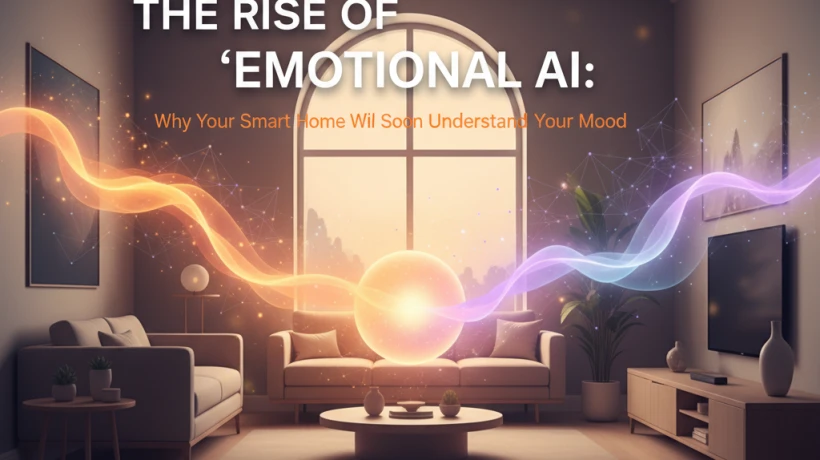
Emotional AI is transforming smart homes in 2026. Instead of just following commands, devices will read your mood through voice, facial cues, wearables, and behaviour. Your home will adjust lighting, music, temperature, and routines to match how you feel, offering support during stress or fatigue. It boosts wellbeing, productivity, and comfort — though privacy must be handled carefully. The future home won’t just be smart, it’ll be emotionally aware.
The Rise of Emotional AI: Why Your Smart Home Will Soon Understand Your Mood


Smart homes used to focus on convenience — lights that switch on automatically, thermostats that learn your schedule, and speakers that play music on command. But 2026 is bringing a new wave of intelligence: Emotional AI.
Instead of responding only to instructions, your smart home will soon understand how you feel, adapt to your emotions, and create an environment that matches your mood.
It sounds futuristic, but emotional AI is already becoming part of everyday products. From voice assistants that sense frustration to TVs that adjust lighting based on your emotional state, emotional intelligence is quickly becoming the next frontier of smart technology.
Let’s explore how it works, why it’s growing, and what it means for your daily life.
What Is Emotional AI?
Emotional AI is a technology that can read human emotions through inputs like:
-
Voice tone
-
Facial expressions
-
Heart rate
-
Micro-expressions
-
Body movement
-
Word choice and message patterns
The AI uses these signals to detect whether you’re happy, stressed, tired, bored, excited, or overwhelmed. Instead of responding to what you say, it understands how you feel.
This is the shift that will redefine the smart home experience.
Why Emotional AI Is Growing So Fast
1. People Want Technology That Feels More Human
Today’s digital tools are powerful, but they often feel cold and robotic. Emotional AI bridges that gap by offering responses that feel warmer, more thoughtful, and more empathetic.
2. Wellness Is Becoming a Priority
Stress, burnout, and mental fatigue are common. Emotional AI helps by adjusting your environment to reduce stress before it builds up.
3. Smart Homes Are Already Data-Rich
Your home devices already understand routines. Adding emotional understanding makes them even more personalised.
4. Advances in Sensors and AI Models
Better microphones, smart cameras, and neural networks make emotion detection accurate and seamless.
How Your Smart Home Will Detect Your Mood
Your smart home will use several types of data to understand your emotional state.
1. Voice-Based Emotion Detection
Your tone, pace, and pitch reveal stress or calmness.
If your voice sounds tense, the AI may lower the lights or play calming music.
2. Facial Expression Analysis
Cameras in smart mirrors, TVs, or mobile devices can read micro-expressions almost instantly.
3. Wearable Integration
Smartwatches track:
-
Heart rate variability
-
Stress patterns
-
Sleep quality
-
Physical tension
This data helps your home predict your mood before you even realise it.
4. Behaviour Patterns
Your habits reveal emotions too.
For example:
-
If you haven’t played music all day, you might be drained.
-
If you turn lights on quickly, you might be anxious.
-
If you move slowly, your home may recognise fatigue.
What Emotional AI Will Do in Your Home
Here’s how your home will support you emotionally without you saying a word.
1. Adaptive Lighting That Matches Your Mood
If you’re stressed, your lights may shift to warm tones.
If you’re tired, they get dimmer.
If you’re excited or energetic, they brighten automatically.
2. Music That Helps You Reset
Emotional AI will choose music based on:
-
Your current mood
-
Your past responses
-
The time of day
-
Your activity
Imagine coming home frustrated, and your AI instantly plays something calming without being asked.
3. Temperature and Air Quality Adjustments
Feeling anxious? Your home may cool slightly.
Feeling sleepy? It may warm up to increase comfort.
Your environment becomes a wellness tool, not just a convenience.
4. Daily Mood Reports and Insights
Your smart home will gently show you patterns:
-
When you feel happiest
-
When your stress peaks
-
Which routines affect your mood
-
How sleep impacts your emotions
It becomes a personal emotional coach.
5. Proactive Support During Emotional Lows
If you seem overwhelmed, your AI can:
-
Suggest breathing exercises
-
Activate calming scenes
-
Remind you to hydrate or take a walk
-
Help you schedule breaks
It’s like having a soft, supportive companion who notices your emotional needs.
Benefits of Emotional AI in Daily Life
1. Better Mental Wellbeing
Your environment adapts to reduce stress, improve sleep, and boost overall mood.
2. Stronger Productivity
When your home knows you’re distracted or drained, it can adjust settings to improve focus.
3. More Meaningful Digital Interactions
Voice assistants sound more empathetic and less robotic, making daily interactions feel natural.
4. Early Emotional Detection
Your home may sense burnout before you do and guide you toward healthier routines.
The Privacy Question: Are Emotional AI Homes Safe?
Emotional AI brings big advantages, but it also raises fair concerns.
1. Sensitive data collection
Emotional signals are deeply personal.
Users will expect transparent data policies and strong encryption.
2. Local processing vs. cloud
Consumers prefer emotional data processed locally on devices rather than servers.
3. User control
The future of emotional AI depends on user-controlled settings where people choose what data is allowed.
If implemented responsibly, emotional AI can feel supportive rather than intrusive.
What Emotional AI Means for the Future of Smart Living
In 2026 and beyond, your home won’t just react to commands — it will participate in your wellbeing. It becomes a space that understands you, adapts to you, and supports how you want to feel.
We’re moving toward homes that can:
-
Build personalised wellness routines
-
Detect burnout early
-
Strengthen emotional balance
-
Reduce digital overload
-
Create healthier living environments
This shift is subtle but powerful. Emotional AI is turning technology into something more human.
Final Thoughts
The rise of emotional AI marks a new era in smart living. Instead of focusing only on convenience, our future homes will care about how we feel. They will respond with warmth, awareness, and emotional intelligence — turning ordinary spaces into environments that heal, support, and uplift.
Loneliness, stress, and burnout won’t disappear overnight, but emotional AI can make everyday life feel lighter and more connected. The tools are becoming smarter, and soon your home will understand your mood better than you expect — and sometimes better than you do.

Comments
Login to Comment