The Packaging Materials That Actually Protect Your Products
30 Jul, 2026
815 Views 0 Like(s)
There is a moment every small business owner dreads wherein the seller gets a message from a customer that the package arrived, but the contents did not survive the journey. Maybe a corner got crushed or maybe the item shifted around so much in transit that something cracked.
There is a moment every small business owner dreads wherein the seller gets a message from a customer that the package arrived, but the contents did not survive the journey. Maybe a corner got crushed or maybe the item shifted around so much in transit that something cracked. In some cases, the entire package may appear so worn and damaged by the time it arrives at the doorstep that the unboxing experience feels disappointing even before the contents are revealed.
Usually, this problem stems from improper packaging rather than the courier, and with proper attention, it is entirely preventable.
I have spent a significant amount of time analysing how small and medium-sized businesses package their products practically. What I have come to believe is that most packaging mistakes come not from ignorance but from underestimating how much the choice of material matters. The difference between a parcel that arrives looking well-considered and one that appears as an afterthought is almost always due to the wrapping rather than the box itself.
Why Brown Parcel Paper Is The Best Choice?
Brown parcel paper is one of those things that feels old-fashioned until you actually use it properly. There was a period when polythene bags and plastic mailers took over because they were cheap, light, and easy. And they still have their place. But the conversation around packaging has shifted considerably in the last few years and not just for environmental reasons, though those matter, but because this parcel paper genuinely does things that plastic alternatives cannot.
It wraps irregularly shaped items naturally and provides a surface that takes tape well from every angle. It also adds a layer of padding that is soft but meaningful for items that are not fragile enough for bubble wrap but could do with a bit of cushioning.
For businesses posting clothing, gifts, stationery, or anything that benefits from a slightly more considered presentation, brown parcel paper is worth reintroducing to your packing station if it has drifted out of your rotation. The imitation kraft rolls available for businesses at different widths and weights mean there is a specification that suits virtually any product size, and the recyclability of paper packaging is a genuine selling point to customers who are paying attention to how the businesses they buy from handle this.
Parcel Wrap: What It Is and Why It Is Important
The term “parcel wrap” is often used generically, leading to confusion that can result in businesses purchasing products that do not meet their specific needs. In its broadest sense, parcel wrap refers to any material used to cover and protect an item before or during transit. But the specific products that fall under this category each have genuinely different properties, and the right choice depends on what you are wrapping and what you need it to survive.
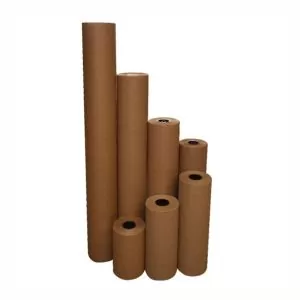
1. Corrugated roll is parcelling wrap that provides structural cushioning as well as coverage. This option is ideal for fragile items that require some shock absorption without the added cost and bulk of bubble wrap.
2. Kraft paper parcel wrap, on the other hand, provides a clean outer covering and a good surface for tape adhesion.
3. Tissue paper parcel wrap is for items where presentation matters and protection from scuffing is the concern rather than impact protection.
The businesses that get the packaging process right tend to keep a small range of wrapping materials on hand rather than defaulting to a single option for everything. It sounds like an additional complication, but in practice it means fewer damaged items, happier customers, and a level of packaging quality that customers notice and comment on.
Book Wraps: The Postal Solution Most Businesses Discover Too Late.
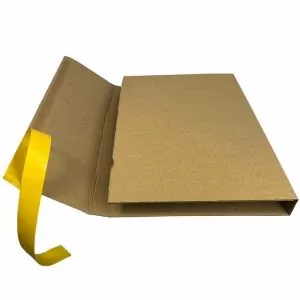
If you are posting books, catalogues, magazines, vinyl records, flat-pack items, or anything that is flat and relatively rigid, book wraps are the packaging solution you should probably already be using. They are specifically designed for this category of items, and they do something that boxes cannot replicate as efficiently. They collapse down to a fraction of the size when unloaded, which means they take up far less storage space on your packing bench and can be ordered and stored in larger quantities without the footprint becoming a problem.
The way book wraps work is simple. The item slides in, the wrap folds around it at adjustable positions, and the whole thing closes flat and securely. The result is a rigid, well-protected parcel that is perfectly sized to its contents, which means no voids, no wasted space, and no need for filler material to stop the item moving around inside. For businesses posting flat items regularly, the time saved on packing alone justifies the switch from general-purpose boxes, quite apart from the material efficiency and the reduction in courier costs that comes from sending correctly sized parcels.
Newspaper Offcuts: The Underrated Materials of the Packing Industry
Newspaper offcuts are one of those packaging materials that looks unremarkable until you start using them properly. These are the end-roll offcuts from newspaper print runs, which are of consistent sizes and are used for void fill, cushioning, wrapping for individual items, and general-purpose packing material.
The specific advantage of newspaper offcuts over other void-fill materials is that they are soft and mouldable. They do the job of filling voids and cushioning contents and have a tactile quality that feels more considered than synthetic alternatives.
For businesses packing items that need some cushioning but do not require bubble wrap, these offcuts fill that gap efficiently and economically. They also keep items from shifting in transit, which is a common cause of damage that businesses often overlook.
Summing Up
To sum up, whether you are a wholesaler or a retailer, ensuring the safe and secure shipping of your items is crucial, and investing in high-quality packaging materials is essential to guarantee that all your items are shipped and delivered to your customers safely and effectively.


Comments
Login to Comment