The Future of Web Development: What’s Coming Next?
30 Dec, 2025
9859 Views 7 Like(s)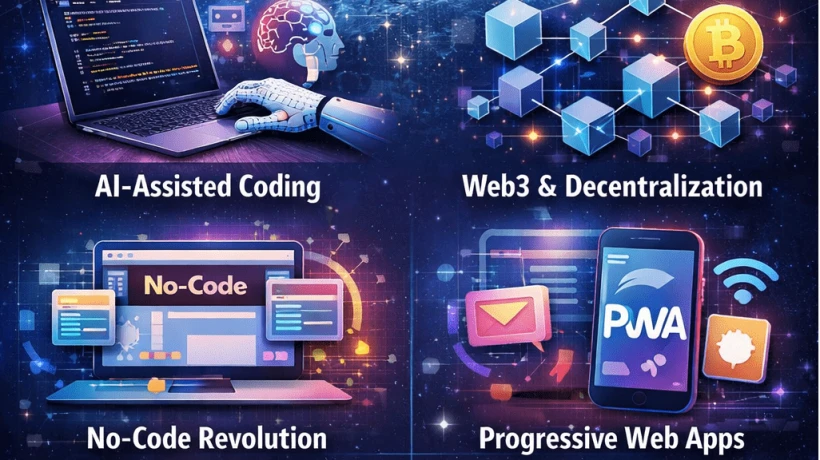
Web development is advancing at a pace faster than ever before. What once started with simple static web pages and limited interactivity has evolved into intelligent, responsive, and deeply personalized digital experiences. Today’s websites are no longer just information portals—they are powerful platforms designed to engage users, automate processes, and drive business growth.
With rapid technological innovation reshaping the digital landscape, the next generation of web development is already emerging. This evolution brings exciting opportunities, but also new challenges, for developers, businesses, and end users alike. So, what exactly lies ahead for the future of web development? Let’s explore the key trends that are shaping what’s next.
1. AI-Assisted Coding
Artificial Intelligence is quickly becoming an essential partner in the development process. AI-powered tools now assist developers with intelligent code suggestions, automated testing, bug detection, and performance optimization. These tools help reduce errors, speed up development cycles, and improve overall code quality.
By automating repetitive and time-consuming tasks, AI allows developers to focus more on creativity, architecture, and solving complex problems. As AI continues to improve, it will play an even greater role in building scalable, efficient, and high-performing web applications.
2. Web3 and Decentralization
Web3 represents a major shift in how the internet operates. Built on blockchain technology, Web3 focuses on decentralization, transparency, and user ownership. Instead of relying on centralized platforms, decentralized applications (dApps) allow users to control their own data and digital assets.
This new approach is especially impactful in areas such as finance, digital identity, and data privacy. By removing intermediaries, Web3 promises greater trust, security, and independence, paving the way for a more open and user-centric internet.
3. The No-Code and Low-Code Revolution
No-code and low-code platforms are transforming how digital products are built. These tools enable businesses and non-technical users to create websites, applications, and workflows with minimal coding knowledge. As a result, development becomes faster, more accessible, and more cost-effective.
While no-code platforms won’t replace experienced developers, they significantly speed up prototyping and allow development teams to focus on complex, customized solutions. This trend is empowering innovation across startups and enterprises alike.
4. Progressive Web Apps (PWAs)
Progressive Web Apps continue to gain popularity by combining the best features of websites and native mobile applications. PWAs offer fast loading speeds, offline functionality, push notifications, and seamless performance across devices—without requiring users to install an app from an app store.
For businesses, PWAs provide a cost-effective way to deliver high-quality mobile experiences while reaching a wider audience. As mobile usage continues to grow, PWAs will play a key role in modern web strategies.
5. Voice and AI-Powered Interfaces
The way users interact with the web is rapidly changing. Voice assistants, chatbots, and conversational AI are moving interfaces beyond traditional keyboards and touchscreens. Voice search and AI-driven personalization are making digital experiences more intuitive, efficient, and accessible.
As these technologies mature, websites will become more conversational and adaptive, offering personalized experiences that respond naturally to user behavior and preferences.
6. Next-Generation Cybersecurity
With increasing data exchange and online transactions, cybersecurity has become a top priority in web development. Modern web architecture now focuses on zero-trust security models, advanced encryption, biometric authentication, and AI-based threat detection.
Security is no longer an optional feature—it is a fundamental component of every web application. Protecting user data and maintaining trust will continue to be critical as digital ecosystems expand.
Looking Ahead
The future of web development is intelligent, decentralized, user-focused, and highly secure. To stay competitive, developers and businesses must continuously adapt, learn new technologies, and embrace innovation. Those who evolve with these trends will be best positioned to create impactful digital experiences in the years ahead.
Which of these trends excites you the most?
Let’s start the conversation in the comments 👇


Comments
Login to Comment