The Complete Guide to Understanding International Glove Size
05 Nov, 2026
10 Views 0 Like(s)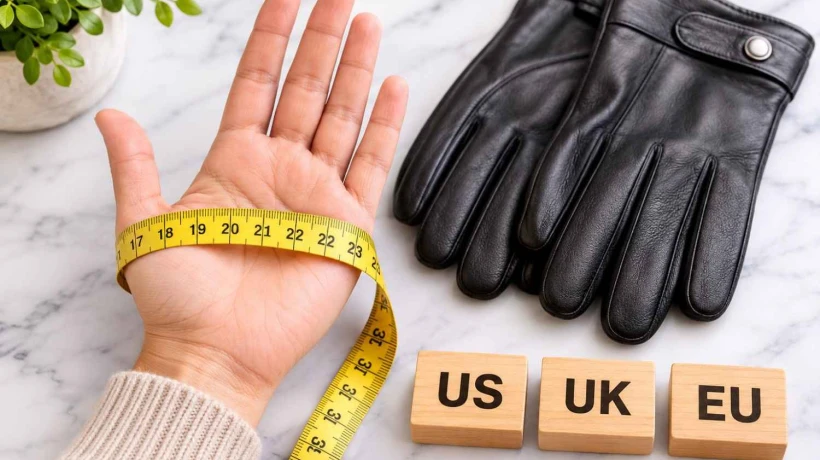
Learn how international glove sizes work, compare US, UK, and EU sizing systems, and measure your hands to find a comfortable fit when shopping online.
Buying gloves seems simple until you start shopping from international brands. One website may display sizes in inches, another may use European numbers, while a third offers only small, medium, and large options. Even when two pairs look similar, their measurements can differ depending on the manufacturer and the sizing system.
Choosing the wrong size can make gloves uncomfortable, restrict finger movement, or leave too much extra space around the fingertips. This is especially frustrating when ordering online because you cannot try them on before purchasing.
Understanding international glove sizes makes shopping much easier. Whether you need winter gloves, leather gloves, work gloves, or everyday accessories, knowing how different countries measure hands can help you make a better choice.
This guide explains the basics of glove sizing, how international systems compare, and how to measure your hands accurately before placing an order.
1. Why International Glove Sizes Can Be Different
Glove sizing is not completely universal. Different countries and manufacturers may use different measurement methods, labels, and size ranges. Some brands use numerical sizes, while others prefer letter-based measurements such as XS, S, M, L, and XL.
European glove sizing traditionally uses numbers connected to hand circumference, generally measured in centimetres. In contrast, many US brands use numerical or letter-based sizes, depending on the type of glove. UK retailers also commonly use letter sizes or numerical measurements.
Another reason for confusion is that glove manufacturers do not always follow identical fitting standards. A medium glove from one company might feel closer to a large in another brand.
The material also matters. Leather gloves may soften and adapt slightly with use, while insulated winter gloves often need additional room for warmth and comfort. Sports and protective gloves may have more specific fitting requirements.
This is why an international glove size comparison should always consider actual hand measurements rather than relying on the label alone.
2. How to Measure Your Hand for the Right Glove Size
Before you convert glove measurements across countries, start by measuring your hand correctly. This is the most reliable way to avoid choosing a size that feels too tight or too loose.
You only need a flexible measuring tape and a few minutes.
Follow these simple steps:
-
Place your dominant hand in a relaxed, natural position.
-
Wrap a flexible measuring tape around the widest part of your palm, just below the knuckles.
-
Keep your thumb outside the measurement.
-
Make sure the tape feels comfortably snug without pressing into your skin.
-
Record the measurement in centimetres or inches.
-
Check the manufacturer's sizing instructions before selecting a size.
For example, if your palm circumference measures 20 centimetres, use that measurement as your starting point when comparing international sizes.
It is also helpful to measure your hand length, from the tip of your middle finger to the crease where your palm meets your wrist. Some manufacturers use both circumference and hand length to determine the best fit.
If one hand is slightly larger than the other, use the larger measurement when selecting gloves. This can help prevent discomfort, especially when wearing gloves for extended periods.
3. Understanding US, UK, and EU Glove Sizing Systems
One of the most confusing parts of international shopping is understanding how different countries label their gloves. Although the systems can overlap, they are not always directly interchangeable.
US glove sizes
American glove brands commonly offer sizes such as XS, S, M, L, XL, and XXL. Some manufacturers also use numerical sizes, particularly for leather, dress, and specialist gloves.
For many adult gloves, the sizing label is based on hand circumference or a manufacturer's own fitting scale. However, there is no guarantee that every US brand follows precisely the same measurements.
UK glove sizes
UK glove sizing is often similar in appearance to US sizing, especially when retailers use small, medium, and large labels. Some traditional glove brands also use numerical sizing.
However, similar labels do not automatically mean identical fits. A UK medium may differ from a US medium depending on the manufacturer, product design, and intended use.
EU glove sizes
European glove sizing commonly uses numerical measurements. Traditional European sizing relates the size number to hand circumference in centimetres, divided by approximately 2.7.
For instance, a hand circumference of around 21.6 centimetres corresponds to a traditional European size of approximately 8.
This gives shoppers a useful starting point when comparing European products with other sizing systems. However, modern brands may use their own size ranges, so checking the product-specific guide remains important.
For protective gloves, European sizing may follow EN ISO 21420, which considers both hand circumference and hand length. This is particularly relevant when buying work or safety gloves rather than ordinary fashion accessories.
4. How to Convert Glove Measurements Across Countries
When shopping internationally, the easiest approach is to use your hand measurement as a common reference instead of trying to convert labels directly.
For example, imagine your palm circumference is 8 inches, or approximately 20.3 centimetres. You can use this measurement to check the size recommendations provided by American, British, and European retailers.
Here are a few useful conversion tips:
-
Inches to centimetres: Multiply inches by 2.54.
-
Centimetres to inches: Divide centimetres by 2.54.
-
European protective glove sizing: Compare your hand measurements with the manufacturer's EN ISO sizing information.
-
US and UK sizing: Check whether the retailer provides a measurement-based size guide or a brand-specific size chart.
Remember that converting measurements is not the same as guaranteeing an identical fit. A brand may design its gloves with a narrower palm, longer fingers, or a different amount of stretch.
This is where a reliable US UK and EU glove size guide becomes useful. It helps you understand the differences between sizing systems while reminding you to check the actual product measurements.
5. Choosing the Right Fit for Different Types of Gloves
Not all gloves should fit in exactly the same way. The ideal fit depends on their material, construction, and intended purpose.
Winter gloves: These should provide enough room for comfortable finger movement and, when appropriate, a thin insulating layer underneath. Gloves that are excessively tight may feel restrictive.
Leather gloves: Leather gloves generally benefit from a close but comfortable fit. Some leather materials soften with regular wear, but you should never depend on a glove stretching significantly to correct the wrong size.
Sports gloves: Cycling, gym, and other sports gloves should provide a secure fit without restricting movement or circulation. Pay particular attention to finger length and palm coverage.
Work and safety gloves: These require extra care because a poor fit can affect grip, dexterity, and protection. Follow the manufacturer's instructions and relevant safety specifications rather than relying only on ordinary fashion sizing.
The right glove should feel secure without creating pressure around the knuckles or fingertips. Your fingers should reach the ends naturally, and you should be able to move your hand comfortably.
6. Common Glove Sizing Mistakes and Tips for Online Shopping
Even after measuring your hand, a few common mistakes can lead to disappointing purchases. Knowing what to avoid can make international shopping much easier.
Choosing a size based only on your usual clothing size: Your regular clothing size does not necessarily indicate your glove size. Always measure your hand independently.
Ignoring finger length: Palm circumference is important, but it does not tell the whole story. Someone with long fingers may need a different fit from someone with shorter fingers and the same palm measurement.
Assuming US and UK sizes are identical: Their labels may look similar, but individual manufacturers can use different sizing specifications.
Forgetting material differences: Stretch fabrics, leather, fleece, and insulated materials all behave differently. Consider the construction before choosing a size.
Skipping the return policy: International purchases can be difficult or expensive to exchange. Check the seller's return and exchange conditions before ordering.
One useful habit is to save your hand measurements on your phone. You can then compare them with different brands whenever you shop online, without repeating the measuring process.
If you are unsure between two sizes, read the manufacturer's fitting advice. The best choice may depend on whether you prefer a snug fit or extra room for movement.
Final Thoughts
Finding the right glove size becomes much easier when you understand how international sizing systems work. By measuring your palm, checking finger length, and comparing manufacturer recommendations, you can make more confident purchasing decisions.
Whether you are shopping for leather accessories, winter gloves, sportswear, or protective equipment, accurate measurements are more useful than relying on size labels alone.
Use a reliable international glove size comparison, check the retailer's fitting instructions, and take a moment to verify your measurements before ordering. A properly fitted pair of gloves can make a noticeable difference in everyday comfort and performance.



Comments
Login to Comment