Silicone Defoamer Manufacturers: Types, Uses, Benefits, and
04 Nov, 2026
15 Views 0 Like(s)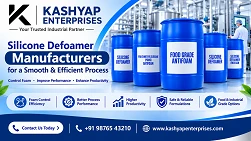
Kashyap Enterprises offers high-quality silicone defoamer and antifoam solutions for various industrial applications. With a focus on product quality.
 Foam formation is a common challenge in industrial processes such as wastewater treatment, food processing, textile manufacturing, paper production, and chemical processing. Excessive foam can reduce production efficiency, affect product quality, interrupt operations, and increase maintenance requirements. Choosing the right defoaming solution helps industries maintain smooth and efficient production.
Silicone defoamers are effective foam-control solutions that help industries reduce unwanted foam, improve process efficiency, and maintain consistent production quality. Selecting a suitable formulation depends on the application, operating conditions, chemical compatibility, and required performance.
Kashyap Enterprises provides silicone defoamer and antifoam solutions for various industrial applications. Understanding the available types, benefits, and uses can help businesses make informed purchasing decisions.
Key Takeaways
-
Silicone defoamers help control unwanted foam in industrial manufacturing and processing.
-
Different formulations are available for wastewater treatment, textiles, paper production, and food processing.
-
Food-grade antifoams must meet the applicable requirements for their intended food-processing applications.
-
Factors such as dosage, compatibility, temperature, and process conditions influence defoamer performance.
-
Choosing experienced suppliers helps businesses identify suitable products for their specific requirements.
What Are Silicone Defoamers and How Do They Work?
Silicone defoamers are chemical formulations designed to eliminate existing foam, while antifoams primarily help prevent foam from forming. Depending on their formulation and application, a product may perform both functions.
These products commonly use silicone-based ingredients, including polydimethylsiloxane (PDMS), which can help destabilize foam bubbles. When the formulation is compatible with the process, it helps bubbles break down and reduces foam accumulation.
Excessive foam can interfere with mixing, filling, pumping, aeration, and other industrial operations. An appropriate defoamer can help control these problems without unnecessarily affecting the main production process.
Reliable Silicone Defoamer Manufacturers consider factors such as formulation stability, application requirements, operating temperature, and chemical compatibility when developing foam-control solutions.
Types of Silicone Defoamers and Their Applications
Different industrial processes require different types of foam-control products. The following table explains several common categories.
|
Type of Defoamer |
Main Purpose |
Common Applications |
|
Silicone Defoamer |
Reduces existing foam |
Wastewater treatment, paints, and industrial processing |
|
Silicone Antifoam |
Helps prevent or control foam formation |
Chemical processing, manufacturing, and fermentation |
|
Food Grade Antifoam |
Controls foam in suitable food-processing applications |
Dairy, beverages, fermentation, and food production |
|
Silicone Defoamer Emulsion |
Provides a dispersed silicone-based formulation |
Textiles, paper production, and water-based industrial processes |
|
Polydimethylsiloxane Antifoam |
Uses PDMS-based chemistry for foam control |
Industrial processing, wastewater treatment, and selected chemical applications |
The best choice depends on the process conditions and the manufacturer's technical recommendations.
What Are the Major Industrial Applications of Silicone Defoamers?
Silicone defoamers support several industries where uncontrolled foam can affect production efficiency and product quality.
1. Wastewater Treatment
Wastewater treatment plants may experience foam during aeration, biological treatment, and other processing stages. Excessive foam can interfere with equipment operation and create housekeeping challenges.
Suitable defoamers help control foam and support smoother treatment operations. The selected product should be compatible with the treatment system and its discharge requirements.
2. Textile Manufacturing
Foam can develop during dyeing, washing, scouring, and other textile-processing operations. Uncontrolled foam may affect liquid circulation, wetting, and process consistency.
Textile manufacturers use appropriate defoamers to improve foam control and maintain efficient processing.
3. Paper and Pulp Production
Paper manufacturing involves several stages where foam may affect production stability, drainage, and finished-paper quality. Suitable antifoam solutions can help manage foam during pulp processing and other production stages.
The formulation should be selected according to the paper machine, process chemistry, and production requirements.
4. Food and Beverage Processing
Foam can develop during fermentation, beverage production, dairy processing, and other food-manufacturing activities.
Food Grade Antifoam Manufacturers supply formulations intended for specific food-processing applications. Buyers should verify applicable regulatory requirements, permitted uses, and relevant product documentation before selecting a product for food-related processes.
5. Paints, Coatings, and Chemical Manufacturing
Foam may develop during mixing, dispersion, filling, and chemical reactions. Excessive bubbles can affect surface finish, product consistency, and production efficiency.
Suitable foam-control products help reduce these issues when their chemistry is compatible with the formulation.
What Are the Benefits of Choosing the Right Silicone Defoamer?
Selecting an appropriate defoamer can provide several operational advantages.
-
Improved foam control: Helps reduce unwanted foam during production.
-
Better process efficiency: Supports smoother operation of mixing, pumping, and processing equipment.
-
Consistent product quality: Helps minimize foam-related defects in suitable applications.
-
Reduced operational interruptions: Can help limit production problems associated with excessive foam.
-
Application flexibility: Different formulations can address the requirements of various industries.
-
Optimized chemical consumption: Appropriate dosage selection can help avoid unnecessary product usage.
Actual results depend on the formulation, dosage, process conditions, and compatibility with the production system.
How to Choose Reliable Silicone Defoamer Manufacturers: A Step-by-Step Guide
Finding the right supplier requires more than comparing prices. Consider the following steps before making a purchase.
Step 1: Identify Your Industrial Requirements
Determine where foam develops and whether you need to eliminate existing foam or prevent new foam from forming. Identify the production stage and the problems caused by excessive foam.
Step 2: Select the Appropriate Formulation
Compare silicone defoamers, antifoam products, and emulsions according to your application. Silicone Defoamer Emulsion Manufacturers can help buyers evaluate emulsion-based products for processes that require a suitable dispersed formulation.
Step 3: Review Technical Specifications
Request the technical data sheet (TDS) and safety data sheet (SDS). Review the recommended dosage, compatibility, storage conditions, temperature limitations, and handling instructions.
Step 4: Check Industry-Specific Requirements
For food processing, confirm that the product is suitable for its intended use and meets applicable regulations. For wastewater treatment, evaluate compatibility with the treatment process and discharge requirements.
Step 5: Evaluate Supplier Reliability
Look for suppliers that provide clear product information, consistent quality, technical assistance, and dependable supply arrangements. Experienced Silicone Antifoam Manufacturers should be able to explain product suitability and help customers assess their foam-control needs.
Step 6: Conduct a Trial Before Bulk Purchasing
Test the selected product under representative operating conditions. Monitor foam reduction, dosage requirements, process compatibility, and any effects on final product quality before adopting it on a larger scale.
Why Consider Kashyap Enterprises for Silicone Defoamer Solutions?
Kashyap Enterprises offers silicone defoamer and antifoam solutions for industrial applications, including wastewater treatment, textiles, paper manufacturing, paints, food processing, and chemical production.
Businesses evaluating Polydimethylsiloxane Antifoam Manufacturers should consider formulation suitability, technical documentation, application support, and consistent supply when selecting a supplier.
Visit the official website of Kashyap Enterprises to explore its foam-control solutions and contact the company for product information or technical guidance.
Conclusion
Silicone defoamers play an important role in controlling unwanted foam across a wide range of industrial processes. From wastewater treatment and textile manufacturing to paper production and food processing, the right formulation can help improve operational efficiency and support consistent product quality.
When comparing Silicone Defoamer Manufacturers, businesses should evaluate product specifications, application suitability, quality standards, technical support, and supply reliability. Testing the selected formulation under actual operating conditions is also an important step in identifying an effective foam-control solution.
Kashyap Enterprises offers silicone defoamer and antifoam solutions for diverse industrial needs. Contact the company to discuss your application and identify a suitable product for your process.
Frequently Asked Questions (FAQs)
1. What is a silicone defoamer used for?
A silicone defoamer is used to reduce existing foam in industrial processes such as wastewater treatment, textile manufacturing, paper production, paints, and chemical processing.
2. What is the difference between a defoamer and an antifoam?
A defoamer primarily removes existing foam, while an antifoam primarily prevents foam formation. Some formulations can perform both functions, depending on the application.
3. Which industries use silicone antifoam products?
Silicone antifoam products are used in wastewater treatment, food and beverage processing, textiles, paper and pulp, paints, coatings, and chemical manufacturing.
4. What should buyers check before choosing food-grade antifoam?
Buyers should verify the product's intended application, applicable regulatory compliance, technical documentation, and suitability for the specific food-processing operation.
5. What is polydimethylsiloxane antifoam?
Polydimethylsiloxane (PDMS) antifoam is a silicone-based foam-control formulation used in suitable industrial processes to reduce or prevent foam formation.
6. How can I choose the right silicone defoamer supplier?
Compare suppliers based on product quality, technical specifications, application experience, compatibility guidance, documentation, and supply reliability. Conduct a process trial before large-scale use whenever practical.
7. How can I contact Kashyap Enterprises?
Visit the official Kashyap Enterprises website to explore its silicone defoamer solutions and submit an inquiry for product details and technical assistance.

Comments
Login to Comment