SC Issues Notice to Om Birla Over Sena (UBT) MPs' Merger with Shinde Faction
22 Jul, 2026
901 Views 0 Like(s)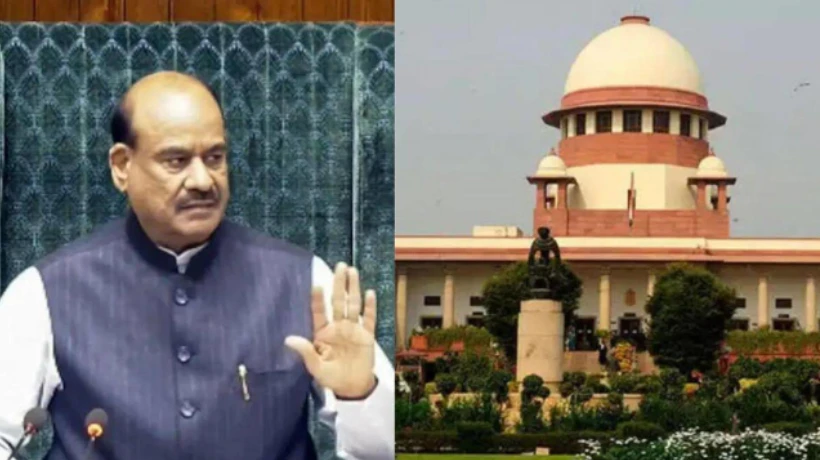
The Supreme Court on Wednesday issued notice to Lok Sabha Speaker Om Birla and others over a plea challenging his decision to recognise the merger of six Shiv Sena (
The Supreme Court on Wednesday issued notice to Lok Sabha Speaker Om Birla and others over a plea challenging his decision to recognise the merger of six Shiv Sena (Uddhav Balasaheb Thackeray) MPs with the Eknath Shinde-led Shiv Sena, while declining to grant any interim relief at this stage. A Bench comprising Justices P.S. Narasimha and Alok Aradhe directed the respondents to file their replies and posted the matter for further hearing after two weeks.
The plea was filed by Shiv Sena (UBT) leader Arvind Sawant, who challenged the Speaker's order recognising the merger under the anti-defection law. Notices were issued to the office of the Lok Sabha Speaker, the Joint Secretary, and the six MPs who switched allegiance — Sanjay Deshmukh, Sanjay Jadhav, Sanjay Dina Patil, Nagesh Patil-Ashtikar, Omprakash Rajenimbalkar, and Bhausaheb Wakchaure.
The controversy stems from Speaker Birla's decision on July 18, just ahead of the Monsoon Session of Parliament, to approve the merger of these six Shiv Sena (UBT) MPs with the Shinde-led faction. As a consequence, the strength of the Uddhav Thackeray-led Shiv Sena (UBT) in the Lok Sabha was reduced from nine to just three MPs, while the Shinde-led Shiv Sena's tally rose from seven to thirteen. This shift has also elevated Shiv Sena's standing within the NDA, making it the third largest constituent after the BJP and the TDP.
Appearing for Shiv Sena (UBT), Senior Advocate Devadatt Kamat argued before the Bench that the six MPs in question had been elected on the Shiv Sena (UBT) symbol and that no disqualification proceedings were pending against them. He contended that since no disqualification process had been initiated, the question of recognising a merger did not even arise in the first place, and questioned the legal basis on which the Speaker exercised jurisdiction to approve such a merger. Kamat further pointed out that the Lok Sabha circular reflecting the revised party position did not disclose any formal, reasoned order passed by the Speaker justifying the approval.
Kamat also raised a broader concern, describing the trend of legislators merging with rival parties they had originally contested and defeated in elections as a worrying "national phenomenon." He urged the Court to treat the matter as one involving significant questions of constitutional morality and propriety, given its implications for the anti-defection framework under the Tenth Schedule of the Constitution.
Under Paragraph 4 of the Tenth Schedule, Shiv Sena (UBT) has maintained that individual legislators cannot unilaterally effect a merger of a political party; they can only accept or reject a merger that has been initiated by the original party leadership. The party asserts that its president, Uddhav Thackeray, neither initiated nor approved any such merger with the Shinde faction, making the Speaker's recognition of the MPs' switch legally untenable in their view.
Despite these submissions, the Supreme Court stopped short of staying the Speaker's order, effectively allowing the merger to remain in force for now. "We have issued notice. We will consider. File counter. After two weeks," the Bench observed, signalling that a more detailed examination of the constitutional questions involved would follow once all parties have filed their responses.
The case is being closely watched as it could set an important precedent on the scope of a Speaker's powers in recognising legislative party mergers, and on how anti-defection law is interpreted when no disqualification petition has been filed beforehand. With the next hearing scheduled in two weeks, the Shiv Sena (UBT) will be hoping the Court ultimately reverses the Speaker's decision and restores its original strength in the Lok Sabha.



Comments
Login to Comment