Sauna Ventilation and Heater Choice: How Airflow Shapes Comfort, Safety, and Performance
24 Mar, 2026
4210 Views 0 Like(s)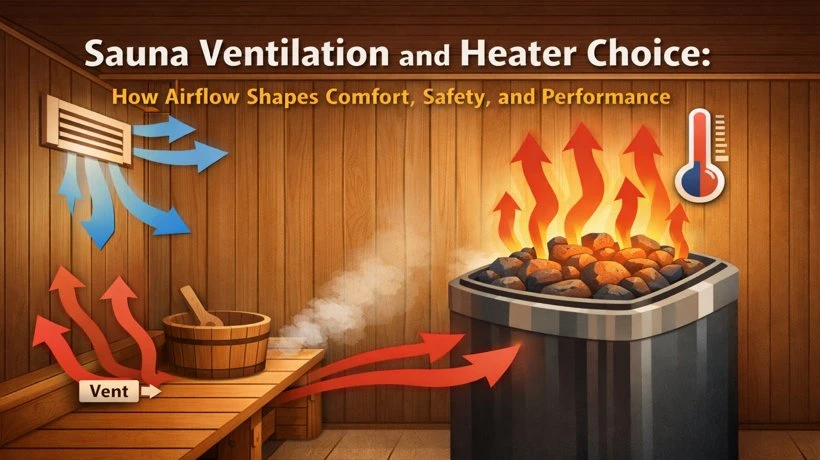
This guide explains how ventilation works in a home sauna, why it matters for safety and comfort, and how heater choice should influence the design.
A sauna is not just a hot room with a heater. It is a controlled environment where heat, airflow, moisture, and combustion or electrical output all need to work together. That is why sauna ventilation is often the detail that separates a sauna that feels harsh and stuffy from one that feels balanced, comfortable, and easier to use.
Many buyers focus first on appearance or heater size. Those choices matter, but the airflow strategy matters just as much. A well-designed sauna ventilation system helps manage fresh air, remove stale air, reduce uneven heat layers, and support safer operation. It also affects how well different heaters perform. The airflow needs of the best sauna heaters electric are not identical to those of wood-burning sauna stoves, especially when combustion air and exhaust behavior come into play.
Why ventilation matters in a sauna
Heat alone does not create a good sauna experience. The room also needs air movement that feels natural and controlled. Without that balance, the room may become stale, overly stratified, or uncomfortable to breathe in, even when the heater is sized correctly.
Good ventilation serves several functions at once. It brings in oxygen-rich replacement air, helps move warm air through the room, and removes excess humidity, odors, and carbon dioxide. In wood-fired rooms, ventilation also supports combustion and helps the stove operate more predictably. More broadly, public health guidance consistently recognizes ventilation as a core part of maintaining healthier indoor air, because airflow helps dilute and remove indoor contaminants.
In practical terms, poor airflow often shows up in familiar complaints. Bathers may feel that their feet stay cold while their head gets too hot. The room may feel heavy or stale after only a short session. Surfaces may dry unevenly. Recovery time between sessions may also be longer because moisture lingers where it should not.
A sauna should feel hot, but it should not feel airless. That distinction is where ventilation design becomes essential.
The basic idea behind sauna airflow
At a simple level, a sauna works best when fresh air enters in a controlled way and used air exits in a controlled way. The exact vent placement depends on the heater type, the room layout, and whether the sauna is naturally or mechanically ventilated.
Warm air rises, so every sauna has some natural heat layering. Ventilation helps reduce the severity of that layering. The goal is not to eliminate vertical temperature differences entirely. The goal is to keep them within a comfortable range so the bench area feels even and breathable.
A typical airflow concept includes an intake vent, an exhaust vent, and enough separation between the two to encourage circulation through the occupied zone. If vents are poorly placed, fresh air may short-cycle and leave without helping the room. That can waste heat while doing little to improve comfort.
This is why sauna ventilation should be treated as part of the core room design rather than an afterthought added after the heater is selected.
How a sauna ventilation system affects comfort
Comfort in a sauna is partly about temperature, but it is also about the quality of the air and the distribution of heat. Ventilation strongly influences both.
When the air supply is too limited, carbon dioxide and moisture can build up more quickly. Even in small rooms, that can create a heavy, stale feeling. When exhaust is too weak or poorly placed, the room may trap used air near the benches. On the other hand, if intake or exhaust vents are oversized or placed badly, the room may lose heat too quickly and develop unwanted drafts.
A balanced sauna ventilation system can improve the sensation of the room in several ways:
Fresher breathing air
Fresh supply air makes the room feel less oppressive during longer sessions. This matters especially in compact home saunas where the air volume is limited.
Better temperature distribution
Thoughtful airflow helps circulate heat from the heater through the bench zone. That can reduce the sharp hot-head, cold-feet pattern common in poorly planned rooms.
More consistent löyly response
When water is thrown on sauna stones, the burst of steam should feel full and soft rather than harsh and patchy. Air movement and room balance influence how that steam travels.
Faster drying after use
Ventilation also helps the sauna recover after bathing. A room that dries properly is easier to maintain and less likely to hold lingering moisture.
Ventilation and safety are closely linked
Comfort is only part of the story. Ventilation also matters for safe operation.
General indoor air guidance from public health and occupational sources consistently shows that ventilation helps dilute airborne contaminants and maintain healthier indoor environments. In a sauna, that principle translates into several practical concerns: fresh air supply, moisture control, and in wood-fired settings, support for combustion and exhaust behavior.
For bathers, heat exposure itself also deserves a measured, evidence-based view. Reviews of sauna research suggest there may be cardiovascular and wellness benefits for some users, but the evidence is stronger for association than for sweeping cause-and-effect claims. Researchers also note that many popular sauna claims remain understudied or overstated. Harvard Health notes that sauna use can temporarily lower blood pressure, and it advises caution for people with low blood pressure or certain heart conditions. Mayo Clinic guidance on heat-related illness also emphasizes dehydration and low blood pressure as real concerns in overheated or dehydrated states.
That does not mean home saunas are unsafe for most healthy adults. It means the room should be designed to support reasonable heat exposure rather than excessive, stagnant, poorly controlled conditions. Good ventilation helps make that easier.
Why heater choice changes the ventilation strategy
Not every heater interacts with the room in the same way. That is why ventilation planning should start after the heater category is narrowed down.
Electric heaters
The best sauna heaters electric offer predictable heat, straightforward controls, and easier integration in many indoor residential projects. They do not need combustion air in the way a wood-fired stove does, but they still need an effective airflow plan to keep the room comfortable and to reduce stale air buildup.
Electric models often pair well with carefully placed intake and exhaust vents that promote circulation through the seating zone. In many home installations, this makes it easier to fine-tune comfort without dealing with chimney draft, firewood storage, or combustion air balancing.
That said, electric does not mean ventilation becomes optional. A sealed hot room is not a better sauna. It is usually a less comfortable one.
Wood-fired heaters
Wood-burning sauna stoves introduce additional variables. They create radiant and convective heat, but they also depend on fuel quality, draft behavior, and combustion air supply. That makes ventilation planning more complex.
A wood-fired setup needs to account for how the stove draws air, how exhaust is vented through a properly designed flue system, and how replacement air enters the room. If those pieces are not coordinated, the sauna may experience uneven burning, backdraft risk, poor heat-up behavior, or uncomfortable pressure imbalances.
Wood-fired saunas can feel exceptional when designed well. They often produce a distinctive heat character that many users prefer. But they are less forgiving of casual ventilation design than electric rooms.
Vent placement basics for electric sauna rooms
For electric saunas, ventilation design usually aims to support fresh air exchange and even room circulation without creating direct drafts on bathers.
The exact vent positions vary by heater model and room layout, and manufacturer instructions should always override generic rules. Even so, a few broad principles hold up well in practice.
An intake is commonly placed to introduce fresh air near the heater area so that incoming air can warm as it enters the room. The exhaust is then positioned to encourage air to move across the room and through the occupied space rather than leaving immediately. In mechanically ventilated rooms, the exhaust location often plays a major role in how effectively the room clears stale air.
The key design mistake is treating vents as decorative openings rather than functional components. Size, location, and path all matter. A small change in vent height or distance from the heater can noticeably change how the sauna feels.
When evaluating the best sauna heaters electric, it is worth looking beyond wattage and control style. The heater should also be considered in relation to room shape, bench height, and planned airflow.
Ventilation considerations for wood-fired sauna rooms
With wood-burning sauna stoves, vent placement needs to support both user comfort and reliable stove operation.
Combustion consumes air. That means the room needs an appropriate replacement air path. At the same time, the flue system needs to establish and maintain sound draft. If the room is too tight or the air path is poorly planned, the stove may struggle to burn cleanly or consistently.
This is one reason wood-fired sauna design is often best approached as a full system rather than a collection of parts. Stove sizing, chimney design, clearances, and air supply all interact.
In addition, wood-fired saunas often produce more ash, more radiant intensity near the heater, and different warm-up behavior than electric rooms. Ventilation can help temper some of those effects, but it cannot fix a poorly matched stove or a flawed flue layout.
A good rule is to avoid copying an electric sauna vent layout directly into a wood-fired room. The two systems may look similar on paper, but they operate differently in real use.
Common ventilation mistakes in home saunas
Many sauna issues that seem like heater problems are actually airflow problems. A few mistakes come up repeatedly.
Vents placed too close together
When intake and exhaust are too near each other, fresh air may leave before it circulates through the room. The sauna loses heat but gains little comfort.
Ignoring bench height
Heat rises. If benches are too low relative to the hot zone, users can end up sitting below the best heat while the upper room holds most of the usable warmth. Ventilation cannot fully solve bad bench geometry, but it does interact with it.
Oversized concern about heat loss
Some owners try to minimize all air exchange out of fear that ventilation wastes heat. In practice, a sauna that holds heat but traps stale air usually feels worse, not better.
Treating all heaters the same
Ventilation details should reflect whether the room uses one of the best sauna heaters electric or one of the many available wood-burning sauna stoves. The airflow strategy should fit the heat source.
Skipping post-use drying
Ventilation is not only for active bathing. Dry-out airflow after use helps the room stay cleaner and more durable over time.
How to match ventilation to the sauna size and use pattern
A family sauna used a few evenings a week has different demands than a heavily used backyard sauna that runs for long sessions with multiple bathers. Room size, occupancy, and usage frequency all affect how much airflow the room needs and how quickly the air becomes stale.
Smaller rooms can become stuffy faster because there is less air volume per person. Larger rooms may have more pronounced hot and cool zones if the circulation pattern is weak. Frequent use can also increase the importance of drying and moisture removal between sessions.
This is why there is no single universal sauna ventilation system layout that works for every room. The design should reflect the whole installation, including insulation, heater output, bench arrangement, and whether the room is indoors or in a separate outdoor structure.
In planning, it helps to think in terms of user experience rather than just hardware. The real test is whether the room heats evenly, feels breathable, responds well to steam, and dries properly afterward.
Choosing between electric and wood with ventilation in mind
Buyers often compare electric and wood-fired heaters by cost, atmosphere, or convenience. Ventilation deserves a place on that list too.
The best sauna heaters electric are usually easier to integrate into indoor residential projects where controlled airflow, simple operation, and repeatable performance matter most. They generally fit homeowners who want faster routine use and fewer variables in day-to-day operation.
Wood-burning sauna stoves appeal to users who value a more traditional firing process and a distinctive heat character. They can be an excellent choice in outdoor buildings or off-grid settings, but they ask more of the installation. Ventilation, combustion air, and chimney planning all become more important.
Neither heater type is automatically better. The better choice is the one that fits the space, the user’s maintenance expectations, and the practical limits of the building.
Health claims should stay realistic
Saunas are widely associated with relaxation, circulation, and recovery, and some research supports possible cardiovascular benefits. Still, the evidence should be described carefully.
Published reviews in medical literature suggest that regular sauna bathing is associated with favorable cardiovascular outcomes and may support blood pressure regulation and vascular function. At the same time, researchers also caution that many commercial claims around detoxification, rapid weight loss, or broad disease prevention are not well supported.
For readers, the practical takeaway is simple. A well-designed sauna may support relaxation and can be part of a healthy routine for many adults, but it is not a substitute for medical care or a cure-all. People with low blood pressure, unstable cardiovascular conditions, or concerns about heat tolerance should use extra caution and discuss sauna use with a clinician.
That same evidence-based mindset should carry into the build itself. Safer, more comfortable rooms usually come from sound design, not exaggerated promises.
Final thoughts
A strong sauna design depends on more than heater power. Sauna ventilation shapes how the room feels, how evenly it heats, how comfortably people breathe, and how safely the system operates over time.
A well-planned sauna ventilation system also helps reveal the strengths of the chosen heater. With the best sauna heaters electric, that often means more consistent comfort and easier control. With wood-burning sauna stoves, it means supporting combustion, draft, and the character of a traditional heat source without sacrificing room balance.
For homeowners comparing sauna options, airflow deserves attention early in the process. The best results come when the heater, room geometry, and ventilation plan are designed to work together from the start.

Comments
Login to Comment