Recycled PET Price Index 2026: Chart, Trend Analysis and Forecast Data
23 Jun, 2026
1234 Views 0 Like(s)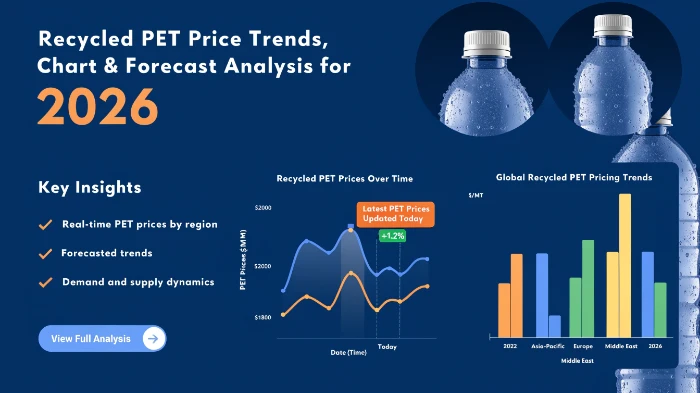
The global recycled polymer space showed mixed pricing behavior in Q2 2026, with the Recycled PET Price Chart 2026 reflecting a moderate upward trend of around 4–6% compared to the previous quarter.
The global recycled polymer space showed mixed pricing behavior in Q2 2026, with the Recycled PET Price Index 2026 reflecting a moderate upward trend of around 4–6% compared to the previous quarter. Price improvements were supported by stable demand from packaging and textile applications, along with tighter supply in some regions.
During Q2 2026, the USA recorded USD 1018/MT, while Brazil reached USD 1033/MT, marking the highest among key regions. In contrast, China and India reported relatively lower levels at USD 749/MT and USD 763/MT, respectively. Germany stood at USD 941/MT, indicating steady European pricing. According to IMARC Group, this variation highlights regional cost structures and recycling efficiency differences.
Recycled PET Price Chart 2026 Analysis
The Recycled PET Price Chart 2026 for Q2 shows a gradual upward movement across most regions. Prices remained stable in April, followed by a steady rise in May due to improved collection rates and increased demand from beverage packaging. June marked the peak in regions like Brazil and the USA, with prices crossing USD 1000/MT.
Compared to Q1 2026, where pricing was relatively softer due to excess inventory, Q2 demonstrated recovery and stabilization. The lowest price point was observed in China at USD 749/MT, while Brazil recorded the highest at USD 1033/MT.
This steady movement indicates a balanced supply-demand equation, making pricing patterns predictable and easier to track for procurement planning.
Recycled PET Price Trend Q2 2026
The recycled PET price trend during Q2 2026 remained slightly positive across global markets. Growth was mainly supported by consistent consumption in packaging and fiber production.
Asia-Pacific maintained stable demand, while North America showed stronger recovery driven by sustainability initiatives. Europe also experienced firm pricing due to higher processing costs and regulatory focus on recycled materials.
Overall, the quarter reflected gradual improvement rather than sharp fluctuations, indicating a stable pricing environment.
Regional Price Analysis
North America
North America recorded relatively high pricing levels, with the USA at USD 1018/MT. Strong demand from packaging and recycling mandates supported price stability. Availability of feedstock remained moderate, preventing excessive price volatility.
Europe
Germany reported USD 941/MT, reflecting steady pricing supported by strict environmental regulations and consistent demand for recycled plastics. Production costs remained slightly elevated, contributing to firm price levels.
Asia-Pacific
Asia-Pacific showed comparatively lower pricing, with China at USD 749/MT and India at USD 763/MT. The region benefited from cost-effective recycling processes and adequate supply, which helped maintain competitive pricing.
Latin America
Brazil recorded the highest price at USD 1033/MT, driven by strong domestic demand and relatively tighter supply conditions. The region showed noticeable price strength throughout the quarter.
Regional Price Snapshot (Q2 2026)
- USA: USD 1018/MT
- China: USD 749/MT
- Germany: USD 941/MT
- India: USD 763/MT
- Brazil: USD 1033/MT
This pricing snapshot highlights a clear regional variation, where Latin America and North America reported higher levels, while Asia remained cost-competitive. Europe maintained balanced pricing supported by regulatory demand. The data reflects how supply efficiency and sustainability initiatives influence pricing across regions.
Key Market Drivers
- Growing demand from sustainable packaging industries
- Increased use of recycled materials in textiles
- Government regulations promoting plastic recycling
- Variations in collection and processing efficiency
- Feedstock availability influencing production costs
- Rising environmental awareness supporting recycled products
- Regional supply-demand balance affecting pricing
Recycled PET Price Forecast 2026
The recycled PET price forecast 2026 indicates a stable to slightly upward trend for the remaining months. Demand from packaging and textile sectors is expected to remain consistent, supporting pricing.
Regions with strong recycling infrastructure may see moderate growth, while cost-efficient regions in Asia could maintain stable pricing. Overall, the outlook suggests gradual increases without major volatility.
Recycled PET Price Index & Historical Comparison
The Recycled PET Price Index reflects a steady improvement in Q2 2026 compared to earlier quarters. Prices increased by approximately 4–6% compared to Q1 2026, indicating recovery from previous softness.
Historically, the recycled PET price history chart shows moderate fluctuations influenced by demand cycles and recycling rates. Current trends align with long-term growth patterns driven by sustainability goals.
IMARC Group data suggests that pricing remains stable with gradual upward movement, supporting long-term planning.
Impact on Related Industries
Changes in recycled PET pricing directly affect several downstream sectors. Packaging companies experience cost adjustments, especially in beverage and food containers. The textile industry also relies heavily on recycled PET for fiber production.
Additionally, the automotive and consumer goods sectors are increasingly adopting recycled materials, making pricing stability important for cost management. Any variation in pricing can influence production budgets across these industries.
📊 Get real-time Recycled PET price insights
Stay ahead in the market with accurate data, forecasts, and regional pricing trends to optimize your sourcing strategy.
https://www.imarcgroup.com/recycled-pet-pricing-report/requestsample
FAQs About Recycled PET Price Trend Analysis & Market Insights:
What does the Recycled PET Price Chart 2026 indicate?
The recycled PET price chart 2026 shows a gradual upward trend in Q2, supported by steady demand and balanced supply across key regions.
How is the Recycled PET Price Index calculated?
The recycled PET price index is based on regional pricing averages, recycling rates, and supply-demand dynamics, providing a clear view of price movement.
What is the recycled PET price forecast 2026?
The recycled PET price forecast 2026 suggests stable growth with moderate increases, driven by sustainability trends and consistent industrial demand.
Conclusion
Recycled PET prices in Q2 2026 showed a steady upward trend with regional variations. North America and Brazil recorded higher pricing, while Asia remained competitive. Europe maintained balanced levels supported by regulatory demand.
The overall outlook for 2026 remains stable, with gradual growth expected. As sustainability initiatives continue to expand, recycled PET demand is likely to support consistent pricing in the coming months.
Contact Us:
IMARC Group
134 N 4th St., Brooklyn, NY 11249, USA
Email: sales[@]imarcgroup.com
Tel No:(D) +91 120 433 0800
United States: +1-201971-6302


Comments
Login to Comment