Palm Coast Pool Repair: How to Diagnose Green, Cloudy, or Algae-Prone Water
24 Sep, 2026
188 Views 0 Like(s)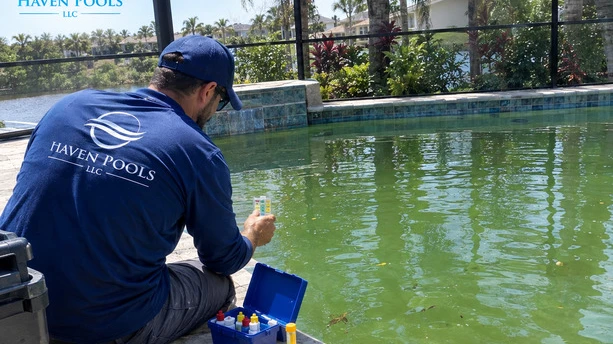
Haven Pools LLC is a professional swimming pool contractor serving Palm Coast and St. Augustine, Florida. The company specializes in custom pool design, construction, installation, remodeling, repair, and maintenance services. Every project is completed with a commitment to quality workmanship, dependable service, and customer-focused solutions for residential properties.
When your pool water turns green, cloudy, or starts looking algae-prone, it usually boils down to one of three things: imbalanced chemistry, poor circulation, or a filtration issue. Figuring out which one is the culprit is the most important step toward a quick fix—and it's the only way to make sure the problem doesn't just keep coming back every single week.
This guide will help you read your pool's "symptoms," explain what typically causes these water issues, and let you know when it’s time to stop DIYing and call in a professional.
Understanding the Three Main Causes
Before you go grabbing extra chlorine, it helps to understand what's actually happening beneath the surface. Most water quality problems fall into one of these categories:
• Chemical imbalance — Your pH, alkalinity, or sanitizer levels are out of their ideal range.
• Poor circulation — The water isn't moving well enough to distribute chemicals evenly.
• Filtration failure — The filter isn't catching contaminants fast enough to keep up.
Quite often, these factors overlap. This is exactly why simply dumping more chlorine into the pool doesn't always solve the problem for the long haul.
Diagnosing Cloudy Water
Cloudy water serves as the “canary in the coal mine.” It is most of the time the first indication that something is wrong and appears just before the water goes completely green. Early detection can go a long way in saving you a lot of problems.
Some of the main reasons for murky water are:
-
The lack of proper chlorine control that causes bacteria to grow.
-
High pH or alkalinity levels resulting in the release of minerals from the water.
-
A soiled or poorly sized filter that is unable to hold back particles of fine matter.
• Weak or malfunctioning pumps that prevent proper circulation.
To find the cause, start by testing your water. If your pH and chlorine levels look perfect but the water is still hazy, you’re likely looking at a mechanical issue—meaning your filter or pump needs attention rather than your chemicals.
Diagnosing Green Water
Green-colored water indicates the presence of algae. It is interesting to note that the color of green water can be used to determine the extent to which the growth has developed. For instance, light green water suggests that the algae are only in their early stages of growth, whereas dark green water indicates established growth that needs more intensive measures.
The presence of green water means that you need to consider:
• Whether there has been any lapse in chlorination.
• If there has been heavy rainfall (rain can wash away organic material).
• Any unusual sunshine or temperature.
• Is the filter running long enough every day to keep up with algae spores?
In Florida, our warm weather and frequent afternoon thunderstorms create the perfect breeding ground for algae, so pools in our area generally need more regular monitoring than those in cooler climates.
When Diagnosis Becomes a Need for Palm Coast Pool Repair
Sometimes, what looks like a simple chemistry hiccup is actually a symptom of a deeper mechanical problem. If you’ve balanced your chemicals correctly and the water still hasn't cleared up after 48 to 72 hours, it’s time to call a technician.
These problems usually stem from a pump failure, an exhausted filter, or even a broken pipe leaking debris into the water. Solving these problems early on using proper diagnosis will prevent a small mechanical problem from costing you a lot down the line in terms of expensive replacements.
Home Diagnosis Checklist
Before you hire a professional, why not tick off the following list?
1. Test the pH level, alkalinity, and chlorination with the aid of a test kit.
2. Check the pump and skimmer basket.
3. Check the pressure gauge on the filter; a high reading will likely require cleaning.
4. Run the pump for a full 8 to 12 hours to rule out poor circulation.
5. Brush the walls and steps to help the chemicals reach the algae more effectively.
6. Retest the water after 24 hours to see if things are stabilizing.
If these steps don't work, or if you hear strange noises coming from the equipment or notice weak water flow, professional Palm Coast pool repair is likely the next step.
Preventing Future Water Quality Issues
When you get your clear water back, follow these tips to maintain it:
• Check your water quality at least two times a week during summer.
• Make sure that your pump works for enough time each day to ensure water turnover.
• Regularly clean or backwash your filter.
• Shock your pool when it rains a lot or when you host many people swimming over the weekend.
• Have professional inspections done regularly to detect damage and replace the parts.
Final Words
Troubleshooting problems with green or cloudy water doesn’t have to be challenging. When you know how chemistry, circulation, and filtration affect your pool water, it will become easier for you to identify and address the problem.
If you have already tried to resolve the issue but without success, turn to Haven Pools LLC for professional help. The company offers professional diagnosis and repairs in Palm Coast, paying special attention to finding the root of the problem and not only dealing with the symptoms.


Comments
Login to Comment