Middle Eastern Perfume Guide - Oud, Amber & Their Varieties
08 Sep, 2026
527 Views 0 Like(s)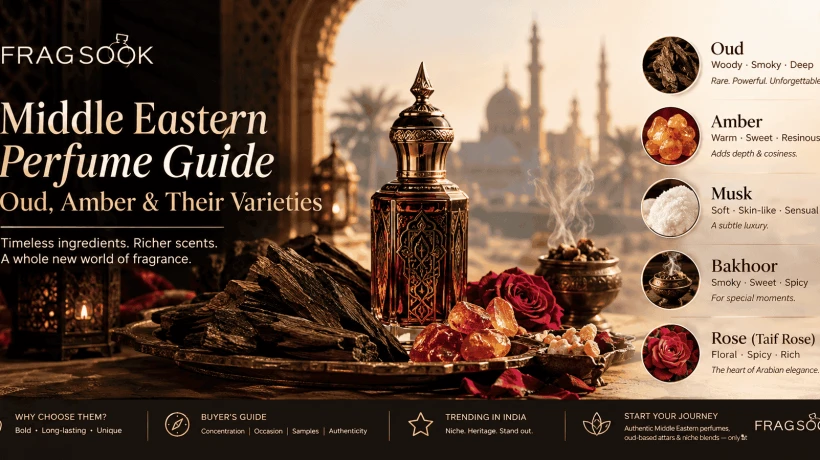
Middle Eastern scents are fast gaining popularity in India – and the reason is quite simple. These fragrances are bold, long-lasting and truly unique, offering an altogether different experience compared to Western designer perfumes. But if you’re new to this arena, it is quite natural to get confused by the different notes such as oud and amber. This guide covers everything from the fundamentals to the buying tips that will help you navigate.
Middle Eastern Perfume Guide - Oud, Amber & Their Varieties
Middle Eastern scents are fast gaining popularity in India – and the reason is quite simple. These fragrances are bold, long-lasting and truly unique, offering an altogether different experience compared to Western designer perfumes. But if you’re new to this arena, it is quite natural to get confused by the different notes such as oud and amber. This guide covers everything from the fundamentals to the buying tips that will help you navigate.
Why Middle Eastern Perfumes Are Different
Western perfumes typically have light, fresh, citrus-floral bases and are formulated for subtleness; they are perfect for the ‘office-appropriate’ setting. Middle Eastern perfumes, in contrast, are all about richness, depth and presence. They last for hours on end, and the sillage (the trail of the fragrance) is considerable.
This distinction stems from the core ingredients that form the essence of Arabian perfumery. Heavier notes like oud, amber, musk and bakhoor have deep, rich essences that are very different from Western fragrances.
Essential Ingredients to Know
1. Oud (Agarwood)
Oud is one of the most expensive raw materials in the world. It’s extracted from the resin-infused wood of the agar tree, and its scent is woody, smoky and deep, sometimes bordering on animalistic.
How to detect: if a fragrance possesses a deep, smoky, almost leathery undertone, there is oud present.
Best for: winter nights, formal occasions, and times when a powerful presence is desired.
2. Amber
Amber is a warm, sweet, and resinous note that's frequently blended with vanilla or labdanum to add a sense of cosiness and warmth to a fragrance.
How to detect: It's a warm, honey-like sweetness that feels comfortable on the skin.
Best for: daywear that's distinctive and wearable.
3. Musk
Musk is a soft, skin-like note that gives a fragrance a sense of being 'clean' and sensual. Modern musk in perfumery is mostly synthetic (cruelty-free).
How to detect: It's a subtle, powdery, close-to-skin smell.
Best for: A base note used for layering or for subtle day wear.
4. Bakhoor
Although technically incense is wood chips soaked in fragrant oils, the smoky, sweet profiles of bakhoor are often captured by perfumes.
How to detect: smoky, sweet and somewhat spicy – like a much richer version of an agarbatti.
Best for: special occasions, festive times and functions.
5. Rose (Taif Rose)
Rose is an absolute staple of Middle Eastern perfumery, with Taif rose being especially renowned (Saudi Arabia). It is deeper and spicier compared to its Western counterparts.
How to detect: Floral, yet strong in presence, and possessing a hint of spice.
Best for: Combining with oud or amber for a well-balanced blend.
How to Buy Middle Eastern Fragrances – Buyer's Guide
1. Understand Concentration
Middle Eastern fragrances typically come in attar (oil-based) or high-concentration perfume. This means only a small amount is necessary; unlike Western perfumes, it's advisable to use sparingly.
2. Choose Based on the Occasion
* Daily wear/office wear: Amber- or musk-heavy blends.
* Evening/winter: Oud-centric perfumes.
* Festive/special occasions: Bakhoor or rose-wood combinations.
3. Try sample/decants first.
Oud and similar heavy middle-eastern fragrances can interact with individual skin chemistry differently and yield varied results. The safest option is to first try a decant before investing in a full bottle.
4. Verify Authenticity
Oud is genuinely expensive; hence, the market is brimming with 'oud-inspired' or counterfeit merchandise. Only buy from trusted and certified vendors.
Why Middle Eastern Fragrances Are Trendy in India
Recently the popularity of attar culture has seen a revival in India, and the young Gen-Z audience are increasingly taking to experimenting with niche and distinctive fragrances that will make them stand out from the crowd. Middle Eastern perfumes are doing exactly that, offering an aspirational feel, unique profiles and a rich heritage.
Kickstart Your Middle Eastern Fragrance Journey
At Fragsook you can find authentic Middle Eastern perfumes, oud-based attars and niche blends, ensuring originality at every step from a multitude of trusted sellers. Whether you want a decant or the full bottle, the experience of discovering your first oud or amber fragrance starts here.


Comments
Login to Comment