Medical Testing Equipment Trends Shaping the Future of Healthcare
21 Jul, 2026
912 Views 0 Like(s)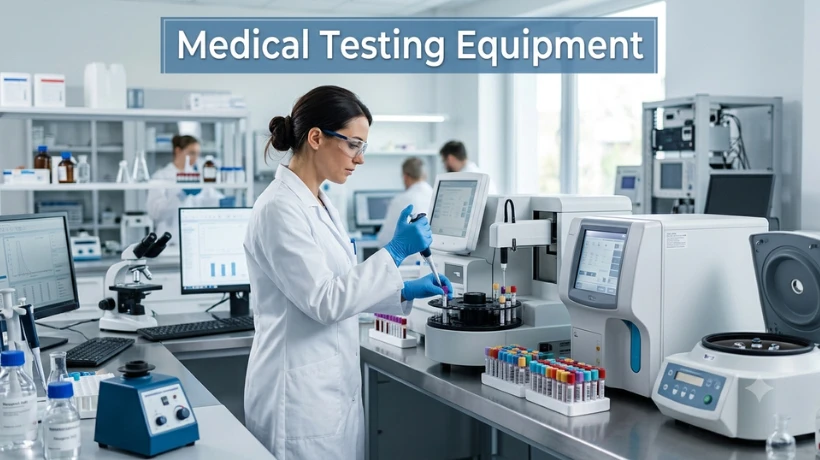
Healthcare is changing faster than ever before. New technologies are helping doctors diagnose illnesses earlier, monitor patients more accurately, and provide better treatments. At the center of this transformation is medical testing equipment, which plays a vital role in modern healthcare facilities.
From hospitals and laboratories to clinics and research centers, advanced testing tools are improving patient outcomes every day. This article explores the latest trends shaping the future of healthcare and explains how these innovations are making medical services safer, faster, and more accessible for everyone.
What Is Medical Testing Equipment?
Medical testing equipment refers to the devices, instruments, and systems used to examine patient samples, monitor health conditions, and support medical diagnoses. These tools help healthcare professionals identify diseases, evaluate treatment effectiveness, and detect health issues before they become serious.
Common examples include blood analyzers, imaging systems, diagnostic machines, glucose monitors, and laboratory testing instruments. Without medical testing equipment, healthcare providers would have limited information when making important medical decisions.
Over the years, these devices have become more accurate, automated, and user-friendly. As a result, patients can receive quicker diagnoses and more personalized care. Today, innovation continues to drive major improvements across the healthcare industry.
Top Trends Shaping the Future of Healthcare
1. Artificial Intelligence in Diagnostics
Firstly, artificial intelligence (AI) is becoming a powerful tool in healthcare. AI systems can analyze large amounts of medical data in seconds and identify patterns that humans might miss.
When combined with medical testing equipment, AI can help detect diseases such as cancer, heart conditions, and infections earlier. This improves diagnostic accuracy and allows doctors to begin treatment sooner.
Additionally, AI reduces human error and helps healthcare professionals make better-informed decisions.
2. Point-of-Care Testing Expansion
Point-of-care testing allows medical tests to be performed near the patient rather than in a central laboratory. This trend is growing rapidly because it provides faster results.
For example, portable devices can test blood glucose levels, detect infections, or measure vital health indicators within minutes. Modern medical testing equipment designed for point-of-care use helps patients receive immediate attention when necessary.
This approach is especially valuable in rural areas and emergency situations where quick decisions are critical.
3. Increased Automation in Laboratories
Laboratories are increasingly adopting automation to improve efficiency and reduce manual work. Automated systems can process hundreds of samples with minimal human intervention.
Advanced medical testing equipment now includes robotic sample handling, automated reporting, and integrated data management systems. These technologies reduce testing errors and improve laboratory productivity.
As demand for healthcare services continues to grow, automation will become even more important for maintaining high-quality patient care.
4. Connected Devices and Remote Monitoring
Healthcare providers are embracing connected technologies that allow patient data to be monitored remotely. Wearable sensors, smart devices, and cloud-based platforms make this possible.
Modern medical testing equipment can transmit results directly to healthcare professionals in real time. This enables doctors to monitor patients from a distance and respond quickly if health conditions change.
Remote monitoring also reduces hospital visits and supports better management of chronic diseases.
5. Personalized Healthcare Solutions
Every patient is unique. As a result, healthcare providers are moving toward personalized treatment plans based on individual health data.
Advanced testing technologies help identify genetic markers, disease risks, and treatment responses. By using specialized medical testing equipment, healthcare professionals can create customized care plans that improve treatment outcomes.
This trend is expected to grow significantly as precision medicine becomes more widely available.
6. Portable and Compact Testing Devices
Another important trend is the development of smaller and more portable devices. Healthcare professionals increasingly need tools that can be used in different environments.
Portable medical testing equipment provides flexibility for home healthcare, mobile clinics, and emergency response teams. These devices are often lightweight, easy to operate, and capable of delivering highly accurate results.
Consequently, healthcare services can reach more patients regardless of location.
Common Challenges and Mistakes to Avoid
While technological advancements offer many benefits, organizations should avoid several common mistakes when investing in healthcare technologies.
Choosing Equipment Based Only on Cost
Many healthcare facilities focus primarily on price. However, selecting the cheapest option may result in lower accuracy or limited functionality.
Instead, organizations should evaluate performance, reliability, support services, and long-term value.
Ignoring Staff Training
Even the most advanced equipment requires proper training. Without adequate education, users may struggle to operate systems correctly.
Healthcare facilities should invest in ongoing training programs to maximize equipment effectiveness.
Neglecting Maintenance
Regular maintenance is essential for maintaining accuracy and reliability. Skipping maintenance schedules can lead to equipment failures and inaccurate test results.
Creating a preventive maintenance plan helps extend equipment lifespan and ensures consistent performance.
Overlooking Data Security
As healthcare becomes more connected, protecting patient information becomes increasingly important.
Facilities using digital medical testing equipment should implement strong cybersecurity measures and follow data protection regulations.
Where to Find More Information and Resources
If you want to stay informed about healthcare technology trends, several trusted resources can help.
-
World Health Organization (WHO): Provides information on medical technologies, healthcare standards, and global health initiatives.
-
U.S. Food and Drug Administration (FDA): Offers updates on approved medical devices and healthcare regulations.
-
Medical journals and research publications: Share the latest scientific findings and technological developments.
-
Healthcare technology conferences: Industry events showcase new innovations and emerging trends.
-
Professional healthcare associations: These organizations provide educational resources and expert insights.
Looking ahead, experts expect further advances in artificial intelligence, remote diagnostics, wearable technology, and predictive healthcare analytics. These innovations will continue to reshape the future of patient care.
Conclusion
The future of healthcare is being shaped by rapid advancements in medical testing equipment. Artificial intelligence, automation, remote monitoring, personalized medicine, and portable devices are helping healthcare providers deliver faster and more accurate care.
As technology continues to evolve, healthcare organizations that embrace innovation will be better positioned to improve patient outcomes and operational efficiency. Stay informed about emerging trends, explore trusted resources, and invest in solutions that support the next generation of healthcare.
FAQs
1. What is medical testing equipment used for?
Medical testing equipment is used to diagnose diseases, monitor patient health, analyze samples, and support clinical decision-making in healthcare settings.
2. How is artificial intelligence improving medical testing?
Artificial intelligence helps analyze medical data quickly, improves diagnostic accuracy, identifies patterns, and supports faster treatment decisions.
3. Why is point-of-care testing becoming more popular?
Point-of-care testing provides faster results, reduces waiting times, and allows healthcare providers to make immediate clinical decisions.
4. What are the benefits of portable medical testing devices?
Portable devices improve accessibility, support remote healthcare services, reduce hospital visits, and provide testing in various environments.
5. What trends will shape the future of medical testing equipment?
Key trends include AI-powered diagnostics, laboratory automation, remote monitoring, personalized medicine, wearable devices, and cloud-connected healthcare systems.


Comments
Login to Comment