Layflat vs Perfect Bound Photobook Printing: Which One Should You Choose?
01 Mar, 2026
6134 Views 0 Like(s)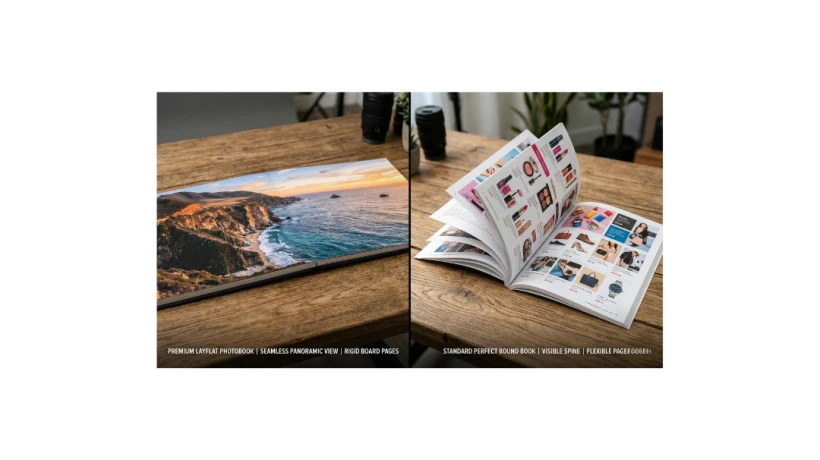
Choosing between layflat and perfect bound Photobook Printing depends on your purpose and budget. Layflat books open fully flat, making them ideal for seamless full-spread images like weddings and portfolios, while perfect bound books offer a lighter, more cost-effective option for catalogs, lookbooks, and bulk orders.
Your Photos Deserve the Right Binding. Most People Pick Wrong.
You spent hours selecting the best photos from your wedding, your brand campaign, or your child's first year. But the moment you sit down to print them into a book, one question trips everyone up: layflat or perfect bound?
Here is the short answer. If your photos run across two pages and you want that seamless, flat spread, go with layflat. If you need a lightweight, cost effective book for portfolios, catalogs, or casual albums, perfect bound works perfectly fine.
Now let's break down exactly what makes each one different so you can pick the right format without second guessing yourself.
What Is Layflat Binding?
Layflat books open completely flat at 180 degrees. The pages are mounted on a rigid board, and the binding allows them to sit flush without any gutter or crease running through the center.
This is especially important when a photograph stretches across both pages. Think of a panoramic landscape shot or a wide group photo at a wedding. With layflat binding, nothing gets lost in the spine.
The feel of a layflat book is closer to a premium photo album. Pages are thick, sturdy, and don't bend easily. They're typically printed on heavyweight photo paper or art stock, giving the images a gallery quality look.
What Is Perfect Binding?
Perfect binding is the most common method used in softcover and many hardcover books. Pages are stacked, glued at the spine, and wrapped in a cover. Most novels, magazines, and commercial booklets use this method.
In the context of photo albums, perfect binding is lighter and more flexible. The pages are thinner, and the book doesn't open completely flat, which means images near the center may get partially hidden in the fold.
That said, it's a practical and budget friendly option when you're printing in bulk or creating something functional rather than display worthy.
How They Compare in Real Use
When it comes to photobook printing, the difference between layflat and perfect bound isn't just technical. It directly affects how your images are experienced by the viewer.
A layflat book invites someone to sit down and slowly go through each page. It's a presentation piece. A perfect bound book, on the other hand, is something people flip through more casually. Both have their place, but they serve different purposes.
Here's where each binding type works best:
Layflat is ideal for:
-
Wedding and event albums
-
Newborn and family photo books
-
Fine art photography portfolios
-
Corporate coffee table books
Perfect bound is ideal for:
-
Product catalogs with images
-
Travel journals
-
Yearbooks
-
Proof books for client review
Paper, Finish, and Print Output
The type of binding also influences which paper stocks and finishes are available to you. Layflat books usually pair with thicker, rigid sheets that support full bleed printing across the spread. You'll often see matte, silk, or lustre finishes used here.
Perfect bound books allow for a wider range of thinner papers, including uncoated, satin, and gloss. These are easier to print in large volumes and offer faster turnaround.
If color accuracy and image sharpness matter to you, pay close attention to the paper and finish options offered by your printer. The binding alone won't determine quality, but it does shape the final result.
What About Cost?
This is where the gap becomes obvious.
Layflat books cost more per unit. The materials are heavier, the printing process is more involved, and assembly takes longer. For a single personal album, the extra cost is worth every dirham. But for 50 copies of a brand lookbook? That adds up quickly.
Perfect bound books are significantly more affordable at scale. If you're producing client gifts, trade show handouts, or seasonal catalogs, this format keeps your budget in check without sacrificing presentation.
At Printery Dubai, we regularly help clients in the UAE choose the right format based on their project size, purpose, and budget.
Which One Should You Actually Go With?
Ask yourself two questions before placing your order.
First, will any images span across two pages? If yes, layflat is the safer bet. You won't lose detail in the spine.
Second, are you printing more than 10 copies? If so, perfect bound will save you money and still deliver a clean, professional product.
For personal milestones and high value branding projects, layflat is hard to beat. For functional use and volume orders, perfect bound is the more sensible choice.
The format you choose for photobook printing should match the intention behind the book. A wedding album and a product catalog don't need the same treatment.
Wrapping It Up
Both binding styles produce beautiful results when paired with good design and quality paper. Layflat gives you that premium, display ready album. Perfect bound gives you flexibility and value. Neither is better in absolute terms. The right pick depends entirely on what the book is for, how many you need, and what kind of impression you want it to leave.
Don't overthink it. Match the format to the purpose, and you'll get exactly what you need.
Frequently Asked Questions
Q.1 What is the main difference between layflat and perfect bound photo books?
Layflat books open completely flat with no gutter, making them ideal for full spread images. Perfect bound books have a glued spine and don't open flat, but they are lighter and more affordable.
Q.2 Is layflat binding more expensive than perfect binding?
Yes. Layflat books use thicker materials and a more detailed assembly process, which increases the cost per unit compared to perfect bound options.
Q.3 Can I use perfect binding for a wedding album?
You can, but layflat is the preferred choice for wedding albums. It prevents photos from being hidden in the spine and gives a more premium feel.
Q.4 How many pages can a layflat photobook hold?
Most layflat books support between 20 and 60 pages. Going beyond that can make the book very thick and heavy due to the rigid page construction.
Q.5 Which type of photobook printing is better for business use?
Perfect binding works better for business applications like catalogs, lookbooks, and portfolios, especially when printing multiple copies. It balances quality and cost effectively.


Comments
Login to Comment