Keeda Jadi: Benefits, Uses, Price in India & Side Effects
19 Oct, 2026
27 Views 0 Like(s)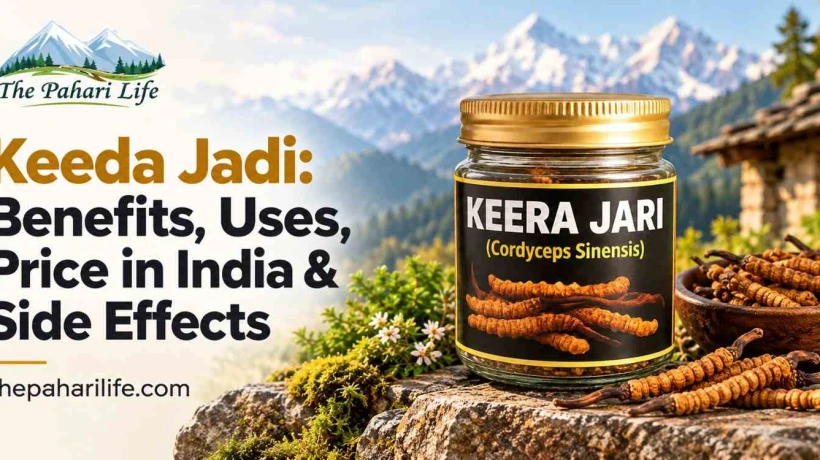
Discover Keeda Jadi, a rare Himalayan fungus known for its traditional uses. Learn about its potential benefits, price in India, possible side effects, scientific research, and how to identify original Keeda Jadi before buying.
High in the Himalayan mountains, a rare fungus known as Keeda Jadi has attracted attention for generations. Also called Yarsagumba or caterpillar fungus, it has a long history of use in traditional medicine.
Today, many people in India want to understand Keeda Jadi benefits, its price, possible side effects, and how to identify an original product.
However, not every product sold under the Cordyceps name contains the same fungus. Scientific evidence supporting many traditional health claims is also limited.
This guide explains what Keeda Jadi is, where it grows, what research suggests, and what to check before buying it.
What Is Keeda Jadi (कीड़ा जड़ी)?
Keeda Jadi is a rare parasitic fungus scientifically known as Ophiocordyceps sinensis. It grows on the larvae of certain moths in high-altitude Himalayan grasslands.
Unlike ordinary mushrooms, its growth depends on an insect host living beneath the soil.
Keeda Jadi is known by several names:
-
Keeda Jadi: Common Hindi name
-
Yarsagumba: Name used in Himalayan regions
-
Caterpillar fungus: Common English name
-
Cordyceps sinensis: Former scientific name
-
Ophiocordyceps sinensis: Currently accepted scientific name
How Does Keeda Jadi Grow?
The fungus infects a moth larva living underground. Over time, it develops inside the host, and a dark fungal stalk eventually emerges above the soil.
The collected specimen contains the preserved caterpillar body and fungal structure.
This unusual life cycle explains why Keeda Jadi is sometimes described as a combination of an insect and a fungus.
Where Is Keeda Jadi Found in India?
Keeda Jadi grows naturally in cold Himalayan environments, generally at elevations of around 3,000–5,000 metres.
In India, it is associated with high-altitude regions of Uttarakhand, including areas around Pithoragarh and Chamoli.
Collection usually takes place after winter snow begins to melt.
Why Is Keeda Jadi So Rare?
Its limited availability is linked to several factors:
-
It requires specific mountain conditions.
-
Its growth depends on suitable insect larvae.
-
Collection is seasonal and labour-intensive.
-
Increased demand has placed pressure on wild populations.
Keeda Jadi also holds cultural and economic importance for Himalayan communities.
Readers interested in the region's food and traditional products can learn more about Himalayan sourcing and mountain traditions.
Keeda Jadi Benefits and Uses: What Does Research Say?
Keeda Jadi has traditionally been associated with energy, stamina and general wellness.
However, traditional uses should not be confused with clinically proven health benefits.
1. Energy and Physical Stamina
Keeda Jadi has been used in traditional medicine by people experiencing tiredness or reduced physical energy.
Some small studies involving Cordyceps-containing preparations have investigated exercise performance, but findings remain mixed.
There is insufficient evidence to conclude that wild Keeda Jadi reliably improves stamina in healthy adults.
2. Immune Function
Researchers have studied certain compounds in Cordyceps fungi, including polysaccharides, for their potential effects on immune-related processes.
Many findings come from laboratory or animal studies.
More human research is required before claiming that Keeda Jadi strengthens immunity or prevents illness.
3. General Wellness and Healthy Ageing
Traditional medicine sometimes associates Keeda Jadi with vitality and healthy ageing.
Scientists continue to investigate its biological compounds, but there is no convincing clinical evidence that consuming Keeda Jadi slows human ageing or increases lifespan.
4. Keeda Jadi Benefits for Men
Keeda Jadi has traditionally been associated with male vitality and physical strength.
However, claims that it increases testosterone, improves fertility or treats sexual health problems have not been established through strong human clinical research.
For an independent review of the evidence, see Memorial Sloan Kettering Cancer Center's Cordyceps guide.
Keeda Jadi vs Cordyceps Militaris: Key Differences
Wild Himalayan Keeda Jadi is often confused with Cordyceps militaris, a related fungus commonly cultivated for supplements.
Although both belong to a wider group of insect-associated fungi, they are different species.
|
Feature |
Wild Keeda Jadi |
Cordyceps Militaris |
|
Scientific name |
Ophiocordyceps sinensis |
Cordyceps militaris |
|
Source |
Mainly wild-harvested |
Commonly cultivated |
|
Appearance |
Caterpillar body with fungal stalk |
Usually orange fruiting bodies |
|
Availability |
Limited |
More widely available |
|
Price |
Generally higher |
Generally lower |
|
Common formats |
Whole dried specimens |
Capsules, powder, extracts |
Research involving cultivated Cordyceps cannot automatically be applied to wild Himalayan Keeda Jadi.
Therefore, checking the scientific name is important when comparing products.
Keeda Jadi Price in India: What Affects the Cost?
The Keeda Jadi price in India varies according to species, origin, quality, quantity and sourcing documentation.
Wild Himalayan specimens generally cost more than cultivated Cordyceps supplements because they are difficult to collect and available in limited quantities.
For example, The Pahari Life listed a 15-piece Himalayan Keeda Jadi product at ₹7,499 when checked on 19 October 2026. The product was marked sold out at that time. Pricing and availability may change.
Factors That Influence Keeda Jadi Prices
-
Origin: Wild Himalayan material generally carries a premium.
-
Species: Different Cordyceps species have different market values.
-
Quantity: Prices may be listed per gram, piece or package.
-
Condition: Physical quality and storage can affect value.
-
Documentation: Traceability and laboratory testing help buyers evaluate quality.
For a fair comparison, check the species and quantity rather than relying only on the package price.
How to Identify Original Keeda Jadi
Identifying original Keeda Jadi requires more than examining its colour or shape.
Wild specimens usually have an elongated caterpillar-like body with a fungal stalk. However, appearance alone cannot confirm that a product is genuine.
Before purchasing, check the following:
-
Scientific name: The seller should identify the species clearly.
-
Source information: Ask where the product was collected or produced.
-
Laboratory testing: Request relevant identity and contaminant test reports.
-
Seller details: Check business information and applicable documentation.
-
Product description: Confirm whether the product contains whole fungus, powder or extract.
For example, a product labelled only "Cordyceps" may contain cultivated Cordyceps militaris rather than wild Ophiocordyceps sinensis.
A trustworthy seller should clearly explain what the customer is purchasing.
Keeda Jadi Side Effects and Disadvantages
Although Keeda Jadi is a natural product, natural ingredients are not automatically safe for everyone.
Possible Side Effects
According to the NIH LiverTox review of Cordyceps, occasional mild side effects reported with Cordyceps extracts include:
-
Nausea
-
Abdominal discomfort
-
Diarrhoea
-
Dry mouth
-
Reduced appetite
-
Skin rash
These observations mainly concern studied preparations and may not describe the safety of every wild Keeda Jadi product.
Possible Medication Interactions
Cordyceps may interact with blood-sugar-lowering medicines and blood thinners.
People taking insulin, anticoagulants or other prescription medicines should consult a healthcare professional before use.
Other Disadvantages
Wild Keeda Jadi can be expensive, difficult to authenticate and affected by harvesting restrictions.
Excessive collection may also threaten natural populations and their mountain habitats.
Who Should Avoid Keeda Jadi or Seek Medical Advice?
Adults interested in traditional wellness supplements should understand that Keeda Jadi is not an established treatment for fatigue, poor immunity or other medical conditions.
Medical guidance is particularly important for:
-
Pregnant or breastfeeding individuals
-
Children
-
People taking blood thinners or diabetes medication
-
People with chronic health conditions
-
Anyone preparing for surgery
People should not replace prescribed treatment with Keeda Jadi or another herbal supplement.
Expert Tips for Choosing Keeda Jadi
When comparing Keeda Jadi products, focus on clear information instead of exaggerated health claims.
-
Verify the species: Confirm the scientific name.
-
Check authenticity: Ask about relevant batch-specific laboratory tests.
-
Compare quantities: Understand the price per gram or serving.
-
Review the packaging: Look for clear product and seller information.
-
Consider sustainability: Ask about sourcing practices and required permissions.
A premium price does not automatically mean a product is authentic or medically effective.
You can also browse the Himalayan Herbs and Herbal Teas collection to understand the wider range of traditional mountain products.
Keeda Jadi Research and Conservation Facts
Scientific and conservation research provides important context about this rare fungus.
Conservation Statistics
The IUCN's 2020 assessment classified Ophiocordyceps sinensis as Vulnerable.
Researchers inferred that its population had declined by more than 30% during the preceding 15 years.
This was a scientific assessment based on available evidence, not an exact population census.
What Does Clinical Research Say About Cordyceps?
A 2017 study by Hirsch and colleagues investigated a mushroom blend containing Cordyceps militaris.
The study initially involved 28 adults. Researchers examined measures of exercise performance, including oxygen consumption and time to exhaustion.
After one week, the researchers found no significant treatment-specific improvement in the main performance measurements.
Ten participants continued for an additional two weeks. Some improvements were observed in the mushroom-blend group, but the small sample limits the conclusions.
Importantly, the study did not test wild Himalayan Keeda Jadi alone.
These findings are preliminary and cannot establish that Keeda Jadi improves exercise performance.
Read the original research study on PubMed.
Frequently Asked Questions About Keeda Jadi
1. What is Keeda Jadi called in English?
Keeda Jadi is commonly called caterpillar fungus. Its scientific name is Ophiocordyceps sinensis, formerly known as Cordyceps sinensis.
2. What are the main benefits of Keeda Jadi?
Keeda Jadi has traditionally been used for energy, stamina and general wellness. However, strong human evidence supporting many advertised benefits is lacking.
3. What is the price of Keeda Jadi in India?
Prices vary depending on species, origin, quality and quantity. Wild Himalayan specimens generally cost more than cultivated Cordyceps supplements.
4. Is Keeda Jadi safe to consume?
Safety information is limited, particularly for wild whole-fungus preparations. People taking medication or managing medical conditions should seek professional advice.
5. How can I identify original Keeda Jadi?
Check the scientific name, source information, seller documentation and relevant laboratory tests. Visual appearance alone cannot confirm authenticity.
6. Is Keeda Jadi the same as Cordyceps?
Keeda Jadi refers specifically to Ophiocordyceps sinensis. Other Cordyceps products may contain different species, including Cordyceps militaris.
7. Can Keeda Jadi be consumed daily?
There is no universally established daily dose suitable for every Keeda Jadi product. Dosage and safety depend on the preparation and individual health circumstances.
Conclusion
Keeda Jadi is a rare Himalayan fungus with an unusual life cycle and a long history in traditional medicine.
Its limited availability, cultural importance and association with traditional wellness have contributed to growing interest in India.
However, scientific evidence supporting many health claims remains limited.
Before purchasing, understand the species, verify the source, consider possible side effects and look for trustworthy product information.
Choosing a product based on clear evidence is more useful than relying on high prices or impressive marketing claims.
Learn More About Himalayan Keeda Jadi
Interested in understanding the source, traditional significance and product details of this rare Himalayan fungus?
Visit The Pahari Life's Keeda Jadi product page to review the product and check its latest availability.
Make an informed decision by considering quality, sourcing information and professional health advice.
Medical Disclaimer: This article is intended for general education only. It is not medical advice and does not replace consultation with a qualified healthcare professional. Keeda Jadi should not be used to diagnose, treat, cure or prevent a medical condition.



Comments
Login to Comment