Ingrown Hair Removal: Causes, Treatment, and Permanent Solutions for Smooth Skin
13 Apr, 2026
2223 Views 0 Like(s)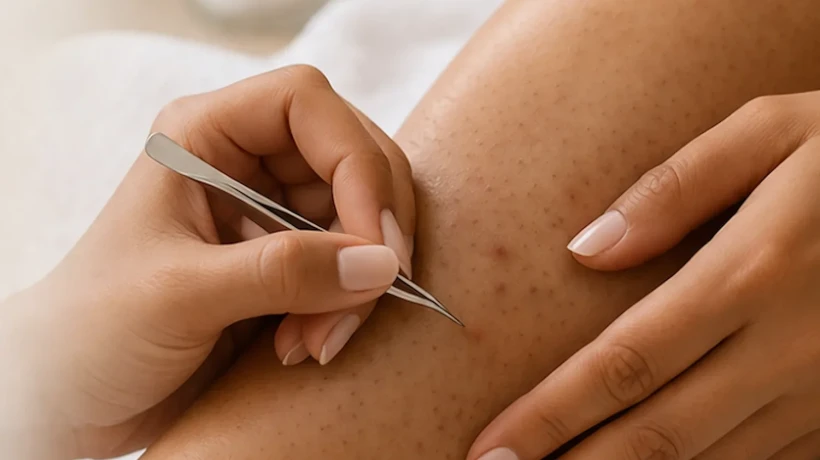
Struggling with ingrown hairs? Learn what causes them, how to safely remove them, and the best prevention tips for smooth, irritation-free skin.
Ingrown hairs are more than a cosmetic nuisance. For many people, they become a recurring skin condition that leads to inflammation, post-inflammatory hyperpigmentation (PIH), and even scarring.
If you’re repeatedly dealing with bumps after shaving, waxing, or tweezing, the problem isn’t just hair removal, it’s how the skin and hair follicle interact.
This guide breaks down ingrown hairs at a deeper level: why they happen biologically, how to treat them effectively, and how to eliminate them long-term.
What Is an Ingrown Hair (From a Skin Biology Perspective)?
An ingrown hair occurs when a growing hair shaft fails to exit the follicular opening and instead:
- Re-enters the skin (extrafollicular penetration)
- Gets trapped under the stratum corneum (top skin layer)
This triggers the body’s inflammatory response, treating the hair like a foreign object.
Definition:
An ingrown hair is a hair that grows back into the skin instead of outward, causing inflammation, bumps, and sometimes infection.
Types of Ingrown Hairs (Often Overlooked)
Understanding the type changes the treatment approach:
1. Transfollicular Ingrown Hair
Hair exits the follicle but curves back into the skin.
Common in: Curly/coarse hair
Seen in: Beard, bikini area
2. Extrafollicular Ingrown Hair
Hair never properly exits the skin and grows sideways underneath.
Common in: Thickened or clogged skin
3. Razor Bumps (Pseudofolliculitis Barbae)
A chronic inflammatory condition often mistaken for acne.
- Most common in men (beard area)
- Can lead to long-term pigmentation and scarring
Root Causes of Ingrown Hairs (Deeper Analysis)
1. Follicular Distortion from Hair Removal
Shaving creates a sharp hair tip. As it regrows, it can pierce the skin instead of exiting cleanly.
Waxing can also weaken the follicle direction, leading to misdirected growth.
2. Hyperkeratinization (Dead Skin Buildup)
The skin produces excess keratin, which blocks the follicle opening.
Think of it as a “sealed exit door” where the hair has nowhere to go.
3. Hair Structure and Growth Angle
Curved follicles (common in coarse or curly hair) increase the probability of hair re-entering the skin.
4. Chronic Inflammation Cycle
Once ingrown hairs start recurring:
- Inflammation thickens the skin
- Thicker skin traps more hairs
- More trapped hairs increase inflammation
A self-perpetuating loop forms.
How to Remove Ingrown Hairs (Treatment Hierarchy)
Instead of random remedies, think in levels of intervention:
Level 1: Surface Correction (Mild Cases)
Chemical Exfoliation (Most Effective First Step)
- Salicylic acid (BHA): penetrates oil and unclogs follicles
- Glycolic acid (AHA): dissolves dead skin buildup
Why it works:
It removes the barrier trapping the hair.
Warm Compress Therapy
- Softens the stratum corneum
- Encourages natural hair release
Level 2: Targeted Intervention (Moderate Cases)
Controlled Extraction
Only when the hair loop is visible:
- Use sterile tools
- Lift, not pluck
- Avoid digging (prevents scarring)
Anti-Inflammatory + Antibacterial Care
- Reduces swelling
- Prevents infection
Key ingredients:
- Niacinamide
- Tea tree oil
- Hydrocortisone (short-term use)
Level 3: Chronic Case Management
When ingrown hairs are frequent or persistent:
- Repeated inflammation damages skin integrity
- Pigmentation becomes harder to reverse
- At-home care becomes insufficient
This is where professional intervention becomes necessary.
Permanent Ingrown Hair Solutions (What Actually Works)
Electrolysis (Gold Standard for Permanent Removal)
Electrolysis hair removal targets individual hair follicles using electrical current, permanently destroying their ability to produce hair.
Why it’s the most effective:
- Works on all hair types and skin tones
- Eliminates the root cause (hair itself)
- Prevents future ingrown hairs completely
Best for:
- Facial hair
- Hormonal hair growth
- Chronic, localized ingrown hairs
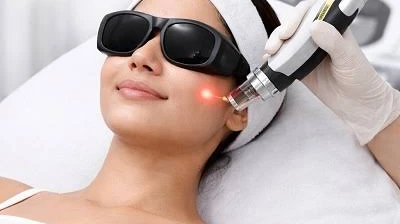
Laser Hair Removal (Reduction Approach)
Laser hair removal reduces hair density and thickness over time.
Important nuance:
- Not fully permanent
- Works best on dark hair/light skin contrast
- Reduces ingrown hairs but may not eliminate them completely
Professional Extractions + Skin Treatments
Clinics can combine:
- Sterile extraction
- Chemical peels
- Barrier repair treatments
This is especially useful for:
- Pigmentation
- Scarring
- Severe inflammation
Post-Inflammatory Hyperpigmentation (PIH) from Ingrown Hairs
One of the most overlooked consequences.
When inflammation occurs, the skin produces excess melanin, leading to dark spots.
More common in:
- Medium to deeper skin tones
- Chronic ingrown hair sufferers
How to Treat It:
- Azelaic acid
- Niacinamide
- Sunscreen (non-negotiable)
Without treatment, pigmentation can last months or longer.
How to Prevent Ingrown Hairs (System-Based Approach)
Prevention isn’t one step. It’s a routine system.
Step 1: Pre-Hair Removal Prep
- Cleanse skin
- Exfoliate lightly
- Use warm water
Step 2: Correct Hair Removal Technique
Shaving rules:
- Always shave in the direction of growth
- Use minimal pressure
- Avoid multiple passes
Step 3: Immediate Aftercare
- Apply soothing, non-comedogenic moisturizer
- Avoid occlusive products immediately after
Step 4: Ongoing Maintenance
- Chemical exfoliation (2–3x/week)
- Hydration to maintain barrier function
Step 5: Long-Term Strategy
If ingrown hairs are recurring:
Switch from temporary removal to permanent reduction or removal
Ingrown Hair vs Razor Bumps (Clear Distinction)
AEO Answer:
Ingrown hairs occur when hair grows into the skin, while razor bumps are an inflammatory reaction to shaving that may include ingrown hairs but also involve general irritation.
When Should You See a Professional?
Seek expert care if you notice:
- Persistent or worsening bumps
- Pain, swelling, or pus
- Dark spots that don’t fade
- Repeated ingrown hairs in the same area
FAQs (Structured for Featured Snippets)
What is the fastest way to remove an ingrown hair?
Use a warm compress, followed by gentle exfoliation. If visible, carefully lift the hair without digging into the skin.
Why do ingrown hairs keep coming back?
Recurring ingrown hairs are caused by hair type, improper removal techniques, and lack of exfoliation, often combined with chronic inflammation.
Can ingrown hairs become permanent?
The condition can become chronic, but the hairs themselves are not permanent. However, pigmentation and scarring can be long-lasting.
What is the only permanent solution?
Electrolysis is the only method that permanently destroys the hair follicle and prevents ingrown hairs entirely.
Final Thoughts (Conversion-Oriented Insight)
Ingrown hairs aren’t just a surface issue, they’re a cycle problem involving hair structure, skin buildup, and inflammation.
You can manage them temporarily with exfoliation and care.
But if they keep coming back, the most effective approach is to remove the cause, not just the symptom.
That’s where permanent solutions like electrolysis change the game entirely.

Comments
Login to Comment