India Plant-based Milk Market Size, Share, Trends, Demand, Growth Opportunities and Forecast 2026–2034
31 Aug, 2026
490 Views 0 Like(s)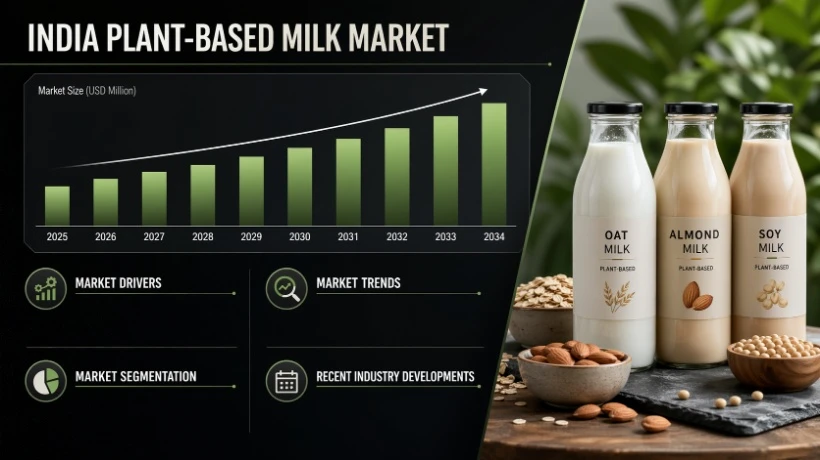
The India plant-based milk market reached USD 857.7 Million in 2025 and is projected to reach USD 1,828.0 Million by 2034, growing at a CAGR of 8.33% during 2026-2034.
Market Outlook
The India plant-based milk industry size reached USD 857.7 Million in 2025. Looking forward, the market is projected to reach USD 1,828.0 Million by 2034, exhibiting a robust compound annual growth rate (CAGR) of 8.33% during the forecast period from 2026 to 2034.
The Indian dairy alternative ecosystem is undergoing a massive structural transformation. Historically a niche, highly premium segment reserved for the urban ultra-wealthy or those with severe dairy allergies, plant-based milk has rapidly transitioned into a mainstream wellness lifestyle choice. This evolution is fundamentally propelled by a surging national awareness of lactose intolerance (affecting approximately 65%–90% of Indian adults), alongside the rapid cultural adoption of vegan and flexitarian diets led by environmentally and ethically conscious Gen-Z and millennial demographics.
Furthermore, the market is experiencing a profound pivot in formulation and functionality. Manufacturers are moving aggressively beyond basic soy and almond variants to advanced, protein-fortified, and barista-grade oat milks designed specifically to replicate the mouthfeel and frothing capabilities of conventional dairy. Supported by the exponential expansion of quick-commerce platforms and the mainstreaming of plant-based options in premium café chains, the India plant-based milk market stands as a highly dynamic, rapidly premiumizing pillar of the country’s modern food and beverage economy.
Market Snapshot
-
Market Size in 2025: USD 857.7 Million
-
Forecast Market Size by 2034: USD 1,828.0 Million
-
CAGR (2026-2034): 8.33%
-
Leading Formulation: Unflavored (58.4% share)
-
Leading Category: Conventional (74.2% share)
-
Fastest Growing Category: Organic (~10.2% CAGR)
-
Leading Region: North India (28.9% share)
What are the Growth Factors of the India Plant-Based Milk Market?
-
Explosion of the Premium Café and B2B Foodservice Channels: The rapid proliferation of specialty coffee chains (like Third Wave Coffee Roasters, Blue Tokai, and Starbucks) has fundamentally driven the B2B demand for plant-based milk, particularly oat and almond barista variants. These establishments operate as critical experiential touchpoints, allowing consumers to taste high-quality, frothable plant milks in lattes and cappuccinos without committing to a full-carton purchase, significantly driving subsequent retail adoption.
-
Aggressive Functional Fortification: A massive barrier to plant-based milk adoption in a dairy-obsessed country like India was the perceived lack of nutrition (specifically calcium and protein). Manufacturers have aggressively countered this by launching hyper-fortified variants enriched with Vitamin D, B12, Calcium, and Omega-3s. The integration of high plant-protein content allows brands to target the rapidly expanding fitness-conscious demographic seeking dairy-free muscle recovery beverages.
-
E-Commerce and D2C Supply Chain Democratization: Historically, plant-based milks were restricted to the cold-chain aisles of ultra-premium supermarkets in Tier-1 cities. The deployment of Ultra-High Temperature (UHT) processing in ambient Tetra Paks, combined with the explosive reach of 10-minute quick-commerce platforms (Blinkit, Swiggy Instamart) and Direct-to-Consumer (D2C) subscription apps, has instantly democratized product availability across major metropolises and increasingly in Tier-2 hubs.
Grab a sample copy of this report: https://www.imarcgroup.com/india-plant-based-milk-market/requestsample
What Are the Key Trends Shaping the Market?
-
Oat Milk's Meteoric Rise Over Soy and Almond: While soy milk was the historical pioneer, oat milk is currently exhibiting the fastest growth trajectory in the Indian market. Oat milk's inherently creamy texture, naturally sweeter flavor profile, and superior environmental sustainability (requiring drastically less water than almond cultivation) have made it the absolute preferred choice for both baristas and health-conscious home consumers.
-
The Pivot to Organic and Clean-Label Certification: As the market matures, affluent consumers are aggressively scrutinizing ingredient lists. There is a massive structural trend toward the Organic category (projected to grow at a ~10.2% CAGR) and "clean-label" formulations. Brands that guarantee zero refined sugars, zero artificial preservatives, and certified organic sourcing are successfully commanding massive price premiums and fiercely differentiating themselves from chemically stabilized mass-market variants.
-
Localization of Flavors: To appeal to the traditional Indian palate, manufacturers are heavily expanding their flavored portfolios (projected to grow at a ~9.1% CAGR). Innovations include turmeric-infused almond milk (haldi doodh alternatives), cardamom-flavored oat milk, and saffron-pistachio blends, directly positioning plant-based options as viable replacements for cultural and festive dairy beverages.
What Are the Major Market Challenges?
-
Prohibitive Price Premiums Over Conventional Dairy: The absolute biggest structural barrier to mass-market penetration is pricing. Plant-based milks currently command a staggering 3x to 5x price premium over conventional cow or buffalo milk. In a highly price-sensitive market like India—where heavily subsidized, ubiquitous dairy cooperatives dictate the baseline price—this extreme premium strictly confines plant-based milk to affluent, Tier-1 urban demographics.
-
FSSAI Regulatory and Labeling Ambiguities: The market faces significant regulatory friction regarding nomenclature. Intense lobbying by the traditional dairy industry has led to strict Food Safety and Standards Authority of India (FSSAI) guidelines attempting to restrict the use of the word "milk" for non-animal-derived beverages. This ongoing regulatory ambiguity forces plant-based brands to constantly restructure their labeling (using terms like "beverage" or "drink"), complicating brand messaging and consumer trust.
-
Volatility in Global Raw Material Procurement: Many premium plant-based brands rely heavily on imported raw materials (such as Australian oats or Californian almonds) to maintain high-quality flavor profiles. Fluctuations in global commodity cycles, currency exchange rates, and erratic seasonal yields frequently trigger severe raw material inflation, aggressively compressing the profit margins of emerging D2C startups.
Explore the Full Report with Charts, Table of Contents, and List of Figures: https://www.imarcgroup.com/india-plant-based-milk-market
How Is the Market Segmented?
-
By Formulation: Segmented into Unflavored and Flavored. The Unflavored segment holds a dominant 58.4% market share (2025), driven entirely by its absolute versatility in daily cooking, baking, and blending with tea/coffee without altering the foundational taste profile.
-
By Category: Divided into Conventional and Organic. The Conventional segment leads with a 74.2% share due to higher availability and lower price points. However, the Organic segment is the fastest-growing frontier, fueled by elite urban consumers demanding chemical-free, certified clean-label nutrition.
-
By Product: The market encompasses Soy Milk, Almond Milk, Coconut Milk, Oat Milk, Rice Milk, and Others. While Almond and Soy currently hold massive legacy volume, Oat Milk is aggressively capturing market share through the specialty coffee sector.
-
By Form: Categorized into Liquid and Powder. The Liquid form heavily dominates retail shelves via ready-to-drink UHT cartons, though the Powder format is gaining niche traction for its extended shelf life and suitability for travel.
-
By Distribution Channel: Spans Supermarkets and Hypermarkets, Convenience Stores, Online Retail, and Others. Online Retail (including Q-commerce and D2C subscriptions) is massively accelerating trial rates and recurring revenue pipelines.
-
By Region: Geographically mapped across North India, West and Central India, South India, and East and Northeast India. North India commands the lead with a 28.9% share, closely followed by West and Central India (27.6%), deeply anchored by the massive health-conscious, high-income millennial populations in Delhi NCR, Mumbai, and Pune.
Competitive Landscape
The India plant-based milk market features a highly dynamic, rapidly evolving ecosystem characterized by fierce competition between agile, venture-backed D2C startups and massive legacy FMCG conglomerates attempting to diversify their dairy portfolios. Market leaders continuously focus on deploying advanced enzymatic blending technologies to improve mouthfeel, securing aggressive B2B café partnerships, and expanding their footprint across major quick-commerce networks.
Key players operating in the market include:
-
The Hershey Company
-
Veganday Lifestyle Private Limited
-
Blue Diamond Growers
-
Bagrry's
Recent News or Developments
-
Country Delight Scales Oat Beverage Delivery via D2C Infrastructure (Mid-2026): Expanding aggressively beyond conventional dairy, direct-to-home subscription leader Country Delight heavily scaled its national distribution of its clean-label 'Oat Beverage' (crafted from imported Australian oats with zero chemical preservatives). Leveraging its massive existing cold-chain and morning delivery app infrastructure, the brand has successfully captured a massive share of urban lactose-intolerant and flexitarian households.
-
HRX Expands Plant-Based Functional Fitness Beverages (Early 2026): Tapping into the surging demand for dairy-free sports nutrition, lifestyle and fitness brand HRX aggressively expanded its distribution of high-protein oat milk shakes across urban retail and e-commerce channels. Formulated to deliver 25g of plant protein per serving, this product line directly bridges the gap between clean-label plant milks and high-performance fitness recovery.
-
Quick-Commerce Platforms Dominate Plant-Based Retail Distribution (2026): Throughout 2026, leading plant-based brands like GoodMylk Co., Only Earth, and Alt Co. heavily prioritized quick-commerce integrations (Blinkit, Zepto, and Instamart). By bypassing traditional, fragile refrigerated retail logistics, these brands now utilize 10-minute dark-store fulfillment to deliver ambient UHT cartons directly to urban millennials, driving record trial rates and repeat purchase frequencies.
Customization Note: If you require any specific information not covered within this report's scope, we will provide it as part of the customization.
Request Report Customization: https://www.imarcgroup.com/request?type=report&id=21107&flag=E
Conclusion
The India plant-based milk market is structurally positioned for exceptionally dynamic and sustained expansion through 2034. Transitioning decisively from a dietary restriction necessity into a mainstream lifestyle and wellness choice, the industry is fundamentally propelled by heightened health consciousness, severe lactose intolerance rates, and the undeniable cultural influence of veganism among urban millennials.
Furthermore, the stringent focus by disruptive D2C startups and legacy FMCG brands on engineering advanced enzymatic blends that perfectly mimic conventional dairy mouthfeel has successfully dismantled early consumer skepticism. Supported by the exponential rise of specialized oat and almond barista variants in the booming B2B café sector and the immediate accessibility provided by quick-commerce platforms, the plant-based milk sector unequivocally stands as one of the most innovative and rapidly premiumizing verticals within India's contemporary food and beverage economy.


Comments
Login to Comment