India Olive Oil Market Share, Growth Trends, Industry Outlook and Forecast Report 2026–2034
07 Aug, 2026
740 Views 0 Like(s)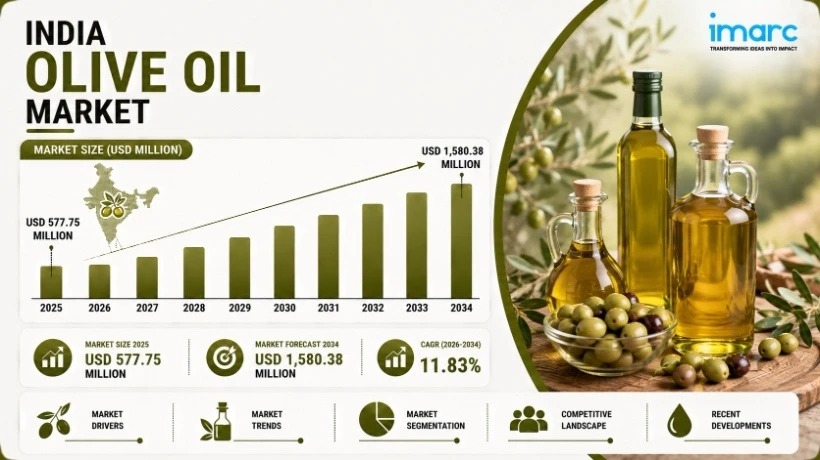
The India olive oil market size was valued at USD 577.75 Million in 2025 and is projected to reach USD 1,580.38 Million by 2034, exhibiting a CAGR of 11.83% during the forecast period 2026-2034.
India Olive Oil Market: Industry Report 2026–2034
The India olive oil market size reached USD 577.75 Million in 2025 and is projected to reach USD 1,580.38 Million by 2034, growing at a CAGR of 11.83% during 2026–2034. This expansion reflects a structural shift as health-conscious consumption rapidly replaces traditional cooking oil habits in metropolitan households. As consumers increasingly prioritize cardiovascular health and natural ingredients, the market is undergoing significant premiumization across both food and personal care applications.
What Is the Size and Growth Forecast of the India Olive Oil Market?
The India olive oil sector has demonstrated steady historical expansion supported by rising health consciousness, followed by a forecast curve heavily powered by premium product adoption, e-commerce scale-up, and expanding culinary versatility.
-
Market valued at USD 577.75 Million in 2025.
-
Projected to reach USD 1,580.38 Million by 2034.
-
Expected to grow at a CAGR of 11.83% during the 2026–2034 forecast period.
-
Over 95% of olive oil consumed in India in 2025 is imported, primarily sourced from major global producers in Spain and Italy.
-
Emerging indigenous olive cultivation initiatives in states like Rajasthan and Himachal Pradesh are expected to support future domestic supply chains.
What Are the Latest Emerging Trends in the India Olive Oil Market?
- Cold-Pressed Premiumisation
Cold-pressed extra virgin olive oil is increasingly becoming the flagship premium variant for modern consumers seeking maximum nutritional retention. Major domestic fast-moving consumer goods brands are actively entering this high-value segment, introducing cold-pressed variants packaged in convenient bottles to seamlessly capture daily, health-led household usage.
- Single-Origin and Varietal Differentiation
Brands are rapidly introducing varietal-led olive oil ranges, effectively mirroring premium wine positioning to attract sophisticated culinary enthusiasts. Single-variety products, such as Arbequina-based fruity oils and Picual-based character oils, are expanding across both digital and physical retail channels, prioritizing unique flavor profiles and transparent origin storytelling.
- Cosmetic and Hair-Care Diversification
Olive oil is experiencing surging demand within the personal care industry, particularly integrated into Ayurveda-inspired hair-care lines. The expanding cosmetic and pharmaceutical end-use segments are creating a robust, structural non-food demand stream that heavily complements traditional dietary consumption by leveraging the oil's natural hydrating properties.
- Direct-to-Consumer Digital Brands
Direct-to-consumer, digital-first olive oil brands are scaling rapidly by utilizing targeted subscriptions, recipe-led content, and influencer partnerships. As digital grocery deepens its reach into tier-2 and tier-3 cities, these e-commerce native brands are successfully disrupting traditional retail distribution networks with highly personalized marketing strategies.
➤ Request Sample Report (TOC & Charts): https://www.imarcgroup.com/india-olive-oil-market/requestsample
What Growth Factors Are Driving the India Olive Oil Market?
- Rising Urban Health Consciousness
A profound structural shift toward health-conscious diets fundamentally drives continuous market expansion. As urban consumers increasingly prioritize cardiovascular health and seek to mitigate lifestyle diseases, they proactively replace traditional vegetable oils with olive oil, heavily praised for its high levels of monounsaturated fats and antioxidants.
- Expanding E-Commerce Reach
The rapid proliferation of digital grocery platforms and dedicated online stores is drastically improving premium edible oil accessibility. Platforms effectively bridge massive distribution gaps, allowing consumers in tier-2 and tier-3 cities to seamlessly discover and purchase high-quality imported olive oils that may lack traditional physical retail visibility.
- Regional Culinary Integration
Olive oil is successfully being adapted for traditional Indian cooking methods rather than remaining restricted to Western dishes. Accelerated by celebrity chefs, consumers are increasingly utilizing specific heat-resistant blends for North Indian grilling and tandoor cooking, as well as South Indian lentil and vegetable preparations.
- Growth of Mediterranean Cuisine
The growing penetration of Mediterranean cuisine across both home kitchens and the institutional food service sector acts as a vital demand driver. An expanding affluent demographic heavily frequents premium restaurants offering authentic global culinary experiences, which mandates massive, continuous bulk olive oil procurement from the hospitality sector.
Who Are the Key Players Shaping the India Olive Oil Sector?
The competitive landscape of the India olive oil market encompasses a mix of established global importers and rapidly expanding domestic FMCG conglomerates. Competition is intensely centered around consumer education, pricing strategies to offset import duties, and the rapid expansion of direct-to-consumer digital channels.
-
Borges India: A dominant market leader maintaining a strong consumer-centric focus, offering customized blends like Extra Light olive oil tailored for Indian cooking, alongside premium single-variety extra virgin ranges.
-
Tata Consumer Products: A massive FMCG group rapidly expanding its premium edible oil platform. The company recently entered the segment by launching cold-pressed Extra Virgin Olive Oil to target health-aware consumers.
-
Leonardo Olive Oil: A highly recognized brand in the Indian market, focusing on comprehensive consumer education regarding the health benefits and culinary versatility of olive oil across local cuisines.
-
Del Monte: An established premium food player actively leveraging its vast retail distribution and brand trust to supply a diverse, highly competitive portfolio of virgin, extra virgin, and pomace olive oils.
➤ Explore the Full Report with Charts, Table of Contents, and List of Figures: https://www.imarcgroup.com/india-olive-oil-market
Deep-Dive Segment Insights
The India olive oil market is segmented by type, distribution channel, and region, with olive pomace oil, supermarkets, and North India capturing the largest respective shares in 2025 on the strength of cooking suitability and dense urban retail infrastructure.
By Type Olive Pomace Oil dominates the segment with a 38.6% market share in 2025.
-
High-Heat Suitability: Its neutral flavor profile and significantly higher smoke point make it perfectly suited for traditional, high-heat Indian cooking applications, such as deep-frying and sautéing.
-
Cost Effectiveness: It offers a lower price point compared to extra virgin variants, providing an accessible entry point for middle-income households transitioning to healthier edible oils.
-
Extra Virgin Expansion: Extra Virgin Olive Oil follows at 24.8%, strictly anchored by strong health-led premium positioning and rising demand for raw consumption in salads and dressings.
By Distribution Channel Supermarkets and Hypermarkets lead the market with a 41.3% share in 2025.
-
Premium Shelf Expansion: Dominance is anchored by major retail chains expanding their premium edible oil sections across prominent urban centers to ensure high visibility.
-
Digital Acceleration: Online stores, accounting for 21.4% in 2025, represent the fastest-growing channel, significantly expanding premium product access beyond metropolitan boundaries and into tier-2 cities.
By Region North India leads the regional market with a 34.2% share in 2025.
-
Premium Grocery Density: The region's dominance is largely driven by Delhi-NCR's incredibly dense network of premium supermarkets and a highly concentrated affluent consumer base.
-
HoReCa Demand: There is a highly concentrated demand from the Hotel, Restaurant, and Café (HoReCa) sector operating within the northern metropolitan corridors.
-
Western Affluence: West and Central India follow at 29.5%, heavily anchored by wealthy households and strong premium grocery consumption in cities like Mumbai and Pune.
Recent Developments:
-
April 2025: Tata Simply Better launched cold-pressed Extra Virgin Olive Oil and Sesame Oil in 1-litre PET bottles, marking a significant entry by a major Indian FMCG conglomerate into the premium cold-pressed segment.
-
January 2025: Borges India officially launched two single-variety extra virgin olive oils Arbequina-based 'Fruity' and Picual-based 'Character' available across online and offline channels to reinforce its premium leadership through varietal differentiation.
-
2025: Indigenous olive cultivation initiatives in states like Rajasthan and Himachal Pradesh gained notable momentum, actively working to slowly reduce India's heavy 95% reliance on imports from Spain and Italy and stabilize long-term supply.
Customization Note: If you require any specific information not covered within this report's scope, we will provide it as part of the customization.
➤ Request Report Customization: https://www.imarcgroup.com/request?type=report&id=21525&flag=E
Frequently Asked Questions (FAQ)
Q1. How big is the India olive oil market?
The India olive oil market size was valued at USD 577.75 Million in 2025.
Q2. What is the projected growth rate of the India olive oil market?
The market is projected to grow at a CAGR of 11.83% from 2026–2034 to reach USD 1,580.38 Million by 2034.
Q3. Which type of olive oil holds the largest market share?
Olive Pomace Oil dominates the market with a 38.6% share in 2025, supported heavily by its lower price point and high-heat suitability for traditional Indian cooking.
Q4. Which region dominates the India olive oil market?
North India leads the regional segment with a 34.2% share in 2025, driven by Delhi-NCR's premium grocery density and concentrated HoReCa demand.
Q5. What are the main growth drivers for the India olive oil market?
Rising health awareness among urban consumers, the growing penetration of Mediterranean cuisine, expanding e-commerce reach for premium edible oils, and increasing applications in cosmetics and pharmaceuticals.
Conclusion
The India olive oil market is on a robust growth path, expanding from USD 577.75 Million in 2025 to a projected USD 1,580.38 Million by 2034 at a strong CAGR of 11.83%. This structural shift is primarily driven by metropolitan consumers actively replacing traditional cooking oils with healthier alternatives to mitigate lifestyle diseases. While the market currently relies heavily on imports with over 95% of olive oil sourced from Spain and Italy the rapid expansion of direct-to-consumer e-commerce channels, rising cosmetic applications, and emerging indigenous cultivation initiatives in Rajasthan and Himachal Pradesh ensure that olive oil will continue to solidify its position as an increasingly accessible and versatile staple in modern Indian households.


Comments
Login to Comment