Improving Industrial Precision Using a Helium Leak Testing Machine
27 Jan, 2026
9424 Views 0 Like(s)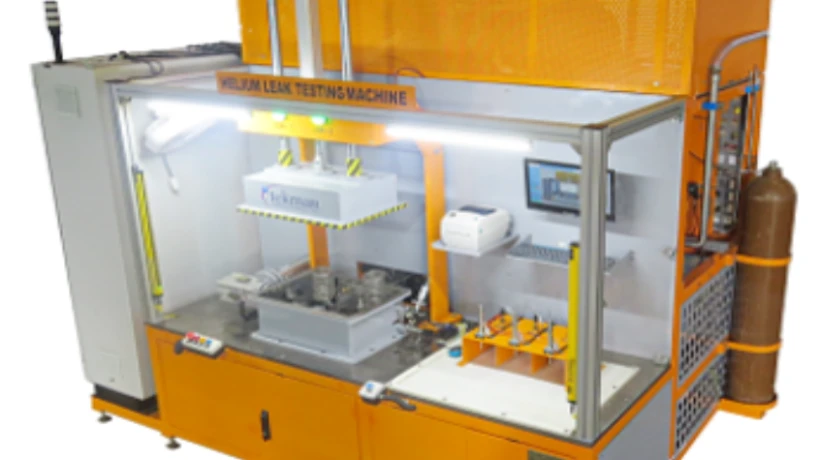
Integrity of components and systems is critical in modern industrial environments. Even the smallest leak can compromise safety, reduce efficiency, and impact product quality. A helium leak testing machine is one of the most precise and reliable quality assurance tools available today. It enables industries to detect microscopic leaks in a controlled manner, ensuring reliable, safe, and high-performance operations.
This blog explains what a helium leak testing machine is, how it works, its advantages, industrial applications, selection criteria, and best operational practices.
Understanding the Helium Leak Testing Machine
A helium leak testing machine is a specialized system designed to identify leaks in sealed components, pipelines, and pressure or vacuum systems. Helium is used as the tracer gas because of its extremely small atomic size and inert, non-reactive nature.
Unlike traditional leak detection methods that rely on air or less sensitive gases, helium can pass through extremely small openings. This makes it possible to detect leaks that would otherwise go unnoticed. The machine can operate using vacuum testing methods or sniffing techniques, offering flexibility across a wide range of industrial applications.
Working Principle of a Helium Leak Testing Machine
Understanding the working process helps highlight why this method is considered highly accurate and reliable.
Preparation and Setup
The component or system under test is sealed and connected to the testing machine. Calibration and baseline measurements are performed to ensure accuracy.
Helium Introduction
Helium is either injected inside the system or sprayed externally, depending on whether the vacuum or sniffing method is used.
Detection Phase
Highly sensitive detectors monitor escaping helium molecules. Mass spectrometer-based sensors are commonly used to identify even the smallest traces.
Analysis and Reporting
The machine measures leak rates, usually expressed in standard cubic centimeters per second, and generates detailed reports for evaluation.
This structured process allows industries to locate weak points early and address them before failures occur.
Key Advantages of a Helium Leak Testing Machine
A helium leak testing machine offers multiple benefits across industrial operations.
High Detection Accuracy
Helium’s small atomic size allows detection of extremely fine leaks that other methods cannot identify.
Non-Destructive Testing
Components and systems remain undamaged during testing, preserving their integrity.
Improved Safety
Early leak detection helps prevent hazardous situations in gas lines, sealed vessels, and pressurized systems.
Cost Efficiency
Detecting leaks early reduces downtime, repair costs, and product recalls.
Versatile Applications
The machine supports different component sizes, pressure ranges, and testing environments.
Compliance with Industry Standards
Helium leak testing meets strict regulatory and quality standards across multiple industries.
Industrial Applications of Helium Leak Testing
Helium leak testing machines are widely used across diverse sectors.
Aerospace Industry
Fuel tanks, pressure vessels, and critical aircraft components are tested to ensure leak-free performance under extreme conditions.
Automotive Industry
Fuel systems, air conditioning units, and battery enclosures are tested for safety and reliability.
Pharmaceutical Industry
Ensures airtight sealing of sterile containers, vials, and medical packaging.
Electronics Manufacturing
Used for vacuum-insulated products, semiconductor components, and sealed electronic devices.
Industrial Gas Systems
Pipelines, tanks, and vacuum systems in chemical and cryogenic environments are tested for safety and consistency.
Research and Development
Laboratories use helium leak testing to validate experimental setups and prototypes without compromising data integrity.
Selecting the Right Helium Leak Testing Machine
Choosing the correct machine depends on several operational factors.
Sensitivity Requirements
The detection capability should match the required leak rate thresholds.
Testing Method Compatibility
Ensure the machine supports vacuum testing or sniffing methods as needed.
Component Size and Geometry
The system must accommodate the size and complexity of the components being tested.
Automation and Reporting Features
Automated testing and digital reporting improve efficiency and traceability.
Maintenance and Calibration Support
Reliable serviceability ensures long-term accuracy and performance.
Integration Capability
The machine should align with existing production and quality control processes.
Best Practices for Operating a Helium Leak Testing Machine
Proper operation ensures consistent performance and reliable results.
Baseline Leak Assessment
Establish baseline measurements for accurate comparison.
Regular Calibration
Periodic calibration of detectors and sensors maintains precision.
Skilled Personnel
Operators should be trained in testing procedures and result interpretation.
Clean Testing Environment
Minimize contamination to avoid false readings.
Routine Maintenance
Regular inspection and cleaning improve system reliability.
Data Documentation
Maintain detailed records to meet compliance and performance monitoring needs.
Addressing Common Challenges
While highly effective, helium leak testing presents certain challenges.
Helium availability and cost can be managed through efficient usage and recovery methods. Environmental factors such as humidity and contamination should be controlled for accurate results. Complex component geometries require careful probe placement and method selection. Regular training ensures accurate operation and interpretation.
Proactive planning helps overcome these challenges and maximizes testing efficiency.
Conclusion
A helium leak testing machine is an essential tool for industries that prioritize precision, safety, and reliability. Its unmatched accuracy in leak detection enhances operational efficiency, reduces risk, and ensures compliance with strict quality standards.
From aerospace and automotive manufacturing to pharmaceuticals and research laboratories, this technology proves its value across diverse applications. When supported by proper selection, best practices, and regular maintenance, a helium leak testing machine becomes a strategic asset that strengthens operational integrity and long-term performance.



Comments
Login to Comment