How to Fix Common Plumbing Issues at Home: Long-Term Solutions
16 Sep, 2026
11 Views 0 Like(s)
Discover long-term solutions for common home plumbing issues in Singapore, including leaks, blocked drains, taps, and toilets.
Common home plumbing issues — such as leaking pipes, blocked drains, low water pressure, dripping taps, and faulty toilets — can usually be resolved with the right approach. Short-term patches like sealant tape or plunging often delay the real problem. Lasting repairs require identifying the root cause, using proper materials, and knowing when professional help is needed.
Most homeowners in Singapore deal with at least one plumbing problem each year. Whether you're in an HDB flat, a condo, or a landed property, understanding how to properly address these issues can save you money and prevent damage down the line. Home plumbing services cover everything from minor tap repairs to full pipe replacements — but many problems can be managed more effectively when you understand what's actually going wrong.
This guide walks you through the most common household plumbing problems and the lasting fixes that actually work.
Why Temporary Fixes Make Plumbing Problems Worse
It's tempting to wrap a leaking joint with waterproof tape and call it done. But temporary fixes mask symptoms without addressing the underlying cause. A slow leak hidden behind a wall can lead to mould growth, structural damage, and costly repairs — all of which could have been prevented with a proper repair early on.
In Singapore, the Public Utilities Board (PUB) estimates that household leaks can waste thousands of litres of water annually. Fixing leaks properly isn't just good for your home — it's good for your utility bill too.
How to Fix a Leaking Pipe Permanently
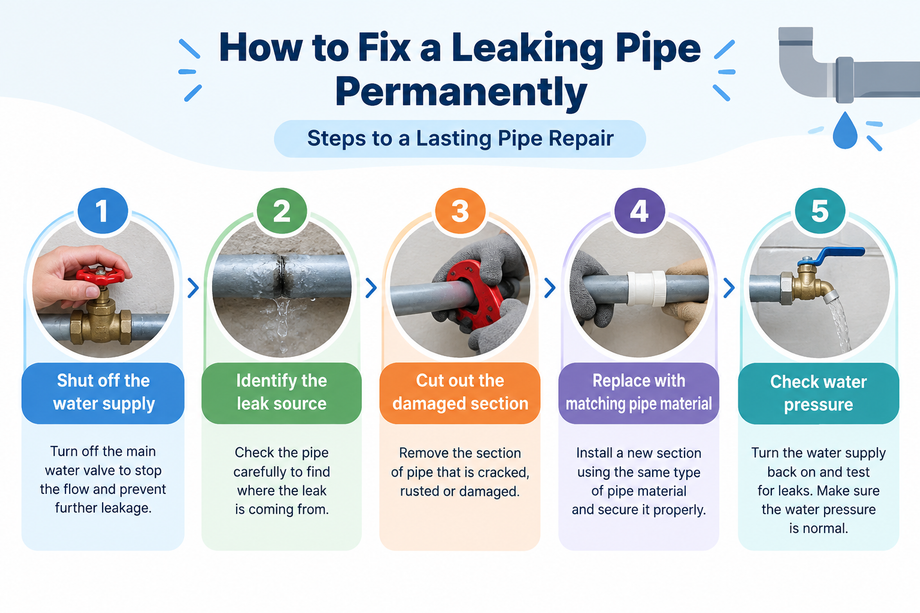
Leaking pipes are one of the most reported home plumbing repair issues in residential properties. The cause is usually one of three things: corrosion, high water pressure, or joint failure.
Steps to a Lasting Pipe Repair
-
Shut off the water supply at the main valve before doing anything.
-
Identify the leak source — is it the pipe body, a joint, or a fitting?
-
Cut out the damaged section of pipe rather than patching over it. For copper or PVC pipes, use the appropriate pipe cutter.
-
Replace with matching pipe material. Mixing metal and plastic without the right connectors causes future corrosion.
-
Check water pressure after the repair. Pressure above 5 bar is common in older Singapore buildings and strains joints over time. A pressure reducing valve (PRV) is a worthwhile long-term investment.
Clearing Blocked Drains Without Damage
Blocked drains are the most common call-out for a handyman plumber singapore . Grease build-up in kitchen sinks and hair accumulation in bathroom drains are the usual culprits.
What Actually Works Long-Term
-
Remove the drain cover and manually clear visible blockages first.
-
Use a drain snake or auger to break up deep blockages rather than relying on chemical cleaners, which degrade pipe lining over time.
-
Hydro-jet flushing, typically performed by a professional, clears grease and scale from the pipe walls entirely — not just clearing a path through the blockage.
-
Install a drain strainer in all bathroom and kitchen outlets. This single habit prevents the majority of repeat blockages.
Avoid pouring cooking oil down the sink. In Singapore's warm climate, grease solidifies quickly inside pipes and bonds with other debris, creating stubborn blockages that chemical cleaners rarely dissolve completely.
How to Fix Low Water Pressure at Home
Low water pressure in a Singapore home typically has one of these causes: a partially closed stopcock, a blocked aerator, pipe corrosion, or issues with the building's water supply system.
Diagnosing and Solving the Problem
|
Cause |
Symptom |
Long-Term Fix |
|---|---|---|
|
Blocked aerator |
Low pressure at one tap only |
Remove and soak aerator in v inegar; replace if worn |
|
Partially closed valve |
Whole-home pressure drop |
Locate and fully open the main stopcock |
|
Corroded pipes |
Gradual pressure loss over months |
Pipe replacement — no patch will resolve this |
|
Building supply issue |
Low pressure during peak hours |
Contact building management or PUB |
If pressure is consistently low despite checking all the above, a licensed plumber can conduct a flow rate test to identify exactly where the restriction lies.
Fixing a Dripping Tap: More Than Just a Washer
A dripping tap is easy to ignore, but a single tap dripping once per second wastes over 11,000 litres of water per year. In the context of Singapore's water conservation goals, this adds up fast — both for the environment and your PUB bill.
Why the Drip Keeps Coming Back
Most people replace the rubber washer and consider it fixed. But if the tap seat (the surface the washer presses against) is worn or corroded, the new washer will fail within weeks. A proper long-term fix involves:
-
Replacing the washer and inspecting the valve seat
-
Reseating or replacing the seat if it's pitted or rough
-
For ceramic disc taps, replacing the entire cartridge rather than individual components
Ceramic disc cartridges, now standard in most modern Singapore fittings, last significantly longer than traditional rubber washers. If your taps are older, upgrading to ceramic disc models is a cost-effective long-term investment.
Toilet Problems That Need Permanent Fixes
Two toilet issues come up repeatedly in home plumbing repair calls: a continuously running cistern and a toilet that doesn't flush properly.
Running Cistern
A toilet that keeps running after flushing usually has a faulty float valve or a worn flapper seal. Replace the flapper entirely — don't just adjust the chain. If the float valve is old, replace the full assembly. These parts are inexpensive and available at any hardware shop in Singapore.
Weak Flush
If flushing power has decreased over time, check the rim holes inside the toilet bowl for limescale build-up. Singapore's water supply, while treated, can still deposit mineral scale over years of use. A descaling solution applied to the rim holes overnight often restores flush strength without any mechanical repairs.
If the problem persists, the issue may be with the fill valve not allowing the cistern to fill completely. A replacement fill valve typically costs under S$30 and resolves most cases permanently.
When to Call a Professional Plumber in Singapore
Some repairs go beyond DIY territory. You should contact a licensed plumber when:
-
The leak is inside a wall or ceiling cavity
-
You notice water damage or mould around pipe routes
-
The problem recurs within weeks of a repair
-
You're dealing with the main supply line or shared building pipes
-
Any work involves the HDB or condo's common property systems
In Singapore, plumbing works affecting shared systems in HDB flats must be carried out by PUB-licensed plumbers. Unlicensed work can void your home insurance and lead to disputes with your town council or management corporation (MCST).
For homeowners and tenants who want reliable, lasting results without the guesswork, Li-fong Handyman provides professional residential plumbing services across Singapore — from routine repairs to full pipe replacements.
Frequently Asked Questions
What are the most common home plumbing problems in Singapore?
The most common issues are blocked drains, leaking pipes, dripping taps, low water pressure, and running toilets. These are typically caused by ageing fittings, scale build-up, or high water pressure — all of which have permanent solutions when properly diagnosed and repaired.
Can I fix a leaking pipe myself without calling a plumber?
Minor pipe leaks at exposed joints can be repaired by a confident DIYer using proper replacement fittings. However, leaks inside walls, near the main supply line, or in shared building systems in Singapore must be handled by a PUB-licensed plumber to comply with regulations.
Why does my drain keep blocking even after I've cleared it?
Repeat blockages usually mean the pipe walls have significant grease or scale build-up that a plunger or chemical cleaner can't fully remove. Hydro-jet flushing by a professional clears the entire pipe interior. Installing a drain strainer prevents most future blockages from forming.
How do I increase water pressure in my Singapore home?
Start by checking if the main stopcock is fully open and cleaning any blocked tap aerators. If pressure remains low, corroded pipes or a building-level supply issue may be the cause. A licensed plumber can conduct a flow rate test to pinpoint the problem accurately.


Comments
Login to Comment