How to Choose a CDSCO Compliant Pharmaceutical Company
12 Nov, 2026
12Views 0 Like(s)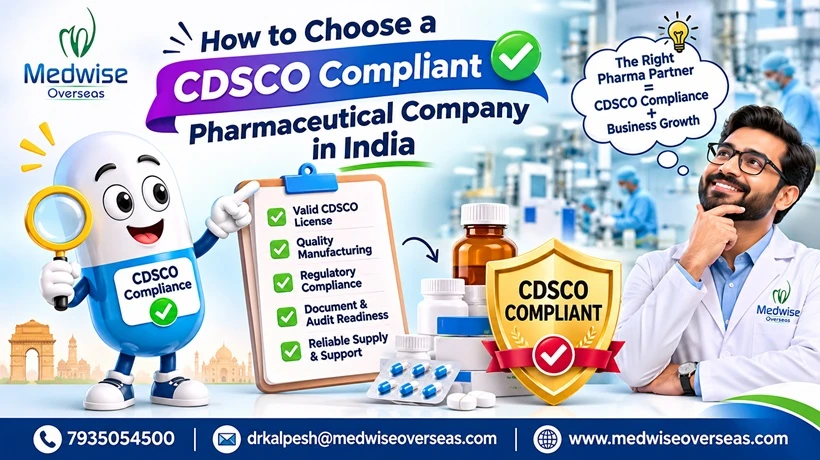
Partner with Medwise Overseas for your pharmaceutical business requirements. From regulatory documents to product quality and support.
Choosing the right pharmaceutical partner is an important decision for pharma distributors, healthcare businesses, entrepreneurs, and medicine marketers. A reliable supplier can help maintain product quality, support regulatory requirements, and create a stronger foundation for long-term business growth. However, selecting a company based only on pricing or product availability may lead to documentation gaps, supply challenges, or compliance concerns.
When searching for a CDSCO Certified Pharmaceutical Company, buyers should look beyond marketing claims and carefully evaluate the company's applicable licences, product approvals, quality systems, and manufacturing arrangements. Understanding these factors can help businesses make informed decisions and build dependable pharmaceutical supply partnerships.
Medwise Overseas understands the importance of choosing a suitable pharmaceutical business partner. By following a structured evaluation process, buyers can identify suppliers whose capabilities and documentation align with their specific business requirements.
What Is CDSCO and Why Does It Matter in the Pharmaceutical Industry?
The Central Drugs Standard Control Organisation (CDSCO) is India's national regulatory authority for pharmaceuticals and certain medical products. It operates under the Directorate General of Health Services, Ministry of Health and Family Welfare.
CDSCO performs regulatory functions that include evaluating and approving new drugs, regulating clinical trials, and coordinating specified regulatory activities with state drug control authorities. State authorities also play an important role in licensing and regulating drug manufacturing and sales.
For pharmaceutical buyers, understanding this regulatory framework is essential because different products and business activities may require different approvals, licences, and compliance documents.
Why Regulatory Compliance Matters
Working with an appropriately authorised pharmaceutical supplier can help businesses:
-
Verify whether the supplier is legally permitted to conduct the relevant activity.
-
Review applicable manufacturing and product documentation.
-
Reduce the risk of purchasing products from unauthorised sources.
-
Improve traceability and supplier accountability.
-
Make more informed decisions about product sourcing and distribution.
It is important to remember that the term "CDSCO certified" should not be treated as a universal certification covering every pharmaceutical company or product. Buyers should verify the specific approvals and licences applicable to the proposed products and activities.
7 Important Factors to Check Before Choosing a CDSCO Certified Pharmaceutical Company
Selecting a pharmaceutical supplier requires a practical assessment of regulatory status, product suitability, quality processes, and commercial reliability. The following checks can help buyers evaluate potential partners more effectively.
1. Verify Applicable Licences and Regulatory Approvals
Start by checking the company's legal identity and the licences relevant to its business activities. If the company manufactures medicines, request the applicable manufacturing licence and confirm the authorised site, dosage forms, and product categories.
For products requiring specific regulatory approval, verify the relevant approval or authorisation. Depending on the product and arrangement, documents may need to be checked with the appropriate central or state drug regulatory authority.
Do not rely solely on website statements, brochures, or verbal assurances. Review the available documents and confirm their validity wherever official verification is possible.
2. Evaluate Manufacturing Standards and Quality Systems
Product quality depends on more than the presence of a licence. Buyers should understand how the manufacturer manages production, testing, documentation, storage, and quality control.
Ask about applicable Good Manufacturing Practices (GMP), quality-control procedures, batch documentation, and the systems used to investigate deviations or product complaints.
Where relevant, request supporting evidence of compliance with applicable requirements under India's Drugs Rules, including the revised Schedule M provisions where applicable to the manufacturing facility.
A structured review of these areas provides a clearer understanding of whether a supplier's quality processes meet your business and regulatory needs.
3. Review Product Documentation Before Placing an Order
Product-level verification is an important step that is sometimes overlooked during supplier selection.
Depending on the medicine and transaction, request relevant documents such as:
-
Product composition and approved specifications.
-
Applicable product permissions or approvals.
-
Batch-specific Certificate of Analysis, where applicable.
-
Manufacturing and expiry details.
-
Storage conditions and labelling information.
-
Product samples and packaging specifications, where appropriate.
Confirm that the product details, manufacturer information, batch records, and labelling are consistent with the applicable regulatory requirements. Not every document applies to every product, so the checklist should reflect the medicine being purchased.
4. Check the Product Portfolio and Business Requirements
A suitable pharmaceutical partner should be able to explain which products it can supply and under what arrangements.
Before finalising a supplier, clarify the required therapeutic categories, dosage forms, pack sizes, order quantities, packaging needs, and target markets. Also confirm whether the proposed products are available for the intended commercial purpose.
For businesses considering contract manufacturing or private-label arrangements, discuss brand ownership, artwork approval, production responsibilities, applicable permissions, and documentation requirements before committing to an order.
This approach helps avoid mismatches between a supplier's actual capabilities and the buyer's expectations.
5. Assess Manufacturing Transparency and Traceability
A dependable pharmaceutical supply arrangement should provide clear information about where products are manufactured and how batches can be traced.
Ask whether the company manufactures at its own facility or works with an authorised third-party manufacturer. If manufacturing is outsourced, establish the identity of the actual manufacturing site and verify the relevant licences and permissions.
Buyers should also understand how batch numbers, expiry dates, distribution records, complaints, and product recalls are managed. Traceability is particularly important when a quality concern or regulatory issue needs to be investigated.
Transparency about manufacturing arrangements helps establish accountability throughout the supply chain.
6. Compare Pricing, Minimum Orders, and Delivery Commitments
Competitive pricing matters, but the lowest quotation is not necessarily the best business decision. Differences in packaging, product specifications, testing, order quantities, and supply arrangements can affect the final cost.
Before placing an order, request a clear quotation covering product pricing, minimum order quantity, packaging, applicable taxes, payment terms, estimated lead times, and delivery responsibilities.
Discuss how the supplier handles production delays, changes in availability, damaged shipments, and order-related concerns. Clear commercial terms can reduce misunderstandings and help both parties plan inventory more effectively.
7. Evaluate Communication and Long-Term Support
A pharmaceutical relationship often continues beyond the first order. Buyers may need updated documentation, order coordination, packaging changes, or assistance with product-related queries.
Assess how promptly the company responds to questions and whether its team can provide clear, consistent information. A useful supplier should be willing to explain its capabilities, identify documentation requirements, and clarify the limits of what it can offer.
Choosing a partner based on transparent communication and realistic commitments can support better coordination as your pharmaceutical business expands.
Why Choose Medwise Overseas for Your Pharmaceutical Business Requirements?
Finding the right pharmaceutical partner starts with understanding your business objectives and verifying that the supplier can meet them.
Medwise Overseas can be considered as a potential partner for businesses evaluating pharmaceutical sourcing and related requirements. Before entering into a business arrangement, prospective buyers should discuss their product needs, order expectations, documentation requirements, and preferred supply model directly with the company.
When evaluating Medwise Overseas, buyers should confirm the following points relevant to their proposed order:
-
Product suitability: Whether the required medicines and dosage forms can be supplied.
-
Regulatory documentation: Whether applicable licences and product documents are available for verification.
-
Manufacturing arrangements: Which facility will manufacture the products and what permissions apply.
-
Commercial clarity: Pricing, minimum quantities, packaging requirements, and expected delivery timelines.
-
Ongoing coordination: How product queries, documentation requests, and order updates will be handled.
These checks help both parties establish clear expectations before a commercial commitment is made. Any specific certification, manufacturing capability, or regulatory approval should be confirmed directly through current supporting documents.
Common Mistakes to Avoid When Selecting a Pharmaceutical Supplier
Even experienced buyers can overlook important details when comparing pharmaceutical companies. Avoid these common mistakes:
-
Choosing a supplier solely because it offers a lower price.
-
Assuming every company advertising CDSCO compliance holds the same approvals.
-
Accepting expired, incomplete, or unverifiable documentation.
-
Ignoring the difference between a marketing company and the actual manufacturer.
-
Placing large orders before clarifying product specifications and commercial terms.
-
Failing to confirm storage conditions, batch traceability, and complaint procedures.
A documented supplier evaluation process makes comparisons more objective and helps businesses manage sourcing risks.
Conclusion: Make an Informed Pharmaceutical Partnership Decision
Choosing a CDSCO-compliant pharmaceutical company in India requires careful attention to applicable licences, product approvals, manufacturing standards, documentation, traceability, and commercial terms. A supplier's claims should always be assessed against verifiable evidence rather than marketing language alone.
For distributors, entrepreneurs, and pharmaceutical businesses, taking time to evaluate these factors can help establish a more transparent and dependable supply relationship.
Medwise Overseas can be approached to discuss your pharmaceutical business requirements and determine whether its available products, documentation, and supply arrangements match your needs.
Looking for a pharmaceutical business partner? Contact Medwise Overseas to discuss your product requirements, request relevant documentation, and explore a suitable supply arrangement.


Comments
Login to Comment