How Does Hair Fillers Treatment in Dubai Support Hair Growth?
02 Oct, 2026
6 Views 0 Like(s)
Discover how Hair Fillers Treatment in Dubai may support existing hair, what happens around the follicles, and why realistic expectations matter.
Hair Fillers Treatment in Dubai is designed to support the scalp and existing hair through targeted injections rather than surgical follicle transplantation. Tajmeels describes its hair filler formulation as containing hyaluronic acid and biomimetic peptides, with treatment administered directly into selected scalp areas.
The phrase “support hair growth” needs some context. Hair fillers should not be described as creating brand-new follicles or guaranteeing regrowth; their potential effect depends on the formulation, the condition of existing follicles, the cause of hair loss, and the patient's individual response.
Understanding what happens at follicle level makes the treatment easier to evaluate.
Hair Growth Starts Beneath the Scalp Surface
A strand of hair is produced by a follicle located within the skin.
The visible hair shaft is only the portion that can be seen above the scalp. Below the surface, the follicle contains specialized structures responsible for producing and regulating the growing hair.
The follicle does not operate in isolation. It exists within a surrounding tissue environment containing blood vessels, connective tissue, glands, signaling molecules, and immune cells.
This is why modern hair-restoration discussions increasingly consider the scalp environment as well as the visible hair shaft.
Where Injectable Hair Fillers Enter the Picture
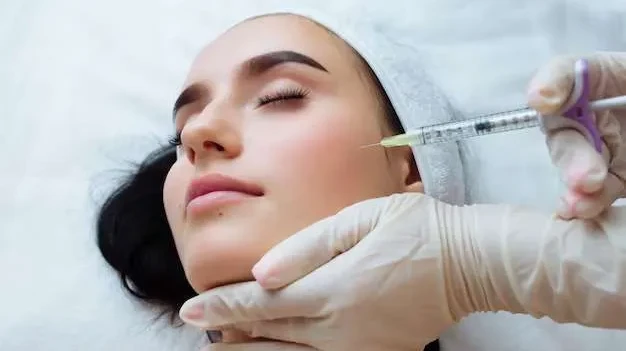
Hair fillers are delivered through small injections into selected areas of the scalp.
Instead of coating the surface like a shampoo or topical cosmetic, the formulation is placed within the tissue at the depth intended by the treatment protocol.
The exact biological effect depends on the ingredients.
Tajmeels describes its formulation as combining hyaluronic acid and biomimetic peptides. Hyaluronic acid has recognized water-binding properties, while peptides can be designed to interact with specific biological signaling pathways.
However, these ingredients should not be interpreted as a universal guarantee of follicular growth.
Does Supporting the Scalp Mean Creating New Follicles?
No.
A follicle that has been permanently destroyed cannot simply be replaced by injecting a filler into the surrounding skin.
The potential role of an injectable treatment is more relevant when functioning or miniaturized follicles remain.
This distinction helps explain why patients with early thinning may have a different treatment conversation from someone with long-standing complete hair loss in a particular area.
What Is Follicular Miniaturization?
In several forms of progressive hair loss, individual follicles can become smaller over time.
As the follicle changes, the hair it produces may become finer and shorter. This can gradually reduce the visual fullness of the scalp.
The person may initially notice that a hairstyle no longer looks as dense or that more scalp is visible under bright lighting.
A treatment plan aimed at supporting existing follicles therefore differs fundamentally from one designed to replace absent follicles.
Why the Cause of Hair Loss Matters
Hair growth is influenced by multiple biological and environmental factors.
Genetics, hormones, inflammatory conditions, nutritional status, medications, systemic health, mechanical tension, and age can all play roles in different forms of hair loss.
An injectable treatment cannot be expected to address every mechanism simultaneously.
For example, if thinning is associated with an untreated medical or inflammatory problem, investigating that issue may be more important than proceeding directly with cosmetic injections.
What Does Hyaluronic Acid Contribute?
Hyaluronic acid naturally occurs within the human body and has a strong association with tissue hydration because of its ability to bind water.
In aesthetic medicine, HA is used in a range of formulations, but the behavior of a scalp-specific product should not automatically be equated with that of a facial dermal filler.
For hair-focused applications, the formulation, concentration, stabilization method, accompanying ingredients, and injection technique all matter.
Research has investigated specific HA-based scalp formulations, including a small study involving a stabilized HA complex with additional components. The findings provide interesting evidence for that formulation, but they do not establish identical effects across all hair fillers.
What Are Biomimetic Peptides Intended to Do?
Biomimetic peptides are engineered to resemble or influence biological signaling.
Their inclusion in cosmetic and medical-aesthetic formulations is based on the idea that certain peptide sequences may interact with cellular processes.
The precise role varies by peptide.
For this reason, patients should ask which peptides are present rather than assuming that every product marketed as a peptide-based hair filler works through the same pathway.
This is one of the most important differences between evidence-based treatment discussions and generalized marketing language.
How the Treatment Is Tailored to the Scalp
The scalp is not anatomically identical from one patient to another.
Hair density, thickness, skin characteristics, vascular anatomy, areas of thinning, and previous treatments can all differ.
During a professional assessment, the clinician can identify which areas require attention and determine whether an injectable approach is appropriate.
The treatment itself involves multiple small injections rather than one large injection into the scalp.
The number and distribution of injection points depend on the formulation and clinical protocol.
Can Hair Fillers Improve the Look of Thinning Hair?
Potentially, yes, but the effect should be described carefully.
If existing hair becomes healthier-looking, thicker, or more substantial in appearance, the scalp may appear less visible. That can translate into an impression of improved density even though the total number of follicles has not increased.
Hair appearance is also affected by strand caliber, length, styling, color contrast, and lighting.
This is why standardized photographs and clinical assessment can be more informative than comparing casual photographs taken under different conditions.
What Does the Research Actually Tell Us?
Evidence for injectable approaches to hair loss is developing.
Some studies have explored hyaluronic-acid-based scalp formulations, while other research has investigated platelet-rich plasma, polynucleotides, growth-factor approaches, and other injectable or regenerative strategies.
These treatments are not interchangeable.
A positive result from one study does not prove that every product marketed under the broad category of “hair filler” will deliver the same outcome. Study size, formulation, treatment protocol, follow-up period, and patient population all influence how much weight can be placed on the findings.
What Patients Should Expect From the Treatment
A sensible expectation is gradual assessment rather than an overnight transformation.
Tajmeels states that some patients may notice changes from around 15 days, while the duration of results can vary depending on the formulation and maintenance.
Individual response can differ substantially.
The clinician may therefore recommend monitoring the treated areas over time rather than judging the entire outcome immediately after the injections.
Could Hair Fillers Be Part of a Broader Hair Plan?
Yes.
Hair loss management often involves more than one consideration. Depending on the diagnosis, a clinician may discuss medical treatments, scalp care, nutritional evaluation, light-based treatments, platelet-based approaches, or transplantation.
The appropriate combination depends on the cause and severity of the hair loss.
Hair filler should therefore be viewed as one possible component rather than a replacement for every other hair-restoration method.
Common Questions About Hair Growth Support
Does hair filler guarantee new hair growth?
No. Results vary, and treatment is generally intended to support existing scalp tissue and hair rather than guarantee new follicle formation.
Can it reverse advanced baldness?
An injectable treatment cannot replace follicles that have been permanently lost. Advanced follicular loss may require a different treatment discussion.
Does more product mean faster growth?
Not necessarily. Treatment quantity should be determined by the formulation, anatomy, and medical protocol rather than an assumption that more product produces more growth.
Can results be maintained forever?
No injectable treatment should be described as permanently maintaining its effect for everyone. Duration varies according to the product, individual response, and maintenance strategy.
Why Clinical Technique Matters
Injecting the scalp is not simply a matter of placing product beneath the skin.
The scalp contains a network of vessels and nerves, and the clinician needs to understand tissue planes and injection depth.
There are also documented reports of hair loss associated with certain hyaluronic-acid filler injections in other scalp or facial contexts, including cases linked to vascular compromise. These reports are uncommon but reinforce why appropriate product selection and qualified medical administration matter.
Potential adverse effects can also include temporary redness, swelling, itching, tenderness, puffiness, or other local reactions.
Building a Realistic Hair Growth Strategy
The most useful approach begins with a diagnosis.
Once the cause and pattern of thinning are understood, the clinician can determine whether injectable treatment has a meaningful role and what outcome would be realistic.
A practical plan may consider:
- Current hair density
- Individual strand caliber
- Scalp condition
- Pattern and progression of thinning
- Existing medical treatments
- Previous procedures
- Lifestyle and maintenance expectations
- The patient's desired cosmetic outcome
This approach is more useful than selecting a procedure simply because it is currently popular.
Final Thoughts
Hair fillers occupy an interesting space in modern nonsurgical hair restoration. Their potential lies in targeted delivery of a specialized formulation to selected scalp areas, but the treatment should be evaluated according to the exact product, scientific evidence, injection technique, and condition of the patient's existing follicles.
For people researching Hair Fillers Treatment in Dubai, a consultation is an opportunity to determine whether the treatment matches the biology of the hair loss rather than simply the appearance of thinning.
Tajmeels Clinic focuses on individualized aesthetic and hair-restoration planning, helping patients understand available options and set realistic expectations.
Medical note: Evidence for hair filler treatments varies by formulation and remains an evolving area of research. Treatment suitability and expected results should be assessed individually by a qualified medical professional.

Comments
Login to Comment