Hex Codes in an Email: How Hidden Messages Are Found
14 Feb, 2026
7622 Views 0 Like(s)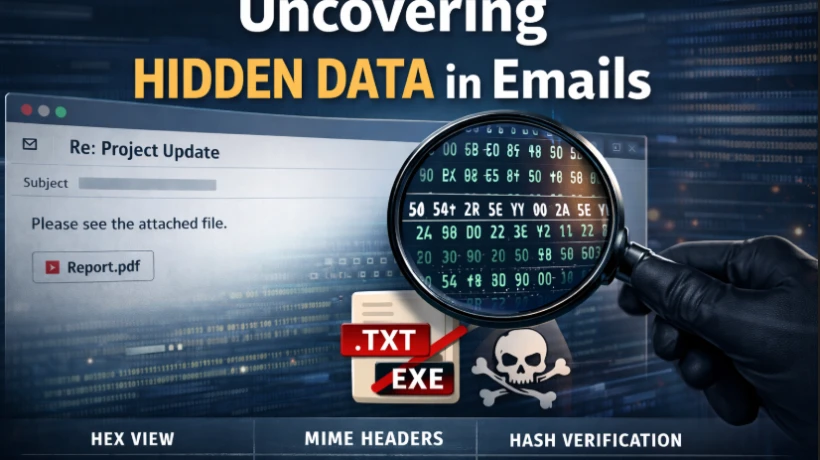
Emails can hide malicious data using hex encoding, masking true file identities. Hex analysis helps investigators uncover hidden threats, verify file integrity, and reveal the email’s true structure.
You open an email. It looks normal. Just text and an attachment. But someone is quietly putting hex codes in an email to hide something important. And your regular email screen shows you nothing unusual.
Today, we’ll break this down so simply how hidden data works and how investigators uncover it step by step.
When we talk about putting hex codes in an email, we are talking about hiding information in a format that computers understand but humans cannot easily read. It is like writing a secret message using numbers instead of letters. The message is there. It is just not visible at first glance.
Why Putting Hex Codes in an Email Can Be a Big Problem
In, many investigations begin with a simple email. Corporate fraud cases, insider threats, phishing attacks, and even federal investigations often start with “just one email.”
But sometimes that email contains hidden layers. A file may look like a harmless document. Yet inside, its original identity is changed using hex values. Think of it like repainting a delivery truck to look like a school bus. On the outside, it looks safe. Inside, it is something else.
This is why putting hex codes in an email is not just a technical trick. It can be a method to hide malicious scripts, disguise executable files, or embed secret data inside attachments.
Why Normal Email Viewing Is Not Enough
Most people only see the surface of an email. They see text, images, and attachments. That is like reading the cover of a book without checking what is printed inside.
Behind every email, there is raw data. There are headers. There is MIME structure. There is binary code. This deeper layer is where investigators look during email forensics.
If someone hides data using hexadecimal format, your normal email application will not show it clearly. You need a deeper view — something like opening the engine of a car instead of just looking at the paint.
What “Hex” Really Means (Explained Simply)
Hexadecimal is just a numbering system computers use. Instead of counting from 0 to 9, it counts from 0 to 9 and then A to F.
That is it. Nothing scary.
Think of it like LEGO blocks. Each small block represents data. When combined, they build files, images, and programs. Hex is simply the way those blocks are labeled inside the computer.
When investigators look at hex, they are looking at the digital DNA of a file.
How Hidden Data Is Placed Inside Emails
Sometimes attackers change the first few bytes of a file. These first bytes are called “magic bytes.” They tell the computer what kind of file it is.
Imagine checking a passport. The cover might say one country. But inside, the watermark tells the truth. Magic bytes are that watermark.
If someone changes those bytes using hex values, a dangerous file can look harmless. This technique is often used to bypass basic security filters.
Can You Detect This Manually?
Yes. But it is difficult. You would need to open the raw source of the email. Then copy the attachment data. Then use a separate hex editor. Then manually compare file signatures.
This process is slow. It requires deep technical skill. And there is always a risk of altering the evidence by mistake. This feels like trying to read a secret code without a key.
Risks of Doing It the Hard Way
Manual inspection can lead to mistakes. If evidence is altered even slightly, its legal value can be questioned.
Investigations often require maintaining data integrity. That means proving the evidence was not changed. A small error can damage a case.
This is why professionals prefer structured forensic tools instead of random manual methods.
The Smarter Way: Using HEX Preview Mode
This is where tools like MailXaminer become helpful.
Instead of exporting data and using multiple applications, investigators can directly view the HEX layer of an email inside the software. It shows the raw binary data in a readable hex format.
It is like having night vision goggles during a mission. You see what others cannot.
Identifying the Real File Type - Even if someone changes a file extension from .exe to .txt, the internal hex signature reveals the truth.
Professional tools allows investigators to check the real file signature. This helps identify disguised attachments quickly.
It removes guesswork and saves time.
Connecting HEX with Header and MIME View - An email is not just text. It has structure.
Headers show routing information. MIME shows how attachments are arranged. HEX shows raw data. When these are viewed together, patterns become clear.
This full visibility helps uncover obfuscation techniques used in advanced email threats.
Protecting Evidence with Hash Integrity - In professional investigations, evidence must remain untouched.
Professional tools maintain hash values such as MD5. Think of a hash like a digital fingerprint. If anything changes, the fingerprint changes.
This helps maintain trust in the evidence during legal proceedings.
Quick Check: Are You Only Viewing the Surface?
If you only read emails visually, you are seeing the surface.
Investigations require deeper visibility.
Quick Check: Do You Need Court-Ready Evidence?
If your role involves compliance, corporate investigation, or legal review, maintaining integrity is not optional.
It is essential.
Common Mistake: Trusting File Extensions
File names can lie.
Extensions can be changed in seconds.
Common Mistake: Ignoring the Raw Layer
The real story often lives beneath the visible content.
Ignoring hex data is like ignoring fingerprints at a crime scene.
Final Thoughts
Putting hex codes in an email may sound complicated. But at its core, it is simply a way to represent data in numbers.
The problem begins when that representation is used to hide harmful content.
For freshers, the key lesson is this: emails have layers. What you see is not always everything that exists.
For professionals in email investigation and digital forensics, deeper analysis tools provide structured visibility into those hidden layers without complexity.
When you understand the hidden structure, you do not just read emails. You truly examine them.
And that makes all the difference.

Comments
Login to Comment