FQHC EHR Software Pricing Guide: Costs, Value Drivers, and ROI Analysis
21 Aug, 2026
351 Views 0 Like(s)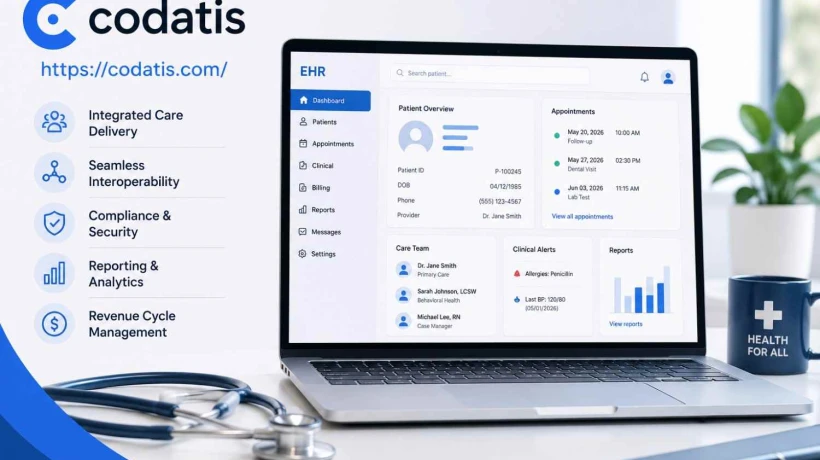
Explore FQHC EHR software designed for integrated care delivery, interoperability, compliance, reporting, analytics, and efficient healthcare management.
Choosing the right healthcare technology is a major financial decision for Federally Qualified Health Centers. FQHCs need technology that can support clinical care while also handling reporting, billing, patient engagement, compliance, and administrative workflows. The cost of fqhc ehr software can vary significantly depending on the number of users, locations, integrations, implementation requirements, and services included in the agreement. Therefore, evaluating price alone is not enough. Health centers should understand what drives costs, what features create value, and how the software can contribute to long-term return on investment (ROI).
Understanding FQHC EHR Software Pricing
There is no single standard price for every FQHC because organizations have different operational structures and technology requirements. A small community health center with one location may have very different needs from a multi-site organization serving thousands of patients.
When evaluating fqhc ehr systems, pricing may depend on factors such as:
-
Number of providers and users
-
Number of locations
-
Implementation and setup requirements
-
Data migration
-
Training and onboarding
-
Billing and revenue cycle functionality
-
Patient portal capabilities
-
Reporting and analytics
-
Third-party integrations
-
Customization
-
Technical support
-
Hosting and security requirements
Understanding these factors helps organizations create a realistic technology budget rather than relying on the advertised subscription price alone.
What Is FQHC EMR and Why Does Pricing Matter?
For organizations asking what is fqhc emr, it is essentially an electronic medical record platform designed to support healthcare delivery and administrative workflows within an FQHC environment. Depending on the solution, it can connect patient records, documentation, scheduling, billing, reporting, and communication.
Pricing matters because healthcare technology is a long-term operational investment. A low-cost platform may become expensive if it requires excessive manual work, additional software integrations, frequent support, or costly upgrades.
Conversely, a platform with a higher initial price may provide better value if it improves productivity, reduces administrative workloads, supports accurate billing, and simplifies compliance reporting.
Major Factors That Influence FQHC EMR Pricing
1. Number of Providers and Users
Most vendors consider the number of providers and employees using the system when determining pricing. A larger workforce generally requires more user accounts, licenses, training, and technical support.
FQHCs should determine exactly which users require full access and which employees only need limited functionality. This can help avoid paying for unnecessary licenses.
2. Number of Locations
Multi-location health centers often require more complex configurations than single-site organizations. Each facility may have different providers, departments, schedules, workflows, and administrative requirements.
When evaluating fqhc emr cost, ask whether additional locations incur separate fees and whether the vendor supports centralized reporting across facilities.
3. Implementation and Data Migration
Implementation can represent a significant portion of the total investment. Moving existing patient information from legacy systems, configuring workflows, establishing user permissions, and training staff all require resources.
Before signing an agreement, ask whether implementation is included in the quoted price or billed separately. Also determine whether historical data migration has additional costs.
4. Customization
Every FQHC has unique workflows. Some organizations may need customized templates, forms, dashboards, reports, or integrations.
Customization can improve usability but may increase the total cost. The key is determining which customizations are genuinely necessary and which can be handled using standard platform functionality.
FQHC EMR Pricing: Subscription vs. Total Cost
When comparing fqhc emr Pricing, it is important to distinguish between the software subscription and the total cost of ownership.
A pricing proposal may include a monthly or annual software fee but exclude:
-
Implementation
-
Training
-
Data conversion
-
Premium support
-
Custom reporting
-
Additional integrations
-
Extra user licenses
-
Hardware or infrastructure
-
Optional modules
A complete financial analysis should account for these expenses. This provides a more accurate picture of what the technology will actually cost over several years.
FQHC EMR Features That Can Increase Value
The value of an EHR should be evaluated according to how effectively its capabilities solve operational problems. Important fqhc emr features may include integrated clinical documentation, scheduling, billing, reporting, patient engagement, interoperability, analytics, and compliance support.
For example, automated reporting can reduce the amount of time staff spend compiling information manually. Integrated billing can help eliminate duplicate data entry between clinical and financial systems. Patient portals can reduce phone-based administrative work by allowing patients to complete certain activities online.
The goal is not to purchase the platform with the most features. It is to select the solution whose features provide measurable value for the health center.
How Billing Capabilities Affect ROI
Revenue cycle management can have a direct impact on an FQHC's financial performance. Delayed claims, coding errors, missing documentation, eligibility problems, and inefficient payment workflows can reduce revenue and increase administrative costs.
An integrated ehr for fqhc can help connect clinical documentation with billing processes. When information flows more efficiently from the patient encounter to the claim, staff may spend less time correcting preventable errors.
When calculating ROI, consider whether the system can improve:
-
Claims processing
-
Eligibility verification
-
Charge capture
-
Payment posting
-
Denial management
-
Billing follow-up
-
Financial reporting
Even small improvements can become financially meaningful when applied across a high-volume health center.
Compliance and Reporting as Value Drivers
Compliance is another important value driver. FQHCs must manage extensive data and reporting requirements, making accurate information essential.
A platform that organizes clinical and operational data can reduce manual reporting workloads and make information easier to retrieve. Automated dashboards and structured data can also help leadership identify performance trends.
This does not mean software automatically guarantees compliance. Staff still need appropriate processes, policies, training, and oversight. However, a well-designed platform can make compliance-related work more manageable.
Patient Engagement and Operational Savings
Patient engagement features can also contribute to ROI. Appointment reminders, online forms, secure messaging, and patient portals may reduce repetitive administrative tasks.
For example, automated appointment reminders can help reduce avoidable no-shows. Digital registration can reduce paperwork at the front desk. Secure messaging can allow staff to handle appropriate patient communications without relying entirely on phone calls.
These improvements may not appear as direct revenue, but they can produce meaningful operational savings over time.
Evaluating FQHC Software With Real-World Workflows
When comparing fqhc software, organizations should avoid evaluating vendors solely through presentations or feature checklists. Instead, create practical scenarios that represent daily operations.
Ask vendors to demonstrate how their system handles:
-
New patient registration
-
Provider documentation
-
Scheduling and reminders
-
Billing and claims
-
Reporting
-
Patient communication
-
Referral management
-
Multi-location administration
-
User permissions
-
Data and analytics
An fqhc emr Demo becomes much more useful when vendors demonstrate these workflows using realistic examples rather than simply describing available features.
Using FQHC EMR Reviews in the Buying Process
Online fqhc emr reviews can provide useful perspectives about usability, implementation, customer service, and reliability. However, reviews should be treated as one source of information rather than the sole basis for a purchasing decision.
Look for recurring patterns instead of relying on isolated comments. Also consider reviews from organizations with similar sizes, specialties, patient populations, and operational structures.
It is equally important to request references from vendors. Speaking with existing customers can provide practical insight into implementation challenges, support responsiveness, system performance, and long-term satisfaction.
Security and Long-Term Value
Security should be considered part of the software's overall value. FQHCs manage sensitive patient information, so appropriate security controls, access management, audit capabilities, backups, and system protections are essential.
A system that provides strong security and dependable availability can help reduce operational disruption and protect organizational trust. During vendor evaluation, ask detailed questions about security practices rather than assuming they are included simply because the platform is healthcare-focused.
How to Calculate FQHC EHR ROI
A basic ROI analysis can compare the financial benefits generated by the system with the total cost of ownership.
A simplified formula is:
ROI = (Total Financial Benefits − Total Investment) ÷ Total Investment × 100
Potential benefits may include:
-
Reduced administrative labor
-
Lower paper and storage costs
-
Improved billing efficiency
-
Fewer claim errors
-
Reduced appointment no-shows
-
Faster access to patient information
-
Lower reporting workload
-
Improved staff productivity
For example, if automation saves several employees multiple hours each week, those productivity gains can be converted into an estimated annual financial value.
ROI should also include qualitative benefits such as better patient experiences, improved care coordination, easier access to information, and stronger operational visibility.
Comparing the Best EHR for FQHC Needs
The best ehr for fqhc is not necessarily the cheapest system or the platform with the largest feature list. It is the solution that aligns technology capabilities with the organization's clinical, financial, compliance, and operational priorities.
Before making a decision, leadership should compare vendors based on functionality, usability, scalability, integration capabilities, security, support, implementation, and total cost of ownership.
FQHC EHR Login and User Accessibility
Even small usability details can influence staff productivity. A reliable fqhc emr login experience should provide secure authentication while allowing authorized employees to access the information and tools they need efficiently.
FQHCs should evaluate user permissions, password recovery, authentication options, session management, and accessibility during the vendor review. A secure but unnecessarily complicated login process can create avoidable support requests, so the balance between security and usability matters.
Is FQHC EHR Software Worth the Investment?
For many health centers, the value of fqhc ehr software depends on how effectively it reduces operational friction and supports sustainable growth. The investment becomes easier to justify when the platform improves workflows across clinical care, billing, reporting, scheduling, and patient engagement.
Rather than asking only, “How much does the software cost?” decision-makers should ask, “What will this system help us save, improve, automate, and measure?”
That broader perspective creates a stronger foundation for technology purchasing decisions.
Conclusion
The cost of fqhc ehr software should be evaluated as a long-term investment rather than a simple technology expense. Subscription fees, implementation, training, integrations, customization, support, and other expenses all contribute to the total cost of ownership. At the same time, billing improvements, automation, compliance support, staff productivity, and patient engagement can create substantial value.
For FQHC leaders comparing technology options, codatis can be part of the research process when evaluating healthcare technology and determining which solution best aligns with operational goals. A careful comparison of features, pricing, vendor support, scalability, and expected ROI can help health centers make a more confident and financially responsible decision.
FAQ’s
How much does FQHC EMR software cost?
There is no universal price. Fqhc emr cost depends on users, locations, implementation, integrations, customization, support, and the modules selected. Organizations should request a complete cost breakdown before comparing vendors.
What should be included in FQHC EMR pricing?
A pricing proposal should clearly identify software fees, implementation, training, data migration, support, integrations, additional users, customization, and optional modules. Reviewing all these costs provides a more accurate total-cost estimate.
What features should an FQHC prioritize?
Important capabilities include clinical documentation, billing, compliance reporting, scheduling, patient engagement, interoperability, analytics, security, and multi-location management. Priorities should be based on the health center's specific workflows.
How can an FQHC calculate EHR ROI?
Calculate the total investment and compare it with measurable benefits such as reduced labor, improved billing performance, fewer errors, lower administrative costs, and productivity gains. Qualitative improvements can also be considered separately.
Should an FQHC request an EMR demo before purchasing?
Yes. A demo allows staff to test important workflows and determine whether the platform is practical for everyday use. FQHCs should request demonstrations based on real operational scenarios rather than relying solely on feature lists.



Comments
Login to Comment