Custom Rigid Boxes for Luxury Retail
03 Jun, 2026
1497 Views 0 Like(s)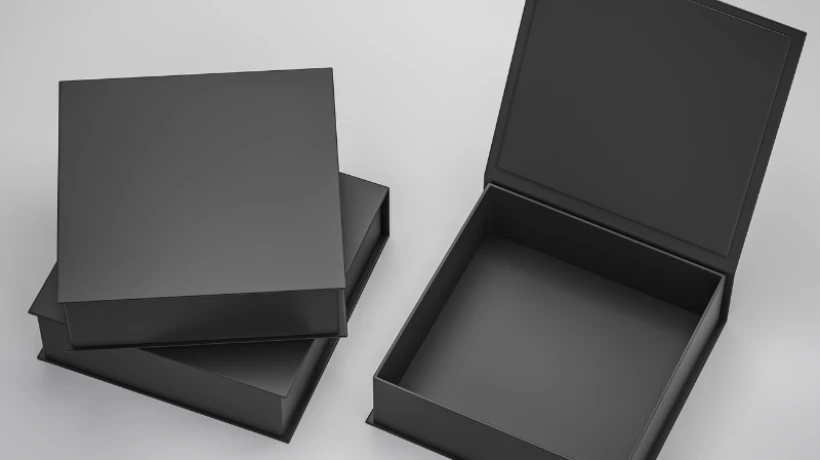
A detailed specification guide for brands ordering custom rigid boxes for luxury retail - covering materials, finishes, inserts, and quality standards.
Custom rigid boxes for luxury retail applications represent some of the most specification-intensive decisions in packaging procurement. The expected performance standard, both functional and aesthetic, is high, and the cost of getting a specification wrong is measured not just in reprinting expense but in brand damage from product presentation that falls short of the premium promise.
This guide is for brand managers, packaging buyers, and operations directors who are specifying or respecifying custom rigid boxes for luxury retail applications. It covers every specification decision in the order, from substrate through final inspection.
Defining 'Luxury' in Rigid Box Terms
Luxury rigid box specification is not defined by a single material or finish, it is defined by the coherent execution of multiple decisions that together create a packaging experience consistent with the brand's price point and consumer expectations. A $300 skincare product and a $5,000 watch require different expressions of luxury, but both require the same commitment to precision in specification and quality in execution.
The common denominators in luxury rigid box specification are: dimensional precision (tight tolerances on box fitting and lid resistance), material weight (heavier chipboard reads as more substantial), surface finish quality (uniform, defect-free lamination and print), and interior experience (the opening moment and the inner packaging that frames the product).
Substrate: Chipboard Selection
Standard Luxury Applications (2.5mm–3mm chipboard)
2.5mm chipboard is appropriate for most luxury retail boxes, jewelry, cosmetics, premium accessories. The board weight provides clear rigidity without excessive weight. 3mm chipboard is used for applications requiring additional structural presence, premium electronics, luxury spirits, gift sets.
Ultra-Premium Applications (3.5mm–4mm chipboard)
4mm chipboard produces a package with a distinctly architectural quality, corners are sharp, the board feels permanent. Used in ultra-luxury packaging for fine jewelry, haute couture accessories, and prestige fragrances. The weight of the empty box itself is a quality signal.
Board Quality
For luxury applications, specify virgin chipboard (not recycled content). Recycled chipboard may have slight surface irregularities that telegraph through thin wrap papers. Virgin chipboard provides a consistently flat surface necessary for high-quality wrap adhesion and finish uniformity.
Lid Construction Format
The lid format is one of the most brand-defining decisions in the rigid box specification:
Shoulder Box
A shoulder box incorporates an internal structural shoulder that registers the lid precisely over the base, creating the distinctive resistance-and-release experience associated with the best luxury packaging. The shoulder box is the gold standard for fragrance, fine jewelry, and ultra-luxury brand applications. It requires additional manufacturing complexity and cost, but the experiential return is significant.
Lid-and-Base (Two-Piece)
The simplest and most cost-effective rigid box format, a separate lid and base with lid fitting over the base exterior. At quality chipboard weights with precisely calibrated tolerances, a well-made lid-and-base box can approach shoulder box quality. Appropriate for most luxury applications below ultra-premium tier.
Hinged Lid
A single-piece construction with a folio hinge at the rear connecting lid to base. Common in watch, jewelry, and premium accessory packaging. The hinged format eliminates the risk of a separated lid and ensures the product is always presented within the complete package.
The right packaging doesn't just protect, it sells. The opening moment of a luxury rigid box is a designed brand experience. Resistance on opening (achieved through precise lid-to-base tolerances and optional magnetic closure) communicates quality through tactile feedback.
Wrap Paper Specification
Paper Weight
Wrap papers for luxury rigid boxes are typically 128–157 GSM coated art paper. Higher weights add cost without meaningfully improving appearance, the paper is backed by chipboard, so its structural contribution is minimal. Focus on print quality and finish rather than paper weight for luxury applications.
Print Method
For luxury applications, offset printing with Pantone color matching is standard. Digital printing is appropriate for short runs or personalization but cannot achieve the same color consistency and ink density as offset. If brand colors are specified as Pantone references (and they should be in luxury categories), confirm the printer can output to Pantone specification.
Finish Selection for Luxury
-
Soft-touch laminate: the dominant finish in luxury packaging. The velvet tactile surface is immediately associated with premium quality. Matte appearance with zero reflectance
-
Matte laminate: professional, understated, appropriate for brands where quiet luxury is the positioning
-
Gloss laminate: high-reflectance finish, less common in ultra-luxury, more prevalent in aspirational luxury and prestige cosmetics
-
Combination: soft-touch base with spot gloss UV on key design elements (logo, product name), creates contrast that draws attention to brand elements
Foil Stamping and Dimensional Treatments
Foil Stamping
Gold foil stamping on logo elements is effectively universal in luxury packaging. The metallic reflectance on a soft-touch matte background creates maximum visual contrast and signals premium quality. Specify foil color precisely, warm gold (PMS 871), cool gold (PMS 874), rose gold, and silver all communicate meaningfully different brand personalities.
Embossing and Debossing
Embossing (raised) or debossing (recessed) of brand marks, patterns, or structural elements adds dimensional texture that rewards close inspection. In luxury packaging, subtle embossing is often more effective than overt decoration, it communicates craft and attention to detail rather than ostentation.
Interior Specification
Foam Inserts
EVA or polyethylene foam, die-cut or thermoformed to cradle the product, is the most common luxury interior solution. Specify density (measured in kg/m³, higher density for heavier products), color (black is standard in luxury; white or custom colors are available), and surface treatment (velvet covering, satin fabric, debossed material).
Magnetic Closure
Embedded magnets in lid and base create a positive closure experience, the satisfying 'click' of a magnetically closed luxury box is a deliberate design element. Specify magnet grade (N35 or N38 neodymium are standard) and position (corners or centered edge).
Quality Specifications and Inspection
For luxury rigid box orders, request the following quality standards in your purchase order and sample approval documentation:
-
Lid tolerance: lid should seat with 1–2mm resistance, no looseness, no force required
-
Wrap uniformity: no wrinkles, bubbles, or lifting at corners, inspect corners under strong light
-
Print color: maximum Delta-E variance of 3.0 from approved Pantone references
-
Foil adhesion: no lifting at edges when finger pressure is applied
-
Insert fit: product should be fully immobile in insert, zero play in any axis
Alpha Global Packaging offers fully customizable rigid box solutions for luxury retail applications, with access to the complete range of chipboard weights, finish options, and interior specifications described in this guide.
Comments
Login to Comment