CO2 Laboratory Incubator vs Standard Incubator: Which One Does Your Laboratory Need?
19 Aug, 2026
575 Views 0 Like(s)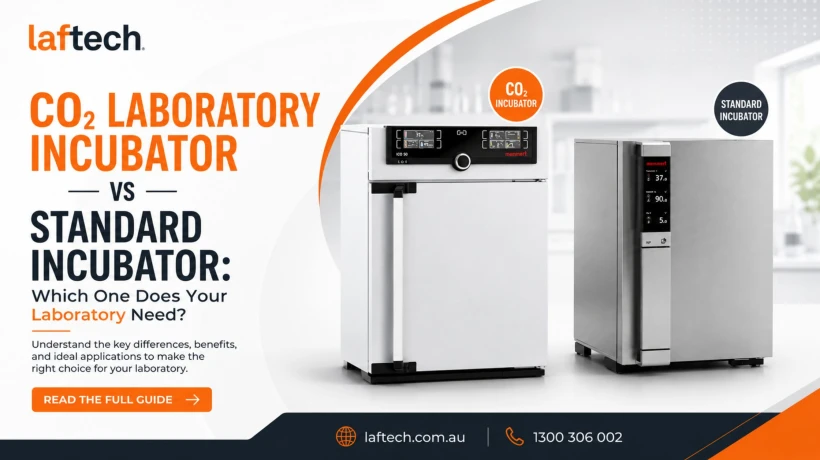
Compare CO2 laboratory incubators with standard incubators. Learn the key differences, applications and factors to choose the right incubator for your laboratory.
Choosing the right incubator can have a significant impact on the consistency, reliability, and success of laboratory work. While standard incubators are suitable for many routine applications, cell culture and other sensitive biological processes often require much tighter environmental control.
This is where a CO2 Laboratory Incubator becomes particularly valuable. Designed to maintain controlled temperature and carbon dioxide conditions, CO₂ incubators provide an environment that closely supports the requirements of mammalian cell and tissue cultures.
But does every laboratory need one? The answer depends on the type of work being performed, the sensitivity of the samples, and the level of environmental control required.
What Is a Standard Laboratory Incubator?
A standard laboratory incubator is primarily designed to maintain a stable temperature for applications such as microbiological culture, sample incubation, and general laboratory procedures.
These incubators typically provide controlled heating and may include features such as digital temperature displays, programmable controls, and safety systems. They are often suitable when temperature is the primary environmental parameter that needs to be controlled.
For example, microbiology laboratories may use standard incubators for growing bacterial cultures under defined temperature conditions. They can also be useful in educational laboratories, food testing, quality control, and other applications where additional atmospheric control is not essential.
However, temperature alone is not enough for many advanced cell culture applications.
What Is a CO₂ Laboratory Incubator?
A CO₂ incubator provides a more controlled environment for biological samples by regulating temperature, carbon dioxide concentration, and — depending on the system — humidity.
A CO2 Laboratory Incubator is commonly used for mammalian cell culture, tissue culture, biotechnology research, pharmaceutical development, and other applications where maintaining stable physiological conditions is important.
Carbon dioxide plays an important role in maintaining the pH of culture media when bicarbonate-buffered systems are used. Maintaining the appropriate CO₂ concentration therefore helps researchers create a stable environment for cell growth and experimentation.
Modern CO₂ incubators can also incorporate contamination-control technologies, monitoring systems, and advanced temperature management to support consistent laboratory conditions.
CO₂ Incubator vs Standard Incubator: Key Differences
The main difference between the two is the level of environmental control they provide.
|
Feature |
Standard Incubator |
CO₂ Incubator |
|
Temperature control |
Yes |
Yes |
|
CO₂ regulation |
Usually no |
Yes |
|
Humidity management |
Limited or application-dependent |
Typically designed for high humidity |
|
Mammalian cell culture |
Generally unsuitable |
Highly suitable |
|
Microbiological applications |
Suitable for many applications |
Suitable for selected applications |
|
pH control through CO₂ |
No |
Yes |
|
Contamination-control features |
Varies |
Often more advanced |
|
Environmental precision |
Basic to moderate |
High |
A standard incubator may be the more practical option when the application only requires temperature-controlled incubation. However, laboratories working with sensitive cell cultures often need the additional controls offered by a CO₂ system.
When Should Your Laboratory Choose a CO₂ Incubator?
A CO₂ incubator is worth considering when your laboratory works with applications that depend on stable temperature, atmospheric conditions, and culture-medium pH.
Common applications include:
Mammalian Cell Culture Mammalian cells are sensitive to changes in their surrounding environment. Maintaining appropriate temperature and CO₂ levels can help create stable conditions for cell growth and routine culture work.
Biotechnology Research Biotechnology laboratories often perform experiments where reproducibility and environmental stability are important. Controlled incubation can help researchers maintain consistent conditions across experiments.
Pharmaceutical Research Drug discovery, development, and testing may involve cell-based assays and biological models. A controlled incubation environment can support reliable experimental workflows.
Tissue Culture Tissue culture applications can require carefully controlled environmental conditions. CO₂ incubation provides atmospheric control beyond what a conventional temperature-only incubator can offer.
Healthcare and Research Laboratories Research and healthcare organisations conducting advanced biological studies may require incubators capable of maintaining precise conditions for sensitive cultures.
When Is a Standard Incubator the Better Choice?
Not every laboratory application requires CO₂ regulation.
A standard incubator may be the better choice if your primary requirement is stable temperature control. For example, routine microbiological culture, sample conditioning, and certain quality-control applications may not require a controlled CO₂ atmosphere.
Choosing a simpler system when appropriate can also make sense from an operational perspective. There is little benefit in investing in advanced environmental controls that your laboratory processes do not actually require.
The key is to match the incubator to the application rather than choosing equipment based solely on capacity or advanced features.
What Should You Consider Before Buying?
Before selecting an incubator, laboratory managers and scientific equipment buyers should consider several practical factors.
-
Application requirements: Start by identifying the organisms, cells, or samples that will be incubated. Determine whether temperature alone is sufficient or whether CO₂ and humidity control are necessary.
-
Temperature stability: Look at the required operating range, temperature uniformity, and recovery performance after door openings.
-
CO₂ control: For cell culture applications, consider the accuracy and stability of the CO₂ control system and how the concentration is monitored.
-
Contamination control: Contamination can compromise cultures and waste valuable research time. Consider the incubator's cleaning, sterilisation, and decontamination capabilities.
-
Capacity and laboratory space: Select an internal capacity that accommodates your current workflow without unnecessarily consuming valuable laboratory space.
-
Monitoring and documentation: Laboratories operating under quality systems may benefit from equipment with appropriate monitoring, alarms, data recording, and validation capabilities.
-
Service and support: Consider the availability of calibration, testing, maintenance, and technical support throughout the equipment lifecycle.
Why Equipment Support Matters
Selecting an incubator is only one part of maintaining reliable laboratory operations. Equipment performance should also be monitored, tested, and maintained throughout its service life.
For laboratories operating under strict quality requirements, appropriate calibration and validation can provide additional confidence that equipment is performing within specified parameters. Environmental monitoring and contamination-control services can also be important where sensitive research or controlled environments are involved.
LAF tech supports laboratories across Australasia with scientific equipment, technical services, and contamination-control solutions. Established in 1987, the company provides equipment and lifecycle support for laboratories across pharmaceutical, biotechnology, healthcare, research, and other technical environments.
Its service capabilities include NATA-accredited calibration and testing, environmental monitoring, and advanced decontamination solutions. This broader technical support can help laboratories manage equipment beyond the initial purchase.
Choosing the Right Incubator for Your Laboratory
The choice between a standard incubator and a CO₂ system ultimately comes down to your laboratory's application.
If your work primarily requires stable temperature-controlled incubation, a standard incubator may provide everything you need. However, if you are performing mammalian cell culture, tissue culture, or other sensitive biological applications that require controlled CO₂ conditions, investing in a CO₂ incubator is likely to be the more appropriate choice.
For laboratories looking for precise environmental control, LAF tech supplies advanced Memmert CO₂ incubator solutions, including the Memmert ICO and ICO Next Generation ranges.
The right equipment should not simply meet today's requirements. It should also support reliable workflows, quality assurance, and future laboratory needs.
Explore LAF tech's CO₂ incubator range to compare available solutions and identify an incubation system suited to your laboratory's application.
Need help selecting the right CO2 Laboratory Incubator for your lab? Explore LAF tech's CO2 Incubator range or contact our team to discuss your application requirements.
Frequently Asked Questions
1. What is the main difference between a CO2 incubator and a standard incubator?
A standard incubator controls only temperature, while a CO2 incubator regulates temperature, CO₂ concentration, and often humidity. This additional control makes CO2 incubators suitable for mammalian cell and tissue culture, where standard incubators generally are not.
2. Why is CO₂ important in a laboratory incubator?
CO₂ helps maintain the pH balance of bicarbonate-buffered culture media. Without stable CO₂ levels, the pH can drift outside the range needed to support healthy cell growth, which can affect the reliability of experimental results.
3. Can a standard incubator be used for cell culture?
Generally, no. Standard incubators are not designed to regulate CO₂ or the humidity levels required for mammalian cell culture. Using a standard incubator for these applications can compromise culture stability and experimental outcomes.
4. Which laboratories typically need a CO2 laboratory incubator?
Laboratories involved in mammalian cell culture, tissue culture, biotechnology research, pharmaceutical development, and healthcare research typically require CO2 incubators due to the need for precise environmental control.
5. What should I check before buying a CO2 incubator?
Key factors include CO₂ control accuracy, temperature stability and recovery time, contamination-control features, internal capacity, monitoring and data-recording capabilities, and the availability of ongoing calibration and technical support.
6. Does LAF tech provide support after the incubator is purchased?
Yes. LAF tech offers NATA-accredited calibration and testing, environmental monitoring, and decontamination services to help laboratories maintain equipment performance throughout its service life.


Comments
Login to Comment