Can Sideburn Hair Transplant in Dubai Fix Uneven Sideburns
05 Oct, 2026
5 Views 0 Like(s)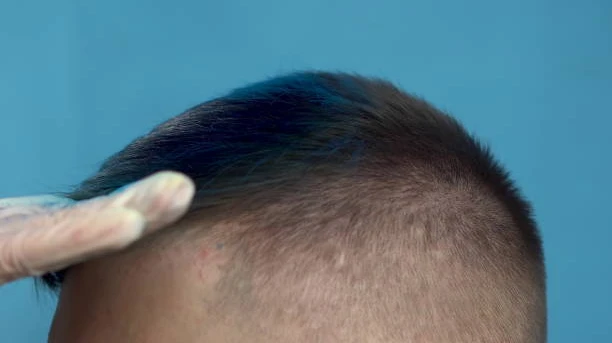
Learn how Sideburn Hair Transplant in Dubai can address uneven sideburn density, missing follicles and asymmetry with carefully planned graft placement.
Uneven sideburns are often more noticeable than patients expect, especially with short hairstyles. Sideburn Hair Transplant in Dubai can help restore areas where hair follicles are absent or significantly reduced, creating a more balanced transition between the temples, sideburns and beard.
The important distinction is between uneven growth and completely missing follicles. If both sides contain healthy but differently distributed hair, transplantation may not always be the first consideration.
When follicles are genuinely absent, however, donor hair can be used to rebuild the deficient area.
Why Sideburns Become Uneven
Asymmetry can develop for several reasons.
Some people naturally grow more hair on one side from adolescence. Others develop differences after injury, surgery, inflammation or scarring.
Hair loss can also become uneven over time.
Changes in hairstyle can make the difference easier to see. A person who previously wore longer hair may only notice the asymmetry after switching to a close crop.
Can Sideburn Hair Transplant in Dubai Correct the Difference
Potentially, yes.
A transplant can add follicles to the side with reduced density or restore an area where hair is missing.
But the target is not necessarily to duplicate the opposite side follicle by follicle.
Instead, the surgeon considers how both sides appear together.
The final design may intentionally use slightly different graft distributions because the underlying anatomy is not perfectly symmetrical.
Uneven Density Versus Uneven Position
These are two different problems.
Some patients have sideburns at similar heights but different density. Others have similar density but one side starts higher or extends farther toward the cheek.
A third group has differences in both.
The treatment plan needs to identify which variable is actually causing the imbalance.
Adding density to a sideburn that is positioned incorrectly will not necessarily solve the aesthetic concern.
How a Sideburn Asymmetry Assessment Works
The assessment usually begins with visual comparison.
The clinician looks at both sideburns from several angles and considers their relationship with the temples, ears, cheeks and beard.
The donor region is also examined.
This helps answer an important question: is there enough suitable donor hair to improve the weaker side without unnecessarily reducing donor reserves?
The patient's preferred sideburn shape is also relevant.
Someone who wants a short, sharply defined sideburn may need a different design from someone who prefers a longer, softer transition into the beard.
Why the Recipient Area Needs Precision
The sideburn contains relatively little space for error.
Recipient sites must be positioned so the follicles emerge in a direction consistent with nearby facial hair.
Spacing also matters.
If grafts are packed too densely in one section while the surrounding hair remains sparse, the transplanted region may become visually obvious.
A gradual density transition is often more convincing.
Graft Selection for Uneven Sideburns
Not every follicular unit behaves identically.
The number of hairs within a graft, shaft thickness and donor-hair characteristics all influence the final appearance.
Finer units can be particularly useful around visible borders where a soft transition is desired.
The surgeon may also need to consider whether the donor hair will remain visually compatible with the existing sideburn hair.
Patient Concerns About Uneven Sideburns
“If one side is weaker, shouldn't the surgeon simply transplant exactly the same number of grafts on both sides?”
Not necessarily. If the existing density and anatomy differ, equal graft numbers may not produce equal-looking results.
“Can transplantation make my sideburns perfectly symmetrical?”
It can improve visible imbalance, but perfect symmetry is neither realistic nor always desirable. Human faces naturally differ from left to right.
“If my sideburn is thin rather than completely bald, I cannot have a transplant.”
Partial density does not automatically rule out transplantation. The question is whether additional follicles would improve the overall design without creating an unnatural density jump.
How Scarring Changes the Treatment Approach
Scar tissue can behave differently from normal skin.
A scar may have altered thickness, reduced elasticity or disrupted blood supply depending on its cause and maturity.
If uneven sideburns are related to a previous injury or operation, the clinician needs to evaluate the scar before deciding how and where grafts can be placed.
The objective is not simply to cover the scar.
The surgeon has to determine whether the recipient environment is suitable for transplantation and whether additional treatment may be appropriate.
What Happens When the Problem Is Genetic
Genetic differences in facial-hair density can appear early and remain stable for years.
Some patients simply have naturally incomplete sideburn development.
If the sideburn has always been sparse and the surrounding facial hair is healthy, transplantation may be considered as a cosmetic restoration option.
The donor area still needs to be strong enough to support the desired change.
How Hairstyles Reveal Sideburn Asymmetry
Short haircuts can make small differences much more obvious.
When the hair around the temple is closely trimmed, the sideburn becomes a prominent part of the facial outline.
That is why patients sometimes seek treatment after changing their hairstyle rather than because their hair loss suddenly became worse.
A good consultation should take the patient's normal haircut into account.
The design should remain natural when the hair is freshly trimmed as well as when it grows longer.
Dubai Weather and the Recovery Period
Dubai's strong sunlight makes post-treatment sun protection particularly relevant.
Patients may also move between hot outdoor conditions and cold air-conditioned interiors several times a day. Heavy sweating, outdoor exercise and frequent touching of the recipient area may be inconvenient during early healing.
Travel schedules deserve consideration too.
If a patient has an international trip immediately after treatment, the timing should be discussed with the treating clinician rather than assumed to be problem-free.
How Long Does It Take to See the Difference
The procedure and the final result occur on different timelines.
The sideburn may look fuller immediately because implanted follicles are visible, but this is not the final outcome.
Some transplanted hairs can shed during the early growth cycle. New growth then develops progressively as the follicles establish themselves.
Patience is therefore part of the process.
The correct time for judging the final density should be discussed during the treatment plan because individual growth rates vary.
When Transplantation May Not Be the Right Answer
Not every uneven sideburn requires surgery.
If the difference is very mild, grooming or styling may be sufficient.
If the underlying hair loss is unexplained or actively progressing, the cause should be assessed first.
And if the donor area is severely limited, the expected benefit may not justify aggressive harvesting.
A responsible treatment plan should include the option of doing less when that produces the more natural result.
Clinic note: Uneven sideburns should be assessed in relation to the whole face. Correcting one visible difference without considering the temples, beard and natural asymmetry can create a new imbalance.
Final Thoughts
Sideburn asymmetry can be subtle, but it can influence the way the entire facial outline is perceived.
When follicles are genuinely missing, Sideburn Hair Transplant in Dubai can provide a durable way to rebuild density and improve the transition between the temple and beard.
The strongest results come from restraint, careful graft selection and placement that follows the patient's natural hair direction.
Tajmeels Clinic can evaluate the cause of uneven sideburns, donor-hair suitability and the level of restoration that makes sense for your facial structure. Visit Tajmeels Clinic to learn more about personalized hair-restoration options.

Comments
Login to Comment