Can PRP Hair Treatment help with crown hair loss
06 Oct, 2026
6 Views 0 Like(s)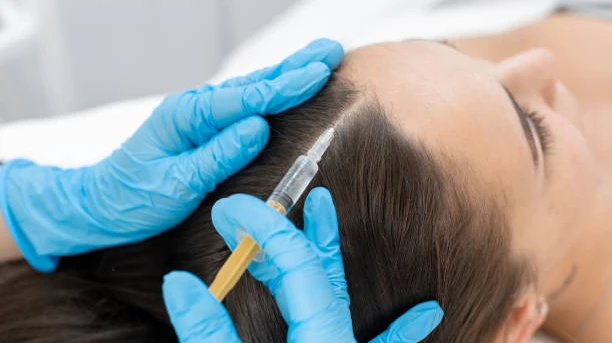
PRP Hair Treatment may support hair density at the crown by encouraging healthier growth and improving the appearance of thinning areas over time.
Crown hair loss can gradually change the appearance of the scalp, with thinning often becoming noticeable around the vertex or upper back portion of the head. Because this area can be difficult to conceal as hair density decreases, many people explore treatments designed to support existing hair growth. PRP Hair Treatment in Abu Dhabi uses platelet-rich plasma prepared from the individual's own blood to support the natural hair-growth environment. By concentrating platelets and growth factors and introducing them into areas of thinning, PRP may help strengthen existing follicles and encourage healthier-looking hair density around the crown.
What Is Crown Hair Loss?
Crown hair loss refers to thinning that develops around the vertex of the scalp. It can begin subtly, with individual hairs becoming finer and the scalp becoming increasingly visible under certain lighting or hairstyles.
The crown can be affected by several forms of hair thinning, although pattern hair loss is one of the common reasons for gradual reduction in density. Over time, follicles may become smaller and produce thinner strands. As this process continues, the crown may appear less full even when some hair is still growing in the area.
Recognizing crown thinning early can be useful because treatments that support existing follicles are generally focused on improving the condition of follicles that are still active.
How Does PRP Hair Treatment Work?
PRP treatment begins with a small blood sample that is processed to separate and concentrate platelet-rich plasma. The resulting preparation contains platelets and growth factors that are involved in natural tissue-repair processes.
The concentrated plasma is then introduced into selected areas of the scalp. When used for hair concerns, the objective is to create a supportive environment around existing follicles and encourage their natural growth activity.
Rather than adding new follicles to the scalp, PRP focuses on the follicles that are already present. This makes it particularly relevant when the crown still contains thinning or weakened hairs rather than completely inactive areas.
Can PRP Help Improve Crown Hair Density?
PRP may help improve the appearance of hair density in the crown when thinning follicles remain active. The growth factors associated with platelet-rich plasma may support follicular activity and contribute to stronger-looking hair growth.
As weakened follicles respond, individual hairs may become more robust and the overall crown can appear fuller. The degree of improvement varies because every person's hair-growth pattern and follicular condition are different.
PRP is generally more focused on strengthening and supporting existing hair than creating an entirely new area of hair growth.
Is PRP Suitable for Early Crown Thinning?
PRP may be particularly relevant when crown thinning is identified at an earlier stage. Early thinning often means that follicles are still producing hair, even if the strands have become finer or less dense.
Supporting these follicles while they remain active may help maintain the appearance of existing hair and potentially improve overall density. This is one reason why early attention to crown hair loss can be important.
However, the suitability of PRP depends on the cause of hair loss, the condition of the follicles, and the individual's overall hair-growth pattern. A professional assessment can help determine whether PRP is an appropriate option.
How Does PRP Support Hair Follicles?
Platelets contain growth factors that participate in cellular communication and tissue-repair processes. When concentrated platelet-rich plasma is introduced into the scalp, these components may interact with the surrounding tissue and support follicular activity.
For thinning hair, the objective is to encourage follicles to remain productive and improve the quality of the hair they produce. This can be especially relevant in areas such as the crown where hair may gradually become finer.
The process is not designed to instantly increase hair volume. Instead, it works through biological processes that can gradually influence the appearance and strength of existing hair.
Can PRP Make Crown Hair Look Thicker?
PRP may contribute to thicker-looking crown hair by supporting follicles that are producing fine or weakened strands. When individual hairs become stronger and more substantial, the scalp may appear less visible.
Hair thickness and density are not exactly the same. A person can have a similar number of follicles but still experience visible thinning because each follicle produces a finer strand. Improving the quality of existing hair can therefore influence the overall appearance of density.
PRP may be useful in this context because its focus is on supporting existing follicles rather than simply adding cosmetic volume to the hair.
How Many PRP Treatments Are Needed for Crown Hair Loss?
PRP hair treatment is commonly approached as a series rather than as a single isolated session. The exact treatment schedule can vary according to the degree of thinning, the condition of the scalp, and the individual's response.
Hair grows through natural cycles, so changes in density cannot always be evaluated immediately after treatment. The follicles require time to respond, and visible changes may develop progressively.
A personalized treatment plan can determine the appropriate number and spacing of sessions based on the individual's crown hair loss and treatment goals.
When Can You See Results From PRP?
Hair growth is naturally gradual, which means PRP results also require time to become visible. Improvements may develop progressively as follicles respond and newly strengthened hairs move through their growth cycle.
Some people may notice changes in hair texture or reduced visibility of the scalp before seeing a more noticeable improvement in overall density. Individual results can differ depending on the cause and extent of hair loss.
Regular evaluation can help determine how the crown is responding throughout the treatment process.
Can PRP Prevent Further Crown Hair Thinning?
PRP may help support existing follicles and maintain healthier-looking hair, but it should not be viewed as a guaranteed way to prevent every form of future hair loss.
Crown thinning can be influenced by genetics, hormones, age, and other factors. Understanding the underlying reason for the hair loss is therefore important when deciding whether PRP is suitable.
For individuals with pattern-related thinning, PRP may form part of a broader hair-management strategy focused on supporting follicular health and preserving existing density.
Can PRP Restore Completely Bald Areas on the Crown?
PRP is primarily intended to support existing hair follicles. If an area of the crown has become completely bald and the follicles are no longer producing hair, PRP alone may have limited ability to create new hair growth in that area.
Its potential is generally greater when fine, thinning hairs are still present. This distinction is important when establishing realistic expectations.
Someone with significant crown hair loss may require an assessment of the scalp and follicular condition to determine which treatment approach is most appropriate for their individual situation.
Is PRP a Good Option for Crown Hair Loss?
PRP may be a suitable option for people experiencing thinning around the crown, particularly when existing follicles remain active. It offers a non-surgical approach centered on supporting the scalp environment and strengthening the appearance of existing hair.
The ideal candidate depends on the underlying cause of hair loss, the amount of remaining hair, and individual treatment objectives. A professional evaluation can help determine whether PRP is likely to provide meaningful improvement.
Final Thoughts
PRP Hair Treatment can help with crown hair loss by using concentrated platelet-rich plasma to support existing hair follicles and encourage healthier-looking growth. It may be particularly useful for early or moderate crown thinning when follicles are still producing finer strands. The treatment does not create new follicles, so its potential is generally greater in areas where existing hair remains. Because hair growth occurs gradually, visible improvements develop over time and can vary between individuals. Understanding the cause and stage of crown hair loss is essential for determining whether PRP is the right treatment approach.
FAQs
Can PRP help crown hair loss?
Yes, PRP may support existing follicles and improve the appearance of thinning around the crown.
Is PRP good for early crown thinning?
It may be particularly useful when thinning follicles remain active and are still producing hair.
Can PRP make crown hair thicker?
PRP may help existing follicles produce stronger, thicker-looking strands, improving overall visual density.
Can PRP regrow a completely bald crown?
PRP primarily supports existing follicles, so completely bald areas may respond differently from areas with thinning hair.
How quickly does PRP improve crown hair?
Hair growth is gradual, so visible improvements generally develop over time as follicles respond to treatment.


Comments
Login to Comment