Can Laser Tattoo Removal treat professional tattoos
07 Sep, 2026
527 Views 0 Like(s)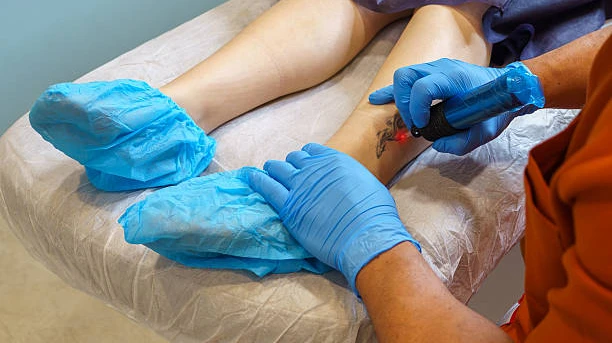
Laser tattoo removal can treat professional tattoos, though their deeper, denser ink may require more sessions for noticeable fading and removal.
Professional tattoos are often created with high-quality equipment, carefully selected pigments, and precise application techniques, which can result in detailed and deeply saturated designs. When someone later decides that a professionally created tattoo no longer suits their preferences, laser tattoo removal can provide an option for progressively reducing its appearance. For people considering Laser Tattoo Removal in Abu Dhabi, an important question is whether professionally applied ink can be treated as effectively as other forms of body art. In many cases, it can, although the tattoo's pigment composition, depth, density, color, age, size, and location all influence the treatment process and expected degree of fading.
What Makes a Professional Tattoo Different?
Professional tattoos can differ from amateur tattoos in several ways. Experienced tattoo artists often use specialized equipment to place pigment at consistent depths within the skin, creating clean outlines, detailed shading, and solid color saturation.
This precision can produce artwork that remains highly visible for many years. It can also mean that the tattoo contains a considerable concentration of pigment, particularly in bold or heavily shaded designs.
These characteristics do not make professional tattoos unsuitable for laser removal. Instead, they provide important information that can be considered when determining how laser energy should be applied to the design.
Can Laser Technology Target Professional Tattoo Ink?
Yes. Laser tattoo removal is designed to target tattoo pigment regardless of whether the tattoo was created professionally or otherwise. The laser delivers controlled energy that is absorbed by the ink, causing pigment particles to break into smaller fragments.
The body then gradually processes the fragmented pigment between treatment sessions. Over time, the visible tattoo can become progressively lighter.
The fact that a tattoo was professionally applied does not prevent the laser from targeting its pigment. However, the depth and density of professionally applied ink can influence the overall treatment course.
Does Professional Tattoo Quality Affect Removal?
The quality of the artwork itself does not determine whether laser removal can be performed. However, professional tattoos can contain carefully layered and highly concentrated pigment.
A design with solid black sections may respond differently from a delicate piece containing several colors and fine shading. Similarly, a tattoo that has received multiple touch-ups may contain additional layers of ink.
The more pigment present within the skin, the more gradual the removal process may be. This is why evaluating the tattoo's actual pigment characteristics is more useful than simply classifying it as professional or amateur.
Does Ink Color Matter?
Ink color is a major consideration in laser tattoo removal. Different tattoo pigments absorb different wavelengths of laser energy, so the treatment approach can be adapted according to the colors present.
Black professional tattoos often respond differently from designs containing red, blue, green, yellow, or pastel pigments. A multicolored professional tattoo may therefore require several treatment approaches to address its different pigments.
The formulation of the ink can also influence how it responds. Two professionally created tattoos that appear to use the same color may contain different pigment compositions.
Can Dense Professional Tattoos Be Removed?
Dense professional tattoos can be treated with laser technology, but their high pigment concentration may make the process more extensive.
Solid blackwork, bold geometric designs, traditional artwork, and heavily shaded pieces can contain substantial amounts of ink. Laser treatment progressively targets this pigment rather than attempting to eliminate all of it at once.
As the tattoo becomes lighter, subsequent sessions can focus on the remaining pigment. This gradual approach is particularly relevant for tattoos with dense areas or multiple layers of ink.
Does Tattoo Depth Affect Professional Tattoo Removal?
Professional tattooing can place pigment at consistent depths within the skin, but the exact depth varies according to technique and design. Some areas may contain pigment deeper than others.
Pigment depth influences how laser energy interacts with the tattoo. Deeply deposited ink may require a carefully customized treatment approach.
Depth does not automatically determine whether the tattoo can be removed. Instead, it is considered alongside color, density, size, location, age, and the individual's skin characteristics.
Can Multicolored Professional Tattoos Be Treated?
Yes. Modern laser technology can target many tattoo colors, although different pigments respond differently to laser energy.
A professional tattoo containing several colors may require customized wavelengths for different portions of the design. Black outlines, colored shading, and bright accent areas can respond at different rates.
Consequently, the tattoo may not fade uniformly. One color may become significantly lighter while another remains visible for longer. This is a normal characteristic of treating complex, multicolored artwork.
Can Older Professional Tattoos Be Removed?
The age of a professional tattoo does not automatically prevent laser treatment. Older tattoos may have naturally faded, but they can still contain substantial pigment.
Sun exposure, natural skin changes, and gradual pigment alteration can influence the tattoo's appearance over the years. However, the remaining ink can still be evaluated for laser treatment.
The current characteristics of the tattoo are more important than its age alone. Pigment density, color, depth, size, location, and composition all contribute to the treatment strategy.
Does Tattoo Size Matter?
Large professional tattoos can often be treated with laser technology. However, larger designs contain more pigment across a greater area and may include several different sections.
A large sleeve, back piece, chest design, or extensive geometric tattoo may contain a mixture of solid ink, shading, outlines, and multiple colors. These variations can affect how different portions respond.
Small tattoos can also contain dense pigment, so size alone does not determine the number of sessions or the final result. A complete assessment considers the entire design.
Does Skin Tone Influence Professional Tattoo Removal?
Skin tone is an important factor because natural melanin can interact with laser energy. Treatment parameters therefore need to be selected according to the person's natural pigmentation as well as the tattoo itself.
People across a wide range of skin tones can often be considered for laser tattoo removal. However, darker skin tones may require particularly careful wavelength selection and treatment customization.
A professional assessment can evaluate the relationship between the tattoo pigment and surrounding skin before treatment begins.
Can Laser Tattoo Removal Treat Tattoos With Touch-Ups?
Yes. Professionally created tattoos are sometimes refreshed or modified over time, which can introduce additional pigment into the skin.
Multiple layers of ink can make the tattoo denser than it was originally. The laser can still target the pigment, but the additional ink may influence the overall treatment course.
Understanding the tattoo's history can therefore be useful during assessment. Information about original application, touch-ups, color changes, and modifications can help establish a more appropriate treatment strategy.
How Many Sessions Might Professional Tattoo Removal Require?
There is no standard number of sessions for removing a professional tattoo. The treatment course varies according to pigment density, color, depth, size, location, age, ink composition, and individual skin characteristics.
A lightly shaded design may respond differently from a heavily saturated professional tattoo. Multicolored artwork may also require a more complex approach because individual pigments can fade at different rates.
Laser tattoo removal is generally progressive, with time between sessions allowing the body to process fragmented pigment.
Can Professional Tattoos Be Completely Removed?
Complete removal may be possible in some cases, but it cannot be guaranteed. Professional tattoos can contain high-quality, concentrated pigments that are designed to remain visible, and their depth and composition can vary.
The final degree of fading depends on numerous factors. Some tattoos may become extremely faint, while traces of pigment may remain visible after treatment.
A professional assessment can provide a more realistic understanding of what may be achievable based on the specific tattoo rather than relying on general assumptions about professional ink.
Why Is Individualized Treatment Important?
Every professional tattoo is unique. Even two tattoos created by experienced artists can differ significantly in pigment composition, depth, density, color, and application technique.
Individualized treatment allows these characteristics to be considered when selecting laser wavelengths and treatment settings. The strategy can also be reviewed as the tattoo becomes progressively lighter.
This is particularly important for detailed professional tattoos because different portions of the same design may respond differently.
What Should You Expect From Professional Tattoo Removal?
People considering removal should expect gradual fading rather than immediate clearing. Each session targets tattoo pigment, while the body continues processing fragmented ink between treatments.
Professional tattoos may require patience because dense or deeply deposited pigment can take time to reduce. Multicolored artwork can also fade unevenly as individual pigments respond differently.
The final result depends on the tattoo's characteristics and individual skin response. A professional assessment can help establish realistic expectations before treatment begins.
Can Laser Tattoo Removal Treat Professional Tattoos?
Yes, laser tattoo removal can treat many professionally created tattoos. The laser does not distinguish between professional and amateur artwork; it targets the pigment contained within the skin.
Professional tattoos may contain dense, deeply deposited, or multicolored ink, which can influence the treatment course. Nevertheless, modern laser technology can be customized according to tattoo color, pigment density, depth, size, location, age, and skin characteristics.
For anyone reconsidering a professionally created tattoo, laser removal can provide a gradual method for reducing its visibility. A personalized assessment is the best way to determine whether the specific design is suitable for treatment and what degree of fading may realistically be expected.
Frequently Asked Questions
Can laser tattoo removal treat professional tattoos?
Yes. Many professional tattoos can be treated with laser technology. The treatment targets tattoo pigment regardless of how professionally the tattoo was applied.
Are professional tattoos harder to remove?
They can sometimes require a more extensive treatment process because professional tattoos may contain dense or deeply deposited pigment. However, tattoo quality alone does not determine removability.
Can colored professional tattoos be removed?
Yes. Many colored pigments can be targeted with appropriate laser wavelengths. Multicolored designs may require different approaches for different sections of the tattoo.
Do professional tattoos require multiple sessions?
Multiple sessions are commonly needed because laser tattoo removal progressively fragments pigment while the body processes it between treatments. The exact treatment course varies according to the tattoo's characteristics.
Can a professional tattoo be completely cleared?
Complete removal may be possible in some cases, but it cannot be guaranteed. Ink composition, depth, density, color, size, location, age, and individual skin characteristics all influence the final degree of fading.


Comments
Login to Comment