Block Blast: How I Accidentally Turned “Simple” Into My New Puzzle Obsession
22 Sep, 2026
16 Views 0 Like(s)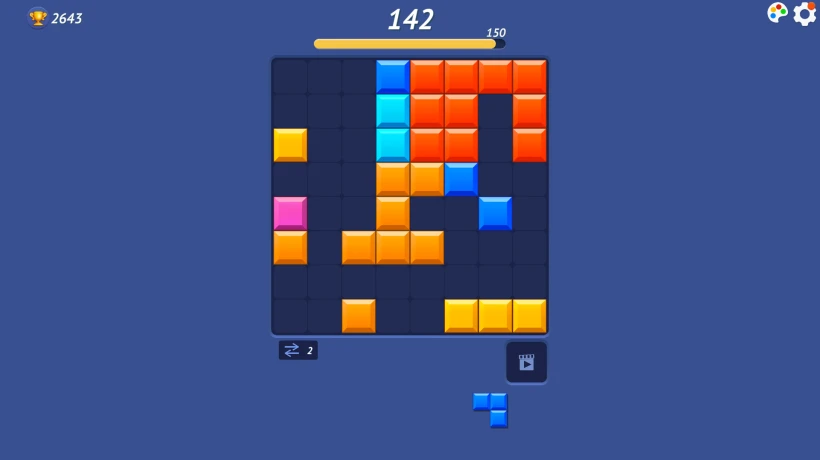
I tried Block Blast expecting easy puzzles, but once the board filled up, I had to plan ahead—and I couldn’t stop.
I stumbled onto Block Blast on a lazy afternoon, thinking it would be one of those quick “place a block, clear a line, done” browser games. The first few moves felt almost unfairly simple. Drag a piece onto the grid, complete a full horizontal row or vertical column, and watch it clear. That was the vibe for all of, like, five minutes.
Then the board started filling up, and suddenly I wasn’t making “obvious” placements anymore. I was making choices—the kind that leave tiny consequences behind, like crumbs you don’t notice until you’re deep in the mess.
The moment Block Blast got tricky (and why it still pulled me back)
At first, I treated every piece like a fresh opportunity. If a move cleared something, I counted it as a win and moved on. But as the game progressed, I realized Block Blast doesn’t use falling pieces—you’re working with a set of block shapes you get, and you place them yourself. No frantic last-second saves. No “maybe the next one will fix it.”
Also, the pieces can’t be rotated. That detail sounds small until you’re staring at a shape that almost fits and then realizing it doesn’t, not even slightly. I kept thinking, “Surely there’s a way,” and then I’d place it “fine enough”… and regret it immediately.
The real challenge hit when I understood that the game wants you to think beyond the current piece. The pieces feel like a group, not a single move at a time. If you just focus on clearing something right now, you can accidentally close off options for later pieces. And later pieces show up whether you’re ready or not.
Keeping space open: my least favorite part of getting better
One of the first things I learned the hard way is that open areas aren’t just nice—they’re basically survival tools. Large clear sections make it easier to tuck different shapes into the board. But if you let it get cluttered, you start creating tiny isolated gaps that are surprisingly hard to fill. They look solvable in the moment, like, “Oh, that corner void is totally fine.”
And then the next piece arrives and you’re like, “Oh… that was a lie.”
I had a run where I got excited about a placement that cleared a couple lines at once. It felt great. You know that little dopamine moment when you think you’re about to break the game? I was wrong. After the clears, I still had to deal with the shape of what remained, and my board was oddly shaped in a way that made future placements feel awkward. I didn’t lose instantly—I just slowly boxed myself in.
There’s also something mentally funny about realizing that “clearing lines” and “staying flexible” are not always the same goal. I kept chasing quick clears, but saving space was what actually mattered.
My biggest mistakes (and the lesson hiding inside them)
Here’s what I kept doing wrong at first:
I’d pick a placement that looked clean, instead of one that would keep multiple future options alive. I also placed pieces a little too quickly when I thought I’d already solved it. Sometimes I’d even create an awkward little gap—tiny, harmless-looking—and then act surprised when it became a problem two moves later.
The most humbling part was how planning several moves ahead makes a noticeable difference. Once I slowed down and started imagining where the next few pieces could go, my runs felt less like luck and more like strategy. I wasn’t suddenly amazing, but I stopped making the same reckless mistake over and over.
Eventually, I learned to ask myself: if this placement is the “easy” one, is it easy because it keeps things open—or easy because it’s quietly killing my future?
A few casual tips I actually used
I’m not pretending I’ve mastered Block Blast, but these helped me a lot:
- Keep large open areas whenever possible. Small isolated gaps feel clever until they become impossible.
- Look at the set as a whole, not just the current piece. Since pieces don’t rotate and there are no falling blocks, your early placement matters more than you think.
- Try to set up multi-line clears—and when it happens, pay attention to how it changes the board shape, not just the satisfaction of clearing.
- Don’t chase every clear. Sometimes the best play is the one that prevents the board from locking into an awkward layout.
The game ends when none of the currently available pieces can fit on the remaining board, so every “almost” matters.
Final thought: come play with me
I started Block Blast expecting an easy little block puzzle. A few runs later, I was spending way too long thinking about where one piece should go—and then, of course, immediately starting another round because I wanted to do it better.
If you try it, let me know what kind of mistake you make first (because I know I’m not the only one who creates that one weird gap). Let’s play—then compare notes on how we kept the board open a little longer.


Comments
Login to Comment