Anechoic Chamber in India: Understanding the Technology Behind Silent Testing
28 Jul, 2026
815 Views 0 Like(s)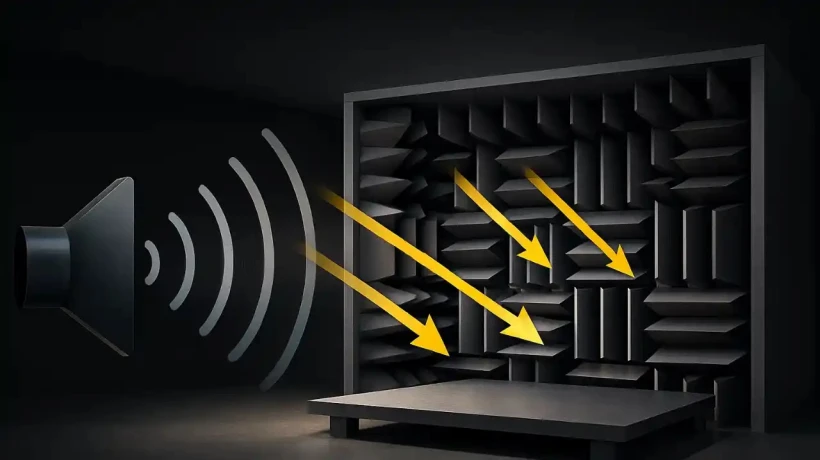
This is why demand for a reliable anechoic chamber in India has grown steadily across automotive, defence, telecom, and consumer electronics sectors over the past decade.
Some of the most important sound and vibration testing in the world happens inside rooms specifically built to have no echo at all. That might sound like a small detail, but for engineers testing speakers, sensors, or electronic devices, it's the difference between accurate data and misleading results. This is why demand for a reliable anechoic chamber in India has grown steadily across automotive, defence, telecom, and consumer electronics sectors over the past decade.
What an Anechoic Chamber Actually Is
An anechoic chamber is a room engineered to absorb sound reflections almost completely, simulating what's known as a free-field environment. In simple terms, it removes echo, background noise, and reflected sound waves so that whatever is being tested, whether that's a microphone, a car's infotainment system, or a piece of industrial equipment, can be measured with pure, unaltered data. Without this kind of controlled space, test results get distorted by reflections bouncing off walls, floors, and ceilings, making it nearly impossible to trust the numbers.
Why Demand for These Chambers Is Growing in India
India's manufacturing and R&D sectors have expanded rapidly, and testing standards have tightened right along with them. Automotive companies need to measure cabin noise and infotainment acoustics precisely. Telecom manufacturers need to test antenna performance without interference. Defence research organizations need controlled spaces for sensitive equipment evaluation. All of this has pushed the need for a properly built anechoic chamber in India well beyond a handful of specialized labs, spreading into universities, private R&D centers, and manufacturing plants across the country.
Core Components That Make a Chamber Work
Building an effective anechoic chamber in India isn't just about lining walls with foam. Several elements need to come together for the chamber to actually perform to specification:
- Wedge-shaped absorptive panels, either foam or metallic, designed to trap sound waves at specific frequencies
- Vibration-isolated flooring to prevent structural noise from interfering with measurements
- Airtight, sealed construction to block external sound from entering
- Ventilation systems engineered specifically not to introduce airflow noise
- Calibrated internal dimensions matched to the frequency range being tested
Skipping any one of these elements can compromise the entire chamber's accuracy, which is why chamber design is treated as a precision engineering task rather than basic construction work.
Full Anechoic vs. Semi-Anechoic Chambers
Not every application needs a fully anechoic space. Some testing scenarios call for a semi-anechoic chamber, where the floor remains reflective to simulate real ground conditions, such as testing a vehicle's exterior noise while it sits on a hard surface. Choosing between a full or semi-anechoic chamber in India depends entirely on what's being tested and what kind of real-world conditions need to be replicated. A manufacturer with genuine acoustic expertise will guide clients toward the right configuration rather than pushing a single standard design for every use case.
Why the Right Manufacturer Makes All the Difference
Designing and building an anechoic chamber in India requires a rare mix of skills: acoustics, structural engineering, ventilation design, and precision manufacturing all rolled into one project. Ecotone Systems has built its reputation around exactly this combination, delivering chambers used for research, automotive testing, and defence applications across the country. Working with an experienced name like Ecotone Systems means the chamber isn't just theoretically sound, it performs as expected once it's actually built and commissioned on-site.
What to Look for Before Choosing a Chamber Provider
Facilities planning to invest in an anechoic chamber in India should look closely at a few key factors before signing off on any project:
- A proven portfolio of completed chambers across different industries
- In-house engineering teams capable of custom frequency-range designs
- ISO-certified manufacturing processes and quality documentation
- Post-installation support and calibration services
- Experience handling both full and semi-anechoic configurations
Ecotone Systems checks each of these boxes, having worked with research institutions and manufacturing clients who need chambers that hold up to rigorous, repeated testing over many years.
Final Thoughts
As India's testing and research needs continue to grow, the importance of a properly engineered anechoic chamber in India isn't going away anytime soon. These spaces quietly support some of the most important product development work happening across automotive, telecom, and defence industries. Choosing a manufacturer with real acoustic engineering depth, like Ecotone Systems, is what separates a chamber that performs reliably from one that falls short the moment real testing begins. For any organization serious about accurate, repeatable acoustic data, that choice is worth getting right from the start.



Comments
Login to Comment