A Guide to Steel Manufacturers and Steel Plants in Saudi Arabia
30 Jul, 2026
611 Views 0 Like(s)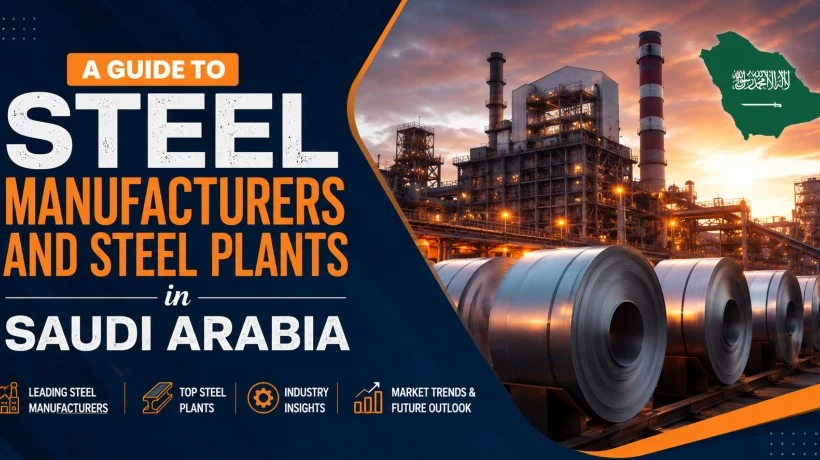
Explore Saudi Arabia's growing steel industry, leading steel manufacturers, major steel plants, production processes, and future opportunities shaping the Kingdom's industrial growth.
Saudi Arabia has built a strong position in the Middle East's steel industry, supported by large-scale construction, infrastructure development, energy projects, and industrial diversification. As the Kingdom continues to implement Saudi Vision 2030, demand for steel products remains closely connected to the development of new cities, transportation networks, industrial facilities, housing, and major infrastructure projects.
For businesses looking to source steel, understanding the country's steel manufacturers and steel plants can help them identify suitable suppliers, evaluate product quality, and choose materials that meet project requirements.
The Growth of the Steel Industry in Saudi Arabia
The steel industry plays an important role in Saudi Arabia's industrial economy. Steel is essential for construction and infrastructure, but it is also widely used in manufacturing, energy, transportation, and other industrial applications.
The Kingdom has developed an established steel production ecosystem that includes raw-material processing, direct reduced iron (DRI), steelmaking, continuous casting, rolling mills, and downstream processing. This integrated structure enables manufacturers to supply products ranging from billets and reinforcement bars to wire rod and flat steel.
The country's industrial development strategy has also encouraged greater local manufacturing and investment in the metals and mining sector. This creates opportunities for domestic steel production while supporting the broader objectives of economic diversification.
Major Steel Manufacturers in Saudi Arabia
Several established companies contribute to the Kingdom's steel production capacity. Their product ranges and manufacturing capabilities vary, so buyers should evaluate each supplier according to their specific requirements.
Hadeed
The Saudi Iron and Steel Company, commonly known as Hadeed, is one of the most prominent names in the Saudi steel sector. Established in 1979, the company produces both long and flat steel products and operates its facilities in Jubail Industrial City.
According to Hadeed, its current annual production capacity includes approximately 3.8 million metric tons of long products and 2.2 million metric tons of flat products. Its product portfolio includes products such as rebar, wire rod, hot-rolled steel, cold-rolled steel, and galvanized steel.
In 2024, the Public Investment Fund acquired Hadeed, which subsequently acquired 100% of AlRajhi Steel Industries. This transaction further strengthened the company's position within Saudi Arabia's steel ecosystem.
Al Ittefaq Steel Products Company
Al Ittefaq Steel Products Company (ISPC) is another significant steel manufacturer operating in Saudi Arabia. Its facilities produce products including billets, reinforcement bars, wire rods, cold-drawn wire, galvanized steel wire, and other downstream steel products.
The company states that its rolling mill produces hot-rolled, high-tensile, weldable reinforcement bars and wire rod products. Its facilities also include operations related to scrap recycling, direct reduction, steelmaking, rolling, and downstream processing.
The National Committee for Steel Industry lists ISPC as a major private-sector steel manufacturer in the Kingdom, with production capabilities spanning reinforcement steel, wire rod, billets, DRI, and value-added downstream products.
AlRajhi Steel
AlRajhi Steel has also been an established name in Saudi Arabia's iron and steel sector. Founded in 1984, the company has specialized in different iron and steel products, including reinforcement steel and rebar on coil.
Its long-standing presence demonstrates the depth of the Saudi steel manufacturing market and the variety of suppliers available to construction and industrial customers. Following the 2024 transaction, AlRajhi Steel Industries became part of the Hadeed structure.
What Happens Inside a Steel Plant?
A modern steel plant can involve several stages, depending on whether the facility is fully integrated or focuses on specific production steps.
1. Raw Material Preparation
Steel production begins with the preparation of raw materials. Depending on the production route, manufacturers may use iron ore, scrap steel, or direct reduced iron as inputs.
2. Iron Production
In integrated facilities, iron ore can be processed into direct reduced iron. DRI is an important input for steelmaking and is particularly relevant to Saudi Arabia's gas-based steel production environment.
3. Steelmaking
The iron-bearing materials and scrap are melted in furnaces to produce molten steel. Chemical composition is carefully controlled to achieve the required grade and mechanical properties.
4. Continuous Casting
Molten steel is cast into semi-finished forms such as billets, blooms, or slabs. These products are then transferred to rolling or further processing facilities.
5. Rolling
Rolling mills transform semi-finished steel into finished products. Depending on the mill configuration, manufacturers may produce rebar, wire rod, bars, coils, sheets, or other steel sections.
6. Finishing and Quality Control
Additional processes may include cutting, straightening, coating, galvanizing, cold rolling, or other finishing operations. Testing and inspection help ensure that products meet customer specifications and applicable standards.
Key Steel Products Manufactured in Saudi Arabia
Steel manufacturers in Saudi Arabia supply a wide range of products for different industries.
Common products include:
- Reinforcement bars and rebar
- Wire rods
- Billets
- Hot-rolled steel
- Cold-rolled steel
- Galvanized steel
- Steel coils
- Structural steel products
- Steel wires
- Epoxy-coated reinforcement bars
- Welded wire mesh
- Prestressed concrete strands
The right product depends on the application. For example, rebar is widely used in reinforced concrete construction, while wire rod can be further processed into wires and other products. Flat steel products are commonly used in manufacturing, automotive applications, appliances, and industrial equipment.
Why Steel Plants Are Important to Saudi Arabia's Development
Steel is a foundational material for economic growth. Large infrastructure projects require significant quantities of reinforcement steel and structural products, while industrial facilities depend on steel for machinery, buildings, pipelines, storage systems, and equipment.
The development of domestic steel manufacturing also offers potential advantages, including:
- Supporting local supply chains
- Reducing dependence on imported steel products
- Creating industrial employment
- Encouraging technology investment
- Supporting construction and infrastructure projects
- Strengthening downstream manufacturing
As Saudi Arabia continues its economic diversification efforts, a competitive steel industry can play an important role in supporting both traditional construction and emerging industrial sectors.
How to Choose a Steel Manufacturer in Saudi Arabia
Selecting a supplier should involve more than comparing prices. Buyers should consider several factors before placing an order.
Product Quality and Standards
Check whether the manufacturer complies with relevant Saudi and international standards. Certifications and quality management systems can provide additional assurance.
Production Capacity
A supplier's production capacity should match the volume and delivery schedule of your project. Large infrastructure projects may require manufacturers with substantial and consistent output.
Product Range
Choose a manufacturer that produces the specific grade, size, and type of steel required for your application.
Technical Support
For specialized projects, technical expertise can be valuable. A supplier that understands material specifications and application requirements can help reduce purchasing errors.
Delivery and Logistics
Consider the plant's location, transportation arrangements, lead times, and ability to deliver products to your project site.
Sustainability
Environmental performance is becoming increasingly important. Buyers may want to evaluate a manufacturer's energy efficiency, recycling practices, emissions management, and responsible sourcing initiatives.
The Future of Steel Manufacturing in Saudi Arabia
The future of the Saudi steel sector is closely connected to the Kingdom's industrial ambitions. Continued infrastructure investment, construction activity, manufacturing expansion, and the development of new economic sectors are likely to maintain demand for steel.
At the same time, manufacturers are under growing pressure to improve efficiency, reduce environmental impact, adopt automation, and develop lower-carbon production methods. Technologies related to energy efficiency, digital monitoring, advanced rolling equipment, and optimized production processes could become increasingly important.
Saudi Arabia's access to natural gas, established industrial infrastructure, and growing focus on metals and mining provides a strong foundation for further development of the sector. Companies that invest in modern equipment and efficient production methods will be better positioned to serve evolving domestic and regional demand.
Final Thoughts
The steel manufacturing sector in Saudi Arabia is an important part of the Kingdom's industrial and economic landscape. From integrated producers such as Hadeed to major private-sector manufacturers such as Al Ittefaq Steel Products Company, the country has developed significant capabilities across steelmaking, rolling, and downstream processing.
For construction companies, engineering firms, and industrial buyers, understanding the capabilities of steel manufacturers and steel plants in Saudi Arabia is essential for making informed sourcing decisions. As the Kingdom continues its transformation under Vision 2030, investment in advanced manufacturing, efficient production, and sustainable steelmaking is expected to remain an important part of the country's industrial future.

Comments
Login to Comment