7 Common International Shipping Mistakes (and How to Avoid Them)
10 Apr, 2026
2376 Views 0 Like(s)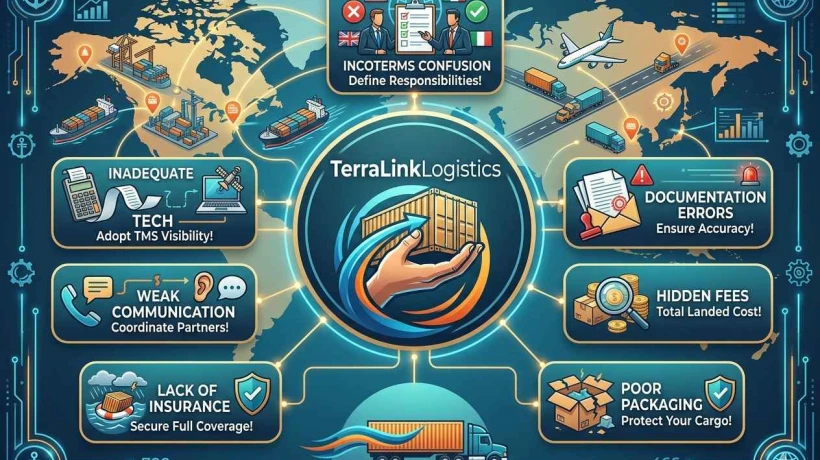
Avoid costly international shipping mistakes by mastering Incoterms, ensuring accurate documentation, calculating total landed costs, improving packaging, securing insurance, and leveraging technology for efficient global logistics.
The landscape of international trade is a complex web of logistical hurdles, where the jump from domestic distribution to global commerce requires a sophisticated understanding of cross-border dynamics. For many growing businesses, the allure of reaching international markets is often met with the harsh reality of diverse legal frameworks, fluctuating time zones, and varied cultural business practices. Moving cargo across continents is not merely a matter of transportation; it is an intricate dance of regulatory compliance and risk management. A minor oversight in a customs form or a slight misunderstanding of trade jargon can trigger a domino effect, resulting in significant financial penalties, seized shipments, and irreparable damage to your brand’s reputation in a foreign market.
In today’s hyper-connected economy, high-performance logistics serves as a critical pillar of a company’s competitive strategy. Organizations that master the nuances of global supply chains can leverage their efficiency to offer more aggressive pricing and guarantee reliability to their international clientele. However, many enterprises inadvertently fall into predictable traps that cause unnecessary delays and inflate their operational expenditures. Recognizing these frequent pitfalls is the essential first step toward constructing a resilient, profitable, and scalable international shipping framework. This comprehensive guide explores the most prevalent errors in global logistics and provides strategic insights on how to bypass them effectively.
1. Misunderstanding Incoterms and Legal Frameworks
One of the most frequent and financially devastating mistakes in the realm of international commerce is the misinterpretation or incorrect application of Incoterms. These "International Commercial Terms" are a standardized set of rules published by the International Chamber of Commerce that delineate exactly where the responsibilities, costs, and risks transfer from the seller to the buyer. Many shippers choose a term based on habit rather than strategy, failing to realize that a term like "Ex Works" (EXW) leaves the buyer responsible for nearly everything, whereas "Delivered Duty Paid" (DDP) places the entire burden—including import taxes—on the seller.
When contractual clarity is lacking, disputes become an inevitable byproduct of the shipping process. If a vessel encounters rough seas and cargo is damaged, the absence of a clearly defined Incoterm can lead to protracted legal battles over who held the risk at the time of the incident. Furthermore, businesses often neglect to research the specific legal statutes of the destination country, which may have unique restrictions on certain commodities or specific safety standards. To navigate this shifting landscape, industry professionals frequently monitor Google News for real-time updates on emerging trade tariffs, diplomatic shifts, and changes in customs protocols that could impact their specific industry vertical.
How to Avoid This Mistake:
-
Invest in Continuous Education: Ensure that your logistics and procurement teams receive formal training on the latest Incoterms updates to avoid using outdated or inappropriate trade terms.
-
Leverage Expert Consultation: Engage with a licensed customs broker or a logistics consultant who possesses deep expertise in the specific regulatory environment of your target market.
-
Enforce Contractual Precision: Never rely on "gentleman’s agreements" or verbal understandings; ensure the chosen Incoterm and the precise named place of delivery are explicitly stated in all purchase orders and sales contracts.
2. Inaccurate Documentation and Labeling
In the world of international logistics, documentation acts as the primary "passport" for your goods. While domestic transport might only require a basic bill of lading, moving products across borders necessitates a mountain of paperwork, including commercial invoices, detailed packing lists, certificates of origin, and specialized permits for specific goods. The most common error involves discrepancies between these documents. For instance, if a commercial invoice lists a different weight than the packing list, customs officials are likely to flag the shipment for a manual inspection, which can halt your supply chain for days or weeks.
Customs inspections are not only a logistical bottleneck but also a significant financial drain, as the shipper is typically responsible for the costs of unloading, storage, and reloading the cargo. Moreover, improper labeling can lead to physical hazards or regulatory fines. If hazardous materials are not labeled according to the Globally Harmonized System of Classification and Labelling of Chemicals, you risk both the safety of the transport workers and the imposition of heavy penalties. The accuracy of "Harmonized System" (HS) codes is equally vital; as noted by Forbes, misclassifying products can lead to the overpayment of duties or, more dangerously, accusations of tax evasion due to underpayment.
How to Avoid This Mistake:
-
Adopt Digital Automation: Utilize advanced shipping software that synchronizes data across all documents to eliminate the risk of manual data entry errors and inconsistencies.
-
Implement a Verification Protocol: Establish a rigorous review process where a second set of eyes must verify the accuracy of all customs documentation against the physical shipment before it departs.
-
Standardize Packaging Labels: Use durable, weather-resistant labeling that clearly communicates handling requirements, destination information, and any necessary regulatory symbols in multiple languages if required.
3. Ignoring Total Landed Cost and Hidden Fees
A critical financial blunder many businesses commit is calculating their international shipping budget based solely on the initial freight quote provided by a carrier. This narrow perspective ignores the "Total Landed Cost," which encompasses the aggregate price of getting a product from the factory floor to the customer's doorstep. This includes not just freight, but also insurance premiums, customs duties, value-added taxes, currency exchange fluctuations, and various local handling surcharges that can quickly erode profit margins.
Unexpected "demurrage and detention" fees are often the most shocking hidden costs for inexperienced exporters. Demurrage occurs when a container sits at the port terminal beyond the agreed-upon free time, while detention is charged when equipment is kept outside the port for too long. These daily charges can accumulate with frightening speed, sometimes surpassing the actual value of the goods being shipped. Efficiently managing the transition from sea to land is paramount to avoiding these costs. It is highly beneficial to work with partners who understand these local nuances; for example, TerraLinkLogistics offers drayage shipping services specifically designed to expedite the movement of containers from busy port terminals to inland destinations, reducing the risk of expensive storage penalties.
How to Avoid This Mistake:
-
Develop a Landed Cost Model: Create a comprehensive financial template that accounts for every conceivable fee, including duties, taxes, and terminal handling charges.
-
Integrate a Financial Buffer: Always include a contingency reserve in your logistics budget to account for unforeseen delays, port congestion, or sudden changes in fuel surcharges.
-
Perform Regular Invoice Audits: Systematically review every carrier invoice to ensure that you are only paying for the services rendered and that no erroneous fees have been applied.
4. Poor Packaging and Cargo Protection
The physical journey of international freight is significantly more taxing than domestic transport. A shipment heading overseas will be subjected to multiple touches by cranes, forklifts, and various transport vehicles. Inside a shipping container, goods may endure weeks of high humidity, extreme temperature swings, and the physical pressure of other cargo. A common mistake is using standard packaging that suffices for local delivery but fails under the rigors of ocean or air transit.
Insufficient packaging often leads to the shifting of cargo, resulting in crushed boxes, internal component damage, or exposure to "container sweat"—moisture that condenses on the metal walls and drips onto the goods. Furthermore, insurance providers are incredibly meticulous during the claims process. If they determine that a loss was caused by inadequate packaging that did not meet international standards, they are likely to deny the claim, leaving your business to suffer the total financial loss of the inventory.
How to Avoid This Mistake:
-
Upgrade to Export-Grade Materials: Utilize heavy-duty, moisture-resistant, double or triple-walled corrugated boxes and ensure that pallets are heat-treated and compliant with international standards (ISPM 15).
-
Utilize Custom Crating: For high-value or fragile machinery, professional wooden crating provides a level of structural integrity that cardboard and plastic wrap simply cannot match.
-
Optimize Container Loading: Use dunnage, air bags, and bracing to ensure the cargo is immobilized within the container, preventing it from tumbling during turbulent weather at sea.
5. Failing to Secure Adequate Insurance
There is a widespread and dangerous misconception that carriers are fully responsible for the total value of the goods they carry. In reality, most international carriers operate under limited liability frameworks defined by treaties like the Hague-Visby Rules. These limits are often based on the weight of the cargo or a set amount per package, which rarely covers the actual market value of the products. Relying solely on carrier liability is a high-risk strategy that leaves your business vulnerable to catastrophic loss.
The perils of the sea are many, ranging from mechanical failures and shipwrecks to theft and "General Average." This last concept is a centuries-old maritime law stating that if a portion of the cargo is jettisoned to save the vessel, all cargo owners must proportionally share the cost of the loss. Without a comprehensive cargo insurance policy, you could be forced to pay for the loss of someone else's goods just to get your own cargo released from the port.
How to Avoid This Mistake:
-
Secure All-Risk Coverage: Specifically request "All-Risk" insurance, which provides protection against all physical loss or damage from external causes, rather than "Named Perils" which only covers specific events.
-
Report Accurate Values: Ensure the insured value includes the cost of the goods, the freight charges, and a small percentage for anticipated profit to ensure you are fully made whole in the event of a claim.
-
Verify Policy Exclusions: Read the fine print of your insurance policy to understand what is not covered, such as losses due to war, strikes, or inherent vice in the goods themselves.
6. Neglecting Communication and Carrier Relationships
Logistics is fundamentally a "people business" that relies on clear communication and mutual trust. Many businesses treat their freight forwarders and carriers as disposable vendors, focusing only on the lowest price rather than the quality of the partnership. This lack of engagement becomes a major liability when things go wrong. A shipper who has invested time in building a relationship with their logistics provider is far more likely to receive priority assistance and creative solutions when a port strike or a vessel delay threatens their timeline.
Furthermore, failing to provide specific, written instructions can lead to disastrous operational errors. If a shipment requires a temperature-controlled environment (a "reefer" container) but this requirement is not clearly flagged during the booking process, the cargo could be loaded into a standard container and ruined. Clear, proactive communication ensures that every stakeholder in the supply chain understands the specific needs of your cargo.
How to Avoid This Mistake:
-
Designate a Logistics Liaison: Assign a specific team member to manage all communications with your freight forwarders to ensure consistency and accountability.
-
Conduct Performance Reviews: Meet with your logistics partners quarterly to review their performance against key metrics and discuss upcoming shipping volumes to ensure they have the necessary capacity.
-
Provide Early Forecasts: Share your shipping schedule as far in advance as possible, particularly during peak seasons when space on vessels and planes is at a premium.
7. Inadequate Technology Adoption
In an age defined by digital transformation, relying on manual processes and disparate spreadsheets to manage a global supply chain is an invitation for inefficiency and error. Shippers who lack modern logistics technology operate in a state of "information darkness," unable to provide their customers with accurate tracking data or predict when their inventory will actually arrive. This lack of transparency can lead to strained customer relations and poor inventory management.
A lack of technological integration also prevents businesses from identifying patterns in their shipping data. Without a centralized Transportation Management System (TMS), it is nearly impossible to analyze carrier performance, identify which routes are prone to delays, or determine where costs are leaking out of the system. In the modern marketplace, data is just as important as the physical goods being moved, and those who fail to embrace technology will find themselves outpaced by more agile competitors.
How to Avoid This Mistake:
-
Implement a Transportation Management System (TMS): Use a TMS to centralize your shipping data, automate documentation, and gain real-time visibility into your global shipments.
-
Integrate Your Tech Stack: Connect your shipping platform with your ERP (Enterprise Resource Planning) and WMS (Warehouse Management System) to ensure data flows seamlessly across your entire operation.
-
Leverage Data Analytics: Use the reporting features of your technology to track key performance indicators (KPIs), such as on-time delivery percentages and average transit times, to drive continuous improvement.
Conclusion
Navigating the complexities of international shipping is an ongoing challenge that requires a proactive and informed approach. By systematically addressing these seven common mistakes, you can transform your logistics operation into a strategic asset that supports your global expansion. Success requires more than just moving boxes; it requires a deep commitment to documentation accuracy, financial transparency, and strong professional partnerships.
As you look to refine your international strategy, remember that specialized support can make the difference between a successful delivery and a costly delay. For those managing the critical "last mile" or moving cargo from major terminals to local hubs, remember that TerraLinkLogistics offers drayage shipping services to ensure your goods transition smoothly from the water to the road. Take the time today to audit your processes, empower your team with the right tools, and build a supply chain that is ready for the world.


Comments
Login to Comment