What Are Dental Surgical Instruments and Why Are They Important?
10 Mar, 2026
5421 Views 0 Like(s)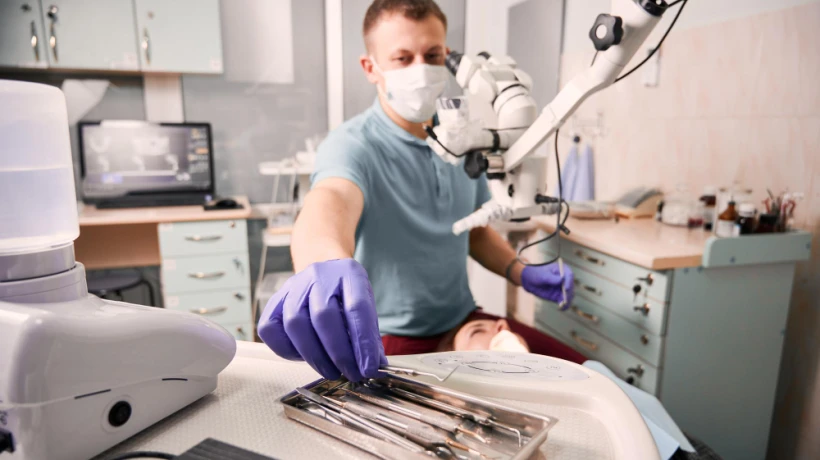
You must be curious to know why dental surgeries are so successful. It is due to the dental surgical instruments employed in every surgery. These instruments are made to carry out fine processes, such as sculpting, removing, or cutting tissues; all are precisely controlled.
From small tooth extractions to intricate jaw operations, each instrument is crucial in enhancing treatment results. Surgeons depend on them not only for functionality but for accuracy that guarantees patient safety and comfort.
Learning more about these tools is one way professionals and patients can better appreciate the skill involved in even the most minute dental procedure.
Let's discuss types, uses, and significance of such tools in contemporary dentistry.
What Are The Main Types Of Dental Surgical Instruments?
There are many types of dental surgical instruments. Here are a few common ones discussed below:
-
Anglevator Stainless Steel Handle: The dental Anglevator is an innovative tool perfect for removing teeth from the alveolar bone
-
American Pattern Forceps: American Pattern Forceps are generally used to extract maxillary incisors and canines. These forceps have a horizontal hinge and a long, non-slippery handle that provides excellent hold.
-
Luxating Elevators: Luxating Elevators are used to loosen and elevate the teeth from the periodontal ligament.
-
Universal curettes: They are double-ended instruments used for periodontal scaling.
-
English Forceps: English pattern forceps are designed to remove or extract teeth and roots. The ergonomic pattern provides greater control to the user, while surgery helps in smoother and painless extractions.
-
Amalgam Carrier: Amalgam carriers are the dental restoration instruments that are used to fill cavities with amalgam filling materials. They carry freshly prepared restorative material into the cavity.
Each instrument is engineered for control and precision, providing a clean and efficient surgical experience.
All of these instruments are designed to work together to provide a smoother, quicker procedure, saving time while guarding patient comfort. With the types identified, let’s discuss how they facilitate oral surgery.
How Are These Instruments Used In Oral Surgery?
Precision is key in oral surgeries. Oral surgery tools are specifically made to work with the delicate tissues found within the mouth. It could be a routine extraction or a complete implant procedure; the proper tools are what make the difference.
For instance, dental surgical instruments, such as elevators, carefully loosen teeth prior to extraction. Forceps assist in removing them without damaging nearby tissues. Scalpels make precise cuts, and retractors give dentists a clear view.
The goal? To provide accuracy, stop bleeding, and aid in quicker healing.
These instruments make oral surgery more predictable and less invasive; a win-win for dentist and patient alike. But why is instrument quality so crucial? Let's dissect that further next.
Why Is The Quality Of Dental Surgical Instruments So Crucial?
In dental surgeries, the quality of oral surgical instruments influences performance and safety. Poor quality instruments slip, become dull fast, or even injure tissue, leading to longer patient recovery periods.
High-quality instruments are constructed from tough stainless steel that won't corrode and stays sharp. This guarantees consistent, accurate results.
Sterilized, clean instruments also avoid infection, one of the most important issues in oral health. One tainted tool can raise risk, so sterilization and upkeep are key processes after each use.
Simply put, good tools mean better surgeries and healthier grins. Let's now consider how these instruments have evolved with better dental technology.
Evolution Of Dental Surgical Instruments
Dentistry today is evolving, and so are the instruments that propel it. Dental surgical instruments today are lighter in weight, ergonomic, and made of improved materials to provide precision and comfort.
Digital technology and lasers are increasingly being used alongside traditional oral surgery equipment in order to make care minimally invasive. That translates to less pain, less cutting, and quicker healing.
Innovation won't end there; intelligent sterilization and module design are revolutionizing efficiency for dental professionals.
The next time you have something done at your dentist's office, notice that innovation is working behind the scenes to get it done faster and more safely.
Now that we've gotten all of that in such wonderful detail, let's wrap up with the final thoughts.
Final Thoughts
Dental surgical instruments are not tools; they're part of the expertise and precision of a dentist. They all have a function to ensure that surgeries become safer, quicker, and more comfortable. Each process, from design to sterilization, is important.
With the progression of dental technology, these instruments are evolving and changing with it, and as a result, oral surgeries are becoming less invasive and more efficient than ever before.
Thus, whether you are a clinician in practice or a patient interested in the magic, learning about these instruments serves to deepen an understanding of the science, precision, and attention to detail involved in each successful smile.
FAQs
What are dental surgical instruments used for?
Dental surgical instruments are employed for various purposes. They may be employed to suture, grasp, or cut tissues in oral surgeries. They assist the dentists in efficiently performing such surgical procedures without causing any damage to adjoining tissues.
What are the most frequently used oral surgery instruments?
The most widely used oral surgery instruments are scalpels, elevators, forceps, scissors, and retractors. They each have a specific function, for example, scalpels to cut or forceps to use when pulling out teeth carefully.
How do I make surgical dental instruments safe?
Safety begins with cleaning and maintenance. Dental surgical instruments must be washed, sterilized, and checked for damage prior to use each time. This ensures the prevention of the possibility of oral infections.
Why are dental surgical instruments made of stainless steel?
Stainless steel is utilized because it is strong, resistant to corrosion, and retains sharp edges even after being subjected to multiple sterilizations. It guarantees precise consistency to every procedure.
How frequently should dental instruments be replaced?
The life of dental surgical instruments depends on their quality, usage, and care. Dull, worn-out, or corroded instruments must be replaced at once. The longevity of the dental surgical instruments also depends on how carefully you use them.


Comments
Login to Comment