Violent Workers’ Protest Triggers Massive Traffic Jam in Noida; Check Diversions & Alternate Routes
13 Apr, 2026
2260 Views 0 Like(s)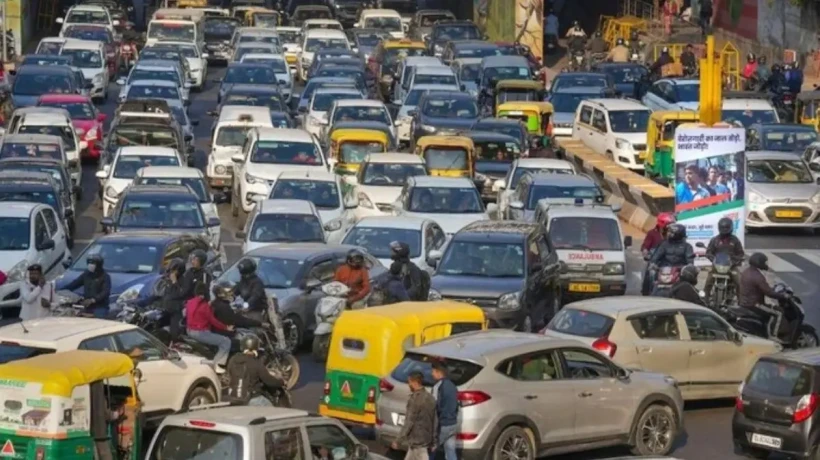
Violent Workers’ Protest Triggers Massive Traffic Jam in Noida; Check Diversions & Alternate Routes
A violent turn in a workers’ protest brought large parts of Noida to a standstill on Monday, leaving thousands of commuters stranded in one of the worst traffic snarls the city has witnessed in recent months. The unrest, which reportedly began as a peaceful demonstration, quickly escalated into chaos, prompting heavy police deployment and widespread road closures across key routes.
According to initial reports, a group of industrial workers had gathered in a prominent sector of Noida to voice their demands related to wages, working conditions, and job security. The protest, which started earlier in the day, drew a significant number of participants, leading to congestion in surrounding areas. However, tensions began to rise when a section of the crowd allegedly clashed with authorities, resulting in stone-pelting, damage to public property, and disruption of normal traffic flow.

As the situation spiraled, police forces moved in to control the crowd, leading to further escalation. Barricades were erected at multiple points, and several arterial roads were either partially or completely shut down to prevent the spread of unrest. This had a cascading effect on traffic across the city, particularly during peak office hours, when thousands of commuters were attempting to return home.
Major routes connecting Noida to neighboring areas, including Delhi and Greater Noida, witnessed long queues of vehicles stretching for several kilometers. Commuters reported being stuck in traffic for hours, with little information about diversions or alternative routes. Public transport services were also affected, with buses delayed and ride-hailing services experiencing significant disruptions due to road closures and gridlock.
Authorities quickly issued advisories urging residents to avoid the affected areas and follow designated diversions. Traffic police teams were deployed at key junctions to manage the flow of vehicles and guide commuters toward alternate routes. Despite these efforts, the sheer volume of traffic and the sudden nature of the disruption made it difficult to restore normalcy immediately.
Officials recommended several alternate routes to ease congestion. Commuters traveling between Noida and Delhi were advised to use routes via the DND Flyway or the Kalindi Kunj corridor, depending on their destination. Those heading toward Greater Noida were encouraged to take peripheral roads and avoid the central sectors where the protest was concentrated. However, these alternate routes also began to experience increased traffic pressure as more vehicles were diverted, leading to slower movement across the network.

Local businesses in the affected areas also felt the impact, with many shops shutting early due to safety concerns. Office-goers faced delays in reaching home, while emergency services reportedly had to navigate through congested roads to respond to calls. The incident highlighted the vulnerability of urban traffic systems to sudden disruptions and the challenges authorities face in managing such situations in real time.
Police officials stated that efforts were underway to bring the situation under control and ensure the safety of residents. Several individuals involved in the violence were reportedly detained, and investigations have been initiated to identify those responsible for instigating the unrest. Authorities also appealed to protestors to maintain peace and engage in dialogue rather than resorting to violence.
Meanwhile, traffic management teams continued to monitor the situation closely, making real-time adjustments to diversions and deploying additional personnel where needed. Digital signboards and social media updates were used to inform commuters about road closures and suggested routes, although many travelers said the information did not reach them in time.
Urban planners and traffic experts noted that such incidents underline the need for better contingency planning and communication systems in rapidly growing cities like Noida. With increasing population density and vehicular load, even minor disruptions can quickly escalate into city-wide congestion if not managed efficiently.

By late evening, traffic conditions began to show signs of gradual improvement as the protest dispersed and authorities started reopening some of the blocked roads. However, residual congestion persisted in several areas, and it took hours for traffic to return to normal levels.
Commuters have been advised to remain cautious and stay updated on traffic advisories, as authorities continue to assess the situation and implement measures to prevent similar disruptions in the future. The incident serves as a stark reminder of how quickly civic unrest can impact daily life in urban centers, affecting not just those directly involved but the wider public as well.


Comments
Login to Comment