US Targets India with New 12.5% Tariff Threat: US-India Trade Talks Face Fresh Challenges
05 Jun, 2026
858 Views 0 Like(s)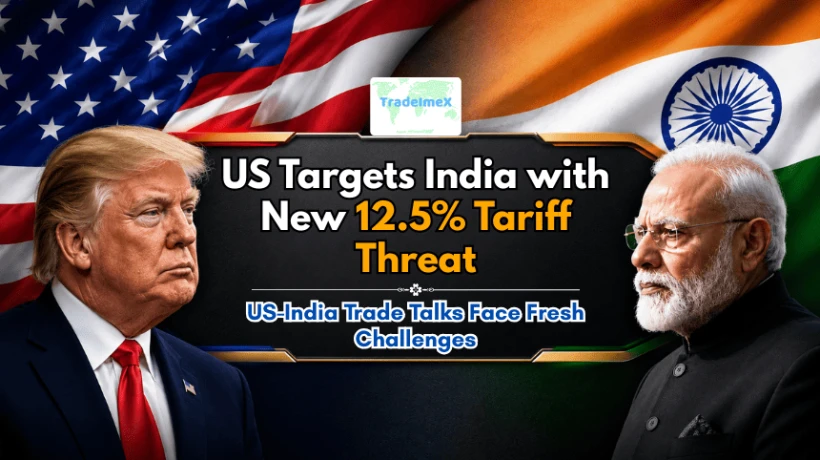
The proposed move reflects ongoing disagreements over market access, digital trade policies, manufacturing incentives, and tariff structures. As a result, US-India trade talks now face fresh challenges that could influence the future of bilateral commerce between the world's largest and fifth-largest economies.
The trade relationship between the United States and India has entered a new phase of uncertainty after reports emerged of a proposed 12.5% tariff on certain Indian exports. The latest tariff threat comes at a crucial time when both countries are engaged in efforts to strengthen economic cooperation and negotiate a broader US-India trade deal. While trade officials on both sides continue discussions, the possibility of new US tariffs on India has raised concerns among exporters, policymakers, and industry groups.
The proposed move reflects ongoing disagreements over market access, digital trade policies, manufacturing incentives, and tariff structures. As a result, US-India trade talks now face fresh challenges that could influence the future of bilateral commerce between the world's largest and fifth-largest economies.
Understanding the New Tariff Proposal
The reported tariff proposal would impose an additional 12.5% duty on selected Indian goods entering the US market. Although the final scope of the measure remains unclear, trade analysts believe it could affect sectors such as manufacturing, engineering products, chemicals, textiles, and other export-oriented industries.
The tariff threat is being viewed as part of a broader effort by Washington to address what it considers unfair trade practices and market barriers. The proposal has also revived discussions around Trump tariffs and their continuing influence on US trade policy.
During Donald Trump's presidency, the United States adopted a more aggressive approach toward trade deficits and market access issues. Several countries faced increased duties and trade investigations, and many experts believe the current debate reflects the long-lasting impact of those policies.
Connection to Section 301 Tariffs
One of the most significant aspects of the current discussion is the possibility that the new duties could be linked to Tariffs under Section 301 of the US Trade Act of 1974.
Section 301 tariffs allow the US government to investigate and respond to foreign trade practices that it believes unfairly restrict American commerce. Historically, Section 301 tariffs have been used against countries accused of maintaining discriminatory regulations, intellectual property violations, or unfair market restrictions.
If the proposed measures are implemented through this framework, they would join a growing list of Section 301 tariffs used by the United States to influence trade negotiations and encourage policy changes among trading partners.
For India, any expansion of US tariffs under Section 301 would represent a significant development in bilateral economic relations and could lead to retaliatory measures or renewed negotiations.
Why the US Is Considering New Tariffs
Several factors are believed to be driving the latest US tariffs India proposal.
1. Market Access Concerns
US officials have repeatedly argued that certain sectors of the Indian economy remain difficult for American companies to access. Areas such as agriculture, medical devices, digital services, and e-commerce have frequently been points of disagreement.
2. Trade Imbalance Issues
Although India and the United States enjoy strong economic ties, trade imbalances continue to be discussed during US-India trade talks. Washington has often sought greater access for American products while encouraging India to reduce tariff and non-tariff barriers.
3. Manufacturing and Industrial Policy
The United States has become increasingly focused on strengthening domestic manufacturing. Policymakers believe that strategic tariffs can support local industries and encourage companies to relocate production to the US.
4. Political Considerations
Trade policy often plays a role in domestic politics. As election cycles and economic concerns shape policymaking, tariff measures can become tools for demonstrating a strong stance on international trade.
Impact on US-India Trade Relations
The latest tariff threat could complicate US-India trade relations at a time when both countries have been working toward closer economic cooperation.
Over the past decade, India and the United States have expanded collaboration in areas including technology, defense, energy, pharmaceuticals, and digital innovation. Trade has become one of the strongest pillars of the broader strategic partnership.
However, recurring disagreements over tariffs, subsidies, and regulatory policies have occasionally created friction. The proposed US-India tariffs could add another layer of complexity to negotiations and potentially slow progress toward a comprehensive US-India trade deal.
Despite these challenges, experts believe that both governments remain committed to maintaining constructive engagement because of the strategic importance of the relationship.
Bilateral Trade Data Highlights Growing Economic Ties
Recent bilateral trade data demonstrates the scale and importance of economic cooperation between the two countries.
The United States is among India's largest trading partners, while India has become an increasingly important market for American goods and services. Bilateral trade has expanded significantly over the past decade, covering sectors such as:
-
Information technology services
-
Pharmaceuticals
-
Engineering goods
-
Electronics
-
Energy products
-
Agricultural commodities
-
Defense equipment
India exports a wide range of products to the United States, while American companies benefit from access to one of the world's fastest-growing major economies.
Strong bilateral trade data underscores why both sides have a vested interest in avoiding a prolonged trade dispute.
How India May Respond
India is expected to carefully evaluate any final tariff decision before determining its response.
Potential options include:
Diplomatic Negotiations
New Delhi may intensify discussions with Washington to resolve concerns through dialogue rather than confrontation.
WTO Mechanisms
India could explore legal avenues through international trade frameworks if it believes the measures violate global trade rules.
Targeted Policy Adjustments
Indian authorities may consider regulatory or policy changes that address some US concerns while protecting domestic interests.
Reciprocal Measures
Although considered a last resort, India could impose its own tariffs on selected US products if negotiations fail.
Most analysts believe both countries would prefer negotiated solutions over retaliatory actions due to the strategic importance of India-US trade.
Implications for Businesses
Companies operating across both markets should closely monitor developments surrounding the tariff proposal.
Indian exporters may face:
-
Higher costs when entering the US market
-
Reduced price competitiveness
-
Supply chain adjustments
-
Increased compliance requirements
Meanwhile, American businesses that depend on Indian suppliers could also experience higher costs and potential disruptions.
Industries with deep cross-border integration, including technology, pharmaceuticals, manufacturing, and engineering, may be particularly sensitive to any changes in tariff policy.
What This Means for the Future of US-India Trade Talks
The latest tariff threat arrives at a critical moment for US-India trade talks. Negotiators have been exploring ways to deepen economic cooperation and remove long-standing barriers that limit trade growth.
While the proposed duties may create short-term uncertainty, they could also increase pressure on both sides to reach compromises on unresolved issues. Many trade experts believe the current dispute could ultimately accelerate discussions toward a broader US-India trade deal if both governments view negotiations as the most effective path forward.
The future direction of US-India trade will likely depend on how policymakers balance domestic economic priorities with the benefits of a stronger strategic partnership.
Conclusion
The proposed 12.5% tariff represents a new challenge in the evolving relationship between Washington and New Delhi. Whether implemented through Section 301 tariffs or another trade mechanism, the move highlights continuing disagreements over market access, industrial policy, and trade regulations.
The emergence of new US tariffs on India has renewed attention on Trump tariffs, Tariffs under Section 301, and the broader direction of US trade policy. At the same time, growing bilateral trade data demonstrates that both nations have strong economic incentives to avoid escalation.
As US-India trade talks continue, businesses, investors, and policymakers will be watching closely to see whether the tariff threat leads to deeper tensions or becomes a catalyst for a long-awaited US-India trade deal. The outcome will play an important role in shaping the future of India-US trade, US-India trade relations, and the broader economic partnership between two of the world's most influential democracies.


Comments
Login to Comment