MCP Server: The Ultimate Guide to AI Integration, Enterprise Data, and Scalable Automation
11 Jun, 2026
1403 Views 0 Like(s)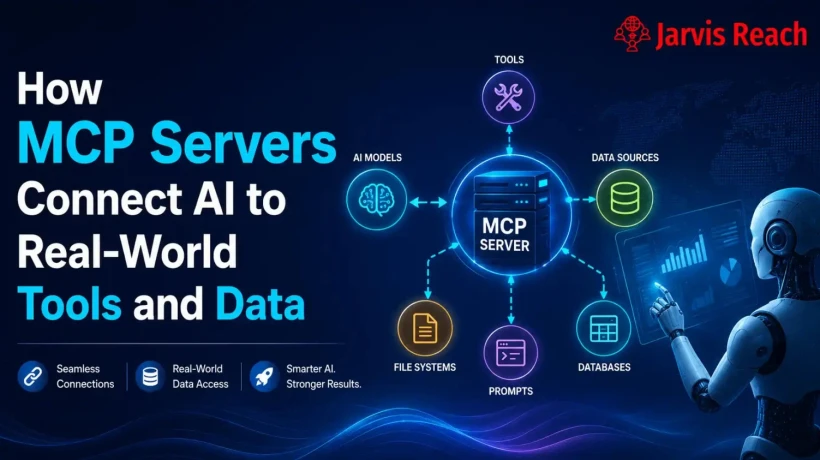
Learn how MCP Server connects AI models to APIs, SQL databases, file systems, enterprise data, and backends. Explore MCP Clients, authentication, prompt templates, stateful and stateless workflows, and scalable AI platform architecture.
Artificial intelligence is evolving rapidly, and modern AI systems need more than just powerful language models to deliver value. They require access to APIs, databases, enterprise tools, and real-time information. This is where an MCP Server becomes essential.
An MCP Server (Model Context Protocol Server) provides a standardized framework that allows AI applications to securely connect with external resources such as SQL databases, file systems, APIs, and enterprise data. By creating a unified communication layer, MCP Servers help organizations build smarter, more scalable AI solutions.
In this guide, you'll learn how MCP Servers work, the role of MCP Clients, authentication methods, stateful and stateless architectures, and why MCP is becoming a foundational technology for the next generation of AI platforms.
What Is an MCP Server?
An MCP Server is a service that implements the Model Context Protocol, enabling AI models to access external tools and information through a secure and structured interface.
Instead of building custom integrations for every application, organizations can deploy an MCP Server that acts as a bridge between AI systems and external resources.
These resources may include:
- APIs
- SQL databases
- Enterprise data
- File systems
- Cloud services
- Internal business applications
- Knowledge repositories
- Third-party tools
This standardized approach simplifies development and improves interoperability.
Why MCP Servers Are Important
Traditional AI models are limited to the information available during training. Without access to current data and external systems, their usefulness is restricted.
An MCP Server solves this challenge by enabling AI applications to:
- Access real-time information
- Query business systems
- Retrieve enterprise data
- Execute workflows
- Interact with external tools
- Maintain secure communication
As businesses increasingly adopt AI, MCP Servers help ensure these systems remain connected and useful.
Understanding the MCP Client
Every MCP ecosystem includes an MCP Client.
The MCP Client is typically:
- An AI assistant
- A chatbot
- An AI agent
- A workflow automation system
- An enterprise AI platform
When the client needs information or wants to perform an action, it sends a request to the MCP Server. The server retrieves the necessary resources and returns structured results.
This separation improves security, scalability, and maintainability.
API Integration Through MCP Server
Modern businesses depend heavily on APIs for communication between systems.
An MCP Server can connect AI applications with APIs that provide:
- Customer information
- Product catalogs
- Financial data
- Analytics reports
- CRM records
- Inventory updates
This capability allows AI systems to deliver accurate and up-to-date responses based on live information.
Connecting Enterprise Data
Organizations store critical information across multiple platforms.
An MCP Server enables secure access to enterprise data, including:
- Customer records
- Sales reports
- Internal documentation
- Employee information
- Operational metrics
Centralized access improves governance while helping AI systems deliver more relevant responses.
Working with SQL Databases
Many businesses rely on SQL databases to manage structured information.
MCP Servers can connect directly with:
- PostgreSQL
- MySQL
- Microsoft SQL Server
- Oracle Database
- SQLite
This allows AI models to query records, generate insights, and retrieve information directly from business databases.
Real-time database access significantly enhances AI performance and usefulness.
Managing Multiple Data Sources
Organizations often maintain information across various systems.
An MCP Server acts as a centralized gateway for multiple data sources, including:
- Databases
- APIs
- File systems
- Cloud storage
- Internal applications
This unified approach reduces complexity and makes information more accessible to AI applications.
Prompt Templates for Consistent AI Responses
One of the most valuable MCP capabilities is support for prompt templates.
Prompt templates help organizations:
- Standardize AI outputs
- Improve response quality
- Reduce prompt duplication
- Maintain brand consistency
- Streamline workflow creation
By managing prompts centrally, teams can improve efficiency and ensure consistent AI behavior.
Stateful vs Stateless MCP Architectures
A key design decision involves choosing between stateful and stateless server architectures.
Stateless Architecture
A stateless MCP Server treats every request independently.
Benefits include:
- Easier scaling
- Better reliability
- Reduced memory requirements
- Simpler deployment
Stateless systems are commonly used in high-volume environments.
Stateful Architecture
A stateful MCP Server maintains context between requests.
Advantages include:
- Conversation memory
- Session persistence
- Personalized interactions
- Workflow continuity
Stateful architectures are particularly useful for AI agents that require long-term context.
Many organizations implement a hybrid approach depending on business requirements.
Authentication and Security
Strong authentication mechanisms are essential when AI systems access sensitive information.
Common authentication methods include:
- API keys
- OAuth
- Access tokens
- Single Sign-On (SSO)
- Role-based permissions
Authentication ensures that only authorized clients can access protected resources.
Security remains one of the primary reasons enterprises adopt MCP-based architectures.
MCP Server Backends
An MCP Server connects with various backends that store information or execute tasks.
Examples include:
- Database servers
- CRM platforms
- ERP systems
- Analytics tools
- Document repositories
- Cloud infrastructure
Backend integration allows AI systems to interact with real-world business operations.
MCP Server and File Systems
Access to file systems is another valuable MCP capability.
Organizations can enable AI applications to:
- Read documents
- Retrieve reports
- Analyze spreadsheets
- Access knowledge bases
- Manage digital assets
File system integration helps AI systems work with both structured and unstructured information.
Building a Modern AI Platform with MCP
Every successful AI platform requires secure and reliable access to information.
MCP Servers provide the infrastructure necessary to:
- Connect AI models with external tools
- Manage permissions
- Access enterprise data
- Automate workflows
- Deliver real-time responses
This makes MCP a foundational technology for enterprise AI initiatives.
Benefits of MCP Server Implementation
Organizations that deploy MCP Servers often experience:
Improved Security
Centralized authentication reduces risk.
Faster Development
Developers can reuse integrations across projects.
Better Scalability
Standardized protocols simplify expansion.
Enhanced Data Access
AI applications can connect to multiple resources through a single interface.
Greater Flexibility
Organizations can integrate new systems without rebuilding existing infrastructure.
The Future of MCP Servers
As AI adoption accelerates, MCP Servers are expected to become a standard component of enterprise architecture.
Future innovations may include:
- Advanced AI agent collaboration
- Improved orchestration workflows
- Smarter authentication controls
- Enhanced stateful memory systems
- Expanded enterprise integrations
Businesses investing in MCP today will be better prepared for the future of AI-powered automation.
Conclusion
An MCP Server serves as the critical connection layer between AI models and external systems. By supporting MCP Clients, APIs, enterprise data, SQL databases, data sources, prompt templates, file systems, authentication, stateful and stateless workflows, and backend integrations, MCP enables organizations to build scalable, secure, and intelligent AI platforms. As AI continues to evolve, MCP Servers will play an increasingly important role in helping businesses unlock the full value of connected artificial intelligence.



Comments
Login to Comment