How Does WhatsApp Business API Integration with CRM Help Businesses Automate Customer Management?
29 Jul, 2026
616 Views 0 Like(s)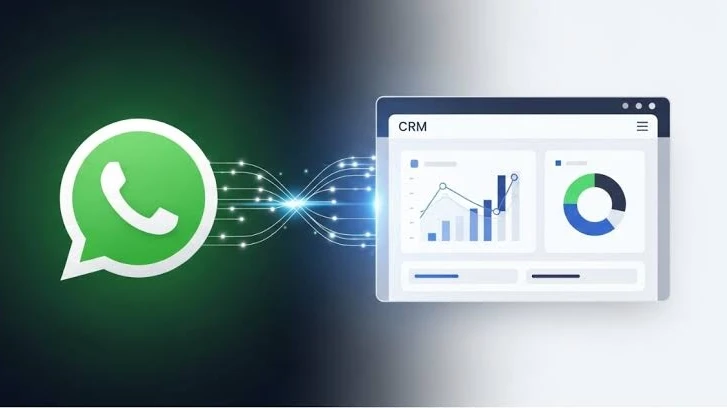
This article explains how WhatsApp Business API Integration with CRM helps businesses automate customer management, improve efficiency, and build stronger customer relationships.
In today's fast-paced digital landscape, businesses are expected to provide instant, personalized, and consistent customer support across multiple communication channels. Customers no longer want to wait hours for email replies or spend time on lengthy phone calls—they prefer quick conversations through messaging platforms like WhatsApp. As one of the world's most popular messaging applications, WhatsApp has become a preferred channel for customer communication.
However, managing hundreds or thousands of conversations manually can be overwhelming. This is where WhatsApp Business API Integration with CRM becomes a powerful solution. By connecting WhatsApp with a Customer Relationship Management (CRM) system, businesses can automate customer interactions, centralize communication, streamline workflows, and improve customer satisfaction.
This article explains how WhatsApp Business API Integration with CRM helps businesses automate customer management, improve efficiency, and build stronger customer relationships.
What Is WhatsApp Business API Integration with CRM?
WhatsApp Business API Integration with CRM is the process of connecting the WhatsApp Business API to a CRM platform, allowing businesses to manage customer conversations, contact information, sales activities, and support requests from a single dashboard.
Unlike the standard WhatsApp Business app, the API is designed for medium and large businesses that handle high volumes of customer interactions. Once integrated with a CRM, businesses can automate repetitive tasks, assign chats to team members, track customer journeys, and provide faster responses.
Why Businesses Need CRM and WhatsApp Integration
Customers expect businesses to remember previous conversations, respond quickly, and provide personalized support. Without integration, customer information is often scattered across different platforms, making communication inefficient.
CRM integration solves this problem by combining messaging and customer data into one centralized system. This enables support teams and sales representatives to access customer history instantly, reducing response times and improving service quality.
Centralizing Customer Communication
One of the biggest advantages of integrating WhatsApp with a CRM is having all customer conversations in one place.
Instead of switching between multiple applications, employees can:
- View WhatsApp chats
- Access customer profiles
- Check purchase history
- Review previous inquiries
- Update customer records
- Track ongoing conversations
This centralized approach improves productivity and ensures that every interaction is informed by accurate customer data.
Automating Customer Responses
Responding manually to every message consumes valuable time, especially when customers ask similar questions repeatedly.
Businesses can automate responses for:
Frequently Asked Questions
Automatically answer questions about:
- Business hours
- Pricing
- Product availability
- Delivery information
- Return policies
Welcome Messages
Instantly greet new customers and introduce your services.
Away Messages
Inform customers when support agents are unavailable and let them know when to expect a reply.
Automation ensures customers receive immediate responses, even outside business hours.
Improving Lead Management
Every customer inquiry is a potential business opportunity.
CRM integration allows businesses to automatically:
- Capture new leads
- Store contact information
- Assign leads to sales representatives
- Track lead status
- Schedule follow-ups
- Record communication history
This organized approach reduces missed opportunities and helps sales teams close more deals.
Personalizing Customer Interactions
Modern customers expect personalized experiences.
By integrating WhatsApp with a CRM, businesses can access valuable customer information during conversations, including:
- Customer name
- Previous purchases
- Inquiry history
- Preferred products
- Service requests
- Communication preferences
Support agents can tailor responses based on this information, creating more meaningful and engaging customer interactions.
Faster Customer Support
Quick responses improve customer satisfaction and build trust.
CRM integration allows support agents to instantly view customer details without asking repetitive questions.
Instead of requesting order numbers or previous communication repeatedly, agents can immediately understand the customer's issue and provide accurate assistance.
This significantly reduces response and resolution times.
Automated Workflow Management
Businesses often perform repetitive tasks after customer interactions.
WhatsApp Business API Integration with CRM automates workflows such as:
Creating Support Tickets
Customer complaints can automatically generate support tickets.
Assigning Conversations
Incoming chats can be routed to the appropriate department based on customer needs.
Updating Customer Records
CRM data updates automatically after every conversation.
Scheduling Follow-Ups
The system reminds sales representatives to reconnect with prospects.
Automation eliminates manual work and minimizes human error.
Enhancing Sales Performance
Sales teams benefit greatly from CRM integration because they have complete visibility into each customer's journey.
Sales representatives can:
- Identify qualified leads
- Monitor customer engagement
- Send personalized offers
- Track conversions
- Schedule product demonstrations
- Follow up automatically
These capabilities improve sales efficiency and increase conversion rates.
Supporting Multiple Team Members
The standard WhatsApp Business application has limited collaboration features.
With WhatsApp Business API integrated into a CRM, multiple employees can manage customer conversations simultaneously.
Benefits include:
- Shared inbox
- Internal chat assignments
- Team collaboration
- Conversation ownership
- Activity tracking
This prevents duplicate responses and ensures customers always receive consistent support.
Using Chatbots for Customer Automation
AI-powered chatbots further enhance CRM integration by handling routine customer requests automatically.
Chatbots can:
- Answer FAQs
- Collect customer information
- Qualify leads
- Book appointments
- Recommend products
- Route conversations to human agents
This allows businesses to provide 24/7 support while reducing the workload for customer service teams.
Tracking Customer Journeys
Understanding how customers interact with your business is essential for improving service.
CRM integration provides complete visibility into the customer journey, including:
- First inquiry
- Follow-up conversations
- Purchases
- Support requests
- Feedback
- Repeat orders
This helps businesses identify opportunities to improve customer experience and increase loyalty.
Better Customer Data Management
Managing customer information manually increases the risk of duplicate or outdated records.
CRM integration automatically stores:
- Contact details
- Chat history
- Purchase records
- Customer preferences
- Support interactions
- Marketing consent
Accurate and organized data enables businesses to make informed decisions and deliver better customer experiences.
Automating Marketing Campaigns
Businesses can also use CRM-integrated WhatsApp messaging for targeted marketing.
Examples include:
Promotional Offers
Send personalized discounts based on customer interests.
Product Updates
Notify customers about new arrivals or service launches.
Appointment Reminders
Reduce missed appointments with automated reminders.
Order Notifications
Keep customers informed about order confirmations, shipping updates, and delivery status.
Marketing automation increases engagement while maintaining personalized communication.
Improving Customer Retention
Retaining existing customers is often more cost-effective than acquiring new ones.
CRM integration helps businesses build long-term relationships by:
- Sending follow-up messages
- Requesting customer feedback
- Offering loyalty rewards
- Sharing exclusive promotions
- Providing proactive support
Consistent communication strengthens customer trust and encourages repeat business.
Real-Time Reporting and Analytics
Integrated CRM systems provide valuable insights into customer communication and team performance.
Businesses can monitor:
- Response times
- Resolution rates
- Customer satisfaction
- Lead conversions
- Agent productivity
- Conversation volume
These analytics help managers optimize workflows and make data-driven decisions.
Enhancing Security and Compliance
The WhatsApp Business API provides enterprise-grade security with encrypted messaging.
When integrated with a secure CRM, businesses benefit from:
- Controlled user access
- Secure customer data storage
- Audit logs
- Permission management
- Data backup
- Compliance with privacy regulations
This protects sensitive customer information and builds confidence in your business.
Industries That Benefit from WhatsApp Business API Integration with CRM
Many industries use CRM-integrated WhatsApp communication to improve customer management, including:
- Real estate
- Healthcare
- Retail
- E-commerce
- Hospitality
- Education
- Banking and finance
- Travel agencies
- Automotive
- Professional services
Each industry can automate customer interactions while delivering faster and more personalized service.
Best Practices for Successful Integration
To maximize the benefits of WhatsApp Business API Integration with CRM:
- Choose a CRM that supports WhatsApp integration.
- Define automated workflows based on customer needs.
- Personalize messages using CRM data.
- Use chatbots for repetitive inquiries.
- Train staff on the integrated system.
- Monitor analytics regularly to optimize performance.
- Keep customer data accurate and updated.
- Ensure compliance with privacy and messaging regulations.
Following these practices helps businesses achieve greater efficiency and customer satisfaction.
Conclusion
WhatsApp Business API Integration with CRM has transformed the way businesses manage customer relationships by combining real-time messaging with powerful customer data management. It enables organizations to automate repetitive tasks, centralize communication, personalize customer interactions, streamline sales processes, and deliver faster, more efficient support.
From automated replies and chatbot assistance to lead tracking, workflow automation, and advanced reporting, CRM integration empowers businesses to scale customer management without compromising service quality. Whether you're a growing startup or a large enterprise, integrating WhatsApp Business API with your CRM can improve productivity, strengthen customer relationships, and drive long-term business growth in today's competitive digital marketplace.
Disclaimer: ThynkTales is a public blogging platform where content is contributed by individual users. While we encourage thoughtful and accurate sharing, we do not independently verify the information provided. Readers are advised to use their discretion and verify any information before relying on it.



Comments
Login to Comment