Hair Transplant in Al Ain for Dubai Residents Seeking Natural Results
23 Sep, 2026
9 Views 0 Like(s)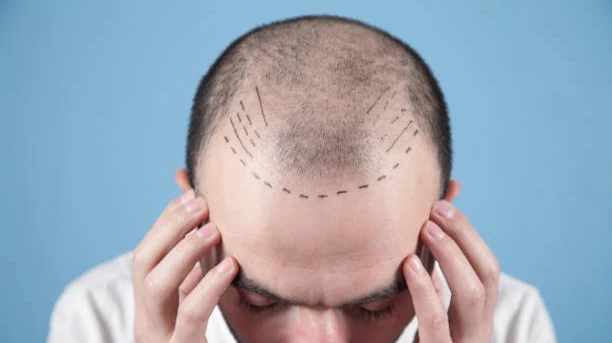
Hair Transplant in Al Ain for natural, lasting restoration. Explore FUE, DHI, graft planning and advanced care with Tajmeels Clinic.
For Dubai residents considering Hair Transplant in Al Ain, the procedure involves relocating healthy hair follicles from a genetically stronger donor zone into areas affected by thinning or baldness. Modern transplantation works because transplanted follicles generally retain the characteristics of their donor region, allowing carefully selected grafts to continue producing hair in their new position.
The important part is not simply moving a large number of follicles. A refined result depends on donor preservation, graft quality, recipient-site design, hair direction, density transitions and the long-term pattern of native hair loss.
Dubai residents also have a practical consideration that patients elsewhere may overlook. A hair restoration plan has to fit around intense sunlight, air-conditioned environments, humid summers, business travel and demanding social schedules.
How Hair Transplantation Handles Dubai and Al Ain Environmental Challenges
Protecting the scalp during Dubai’s intense sun
The scalp is particularly sensitive during the early healing period because transplantation creates numerous small recipient and donor wounds. Direct sun exposure can irritate healing tissue, increase discomfort and make postoperative skin changes more noticeable.
That does not mean Dubai's climate prevents successful transplantation. It means recovery has to be planned properly, with the medical team providing specific instructions about sun exposure, washing, headwear and activity.
Managing indoor AC and changing humidity
Dubai residents can move between extremely dry, air-conditioned interiors and hot, humid outdoor conditions several times in one day. These environmental shifts do not determine graft survival by themselves, but they can affect scalp comfort, dryness and the patient's perception of irritation during recovery.
Good postoperative care therefore focuses on maintaining a clean, appropriately moisturized scalp environment without unnecessarily disturbing newly placed grafts.
Building recovery around international travel
Frequent travel is another common consideration for Dubai-based patients. A transplant should not be planned immediately before a demanding business trip, long-haul flight schedule, major event or holiday involving substantial sun exposure.
The first days are particularly important because swelling, crusting and tenderness can occur after surgery. Clinical literature also identifies pain, edema, bleeding, infection and recipient-site inflammatory reactions among the potential complications that require appropriate postoperative management.
A simplified treatment pathway looks like this:
Hair-loss assessment
        ↓
Donor density + scalp evaluation
        ↓
Hairline and recipient-zone design
        ↓
Graft harvesting
        ↓
Graft inspection and preparation
        ↓
Recipient-site creation
        ↓
Strategic graft placement
        ↓
Early healing and scalp protection
        ↓
Progressive hair growth
        ↓
Long-term density assessment
The key point is that the procedure does not end when the final graft is implanted. The biological growth cycle continues for months, and expectations should be based on that timeline rather than the appearance of the scalp during the first few weeks.
How Hair Transplant Options Compare
Different transplantation approaches can be useful in different clinical situations. The choice should be based on donor characteristics, the size and location of the recipient area, hair caliber, desired density and the surgeon's assessment rather than simply choosing the technique with the most recognizable name.
| Approach | Main principle | Where it can be useful | Key consideration |
|---|---|---|---|
| FUE | Individual follicular units are harvested from the donor area | Many patients seeking minimally invasive donor harvesting | Requires careful punch selection and donor management |
| DHI | Often refers to implantation using an implanter device after follicular-unit extraction | Controlled placement in selected cases | DHI is not a separate harvesting method; terminology varies between clinics |
| FUT | A donor strip is removed and follicular units are dissected | Selected patients where strip harvesting is appropriate | Produces a linear donor scar |
| Non-surgical hair-loss therapy | Attempts to slow, stabilize or improve hair growth without transplantation | Early or medically manageable hair loss | Does not physically replace follicles in an empty recipient area |
The International Society of Hair Restoration Surgery specifically notes that “DHI” is used inconsistently and should not be treated as a completely separate hair-transplant method. Implanters describe an implantation technique or instrument; the underlying transplant still depends on appropriate extraction, graft handling and recipient-site creation.
For that reason, someone searching for “DHI hair transplant in Al Ain” should look beyond the label and ask exactly how follicles will be harvested, handled and implanted.
Clinical Execution and Technique Breakdown
Donor-area assessment comes first
A transplant is limited by the quality and quantity of the donor supply. The surgeon needs to evaluate follicular density, hair caliber, scalp characteristics and the likely future pattern of hair loss before deciding how many grafts can reasonably be harvested.
Overharvesting may create visible thinning in the donor region. Modern FUE planning therefore requires more than identifying an area with apparently dense hair; extraction must be distributed strategically to preserve the visual appearance of the donor zone. Current literature highlights donor depletion and other donor-site complications as important considerations in FUE.
Natural hairline restoration requires microscopic planning
The frontal hairline is one of the most visually demanding areas of transplantation. It cannot be treated like a uniform block of density.
The leading edge normally requires finer follicular units and carefully controlled angles. Behind it, graft selection and density can gradually change to create a transition that looks natural rather than abruptly transplanted.
This is why natural hairline restoration depends on placement strategy as much as graft quantity.
Graft selection affects the final appearance
A follicular unit may contain one, two, three or more hairs. Single-hair units can be particularly valuable toward the frontal transition, while larger units may contribute more density behind the leading edge.
The objective is to use the available donor supply intelligently rather than placing every available graft at the front.
Recipient-site design controls direction and density
Recipient sites need to follow the existing anatomy of the scalp. Hair does not emerge vertically like artificial fibers; it exits the scalp at specific angles and changes direction across the frontal region, temples and crown.
Incorrect angulation can make otherwise healthy transplanted follicles appear unnatural.
For Dubai residents considering treatment through a specialist pathway, the dedicated [Hair Transplant in Al Ain] service information provides a more focused overview of the treatment option.
FUE and graft handling
During FUE, individual follicular units are extracted using a punch and subsequently prepared for implantation. The procedure is technically sensitive because follicular structures can be damaged during extraction, handling or implantation.
Recent evidence emphasizes that punch design, graft handling, follicular density and ischemia time can influence complications and outcomes.
The surgical team therefore has to think about the entire chain:
Extraction quality
       ↓
Graft integrity
       ↓
Graft storage and handling
       ↓
Recipient-site preparation
       ↓
Placement angle + direction
       ↓
Healing
       ↓
Long-term growth
A weak link anywhere in this sequence can compromise the final aesthetic result.
Real Patient Experiences and Clinical Realities
“I thought more grafts automatically meant a better result.”
Not necessarily.
A large graft count can be inappropriate if the donor supply is limited or the distribution is poorly planned. The better question is whether the grafts are being allocated to the areas that create the greatest visual improvement while protecting future donor reserves.
“I am worried that the transplanted hair will fall out.”
Temporary shedding after transplantation is expected in many patients. The American Academy of Dermatology notes that transplanted hair can shed between approximately two and eight weeks after surgery, with visible growth typically developing over subsequent months.
This early shedding can be alarming when patients are expecting immediate permanent hair. It is better understood as part of the normal transition between implantation and the later growth phase.
“If I travel frequently between Dubai and other countries, recovery will be difficult.”
Frequent travel does not automatically rule out transplantation. The issue is timing.
Patients should avoid building a recovery schedule around consecutive flights, intense sun exposure, swimming, major events or physically demanding commitments. A carefully planned recovery period is much easier to manage than trying to compress postoperative care around a packed itinerary.
“FUE means there are no scars.”
FUE generally avoids the linear scar associated with strip harvesting, but it is still a surgical procedure involving multiple small extraction sites. It can produce small visible changes in the donor area, particularly when harvesting is excessive or poorly distributed.
That distinction matters when discussing realistic outcomes with an experienced patient.
Treatment Roadmap and Timeline
1. Consultation and diagnosis
The process begins with determining why the hair is thinning. Pattern hair loss, diffuse thinning, inflammatory scalp disorders and other causes can require different management strategies.
2. Donor and recipient mapping
The clinician evaluates the donor zone and maps the areas requiring restoration. Hairline position, temples, mid-scalp and crown can require different graft strategies.
3. Treatment design
The number and type of grafts are estimated according to available donor resources and the desired aesthetic result. Long-term planning is particularly important for younger patients whose native hair may continue to thin.
4. Graft extraction and preparation
For FUE-based treatment, follicular units are individually harvested and prepared for placement. The objective is to preserve follicular integrity while maintaining an appropriate extraction pattern.
5. Recipient-site preparation and implantation
The recipient area is prepared according to the planned hair direction, angle and density. Grafts are then positioned to recreate a gradual and anatomically appropriate appearance.
6. Early recovery
During the first several days, patients may experience redness, swelling, tenderness or crust formation. Postoperative instructions should be followed carefully, particularly regarding scalp washing, physical activity and sun exposure.
7. Temporary shedding phase
During the following weeks, transplanted shafts may shed. This does not necessarily indicate that the follicles have failed; the biological growth cycle continues beneath the scalp.
8. Progressive regrowth
Visible improvement develops gradually rather than overnight. Many patients begin seeing meaningful results within several months, with the American Academy of Dermatology noting that results commonly become apparent around six to nine months, although some patients require up to 12 months.
9. Long-term assessment
The final evaluation considers both transplanted growth and the behavior of the patient's original hair. Medical treatment may sometimes be recommended to slow ongoing native-hair loss and help preserve the overall result.
Long-Term Hair Health and Restoration Planning
A successful transplant should be viewed as part of a long-term hair strategy rather than an isolated cosmetic procedure. The transplanted follicles may remain durable, but the surrounding native hair can continue to miniaturize depending on the underlying diagnosis and individual pattern of hair loss.
For Dubai residents, the most useful approach is one that combines realistic graft planning, conservative donor management, anatomically appropriate hairline design and disciplined postoperative care. Climate, travel and lifestyle should be incorporated into the recovery plan rather than treated as afterthoughts.
Patients considering advanced hair restoration can explore the wider treatment approach and aesthetic services available through Tajmeels Clinic.
Comments
Login to Comment